
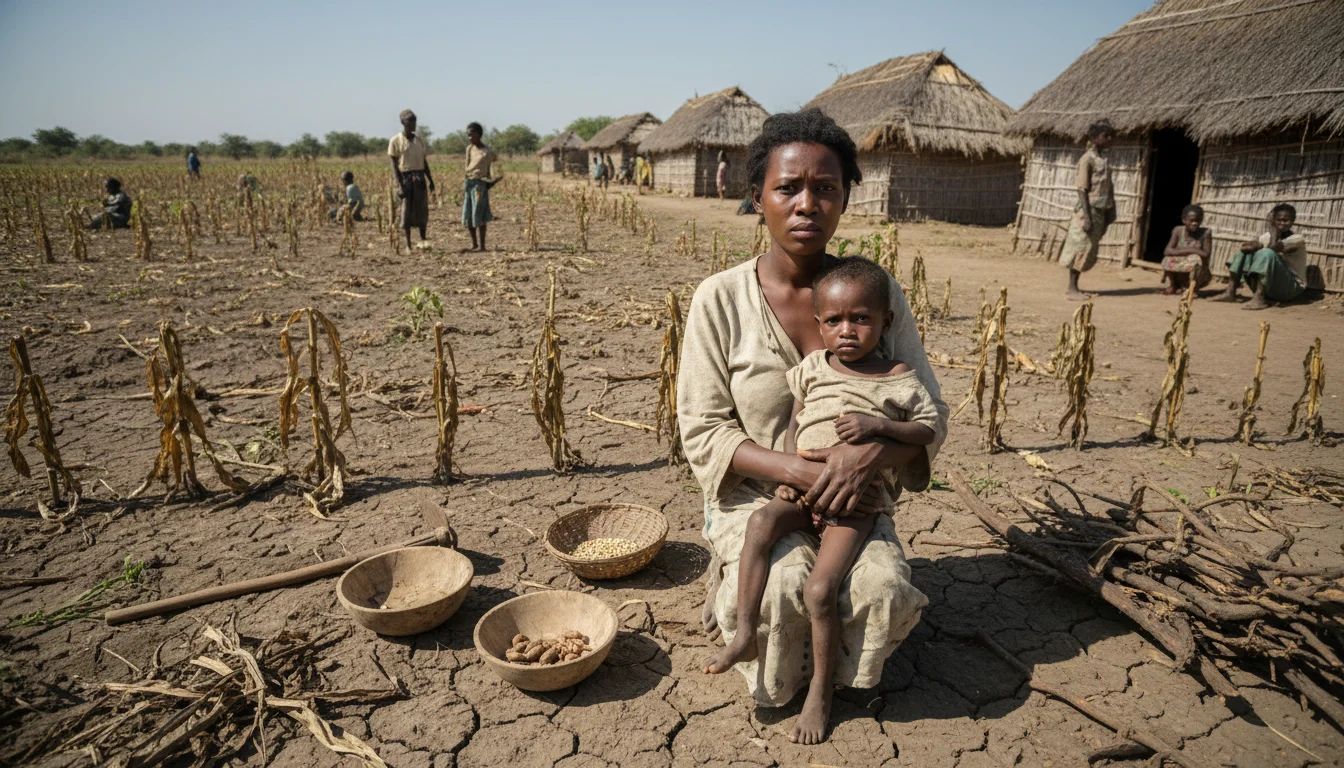

Madagascar, this magnificent island in the Indian Ocean, is unfortunately at the heart of a silent and persistent humanitarian crisis. Malnutrition remains a tenacious scourge, threatening the lives and development of millions of people, especially the youngest. We are talking about a situation where access to food is not simply a matter of quantity, but also of quality and regularity, under the crushing weight of socio-economic factors and, increasingly, the vagaries of a raging climate. Projections for the coming years, particularly up to 2026, are alarming, predicting a significant increase in the number of children facing the most severe forms of undernourishment, with irreversible consequences if strong action is not implemented quickly. This is an urgent call for vigilance and mobilization. The country, with its young and predominantly rural population, is particularly vulnerable to external shocks. The relentless droughts in the south and devastating cyclones on the eastern coasts are no longer isolated events but a grim, recurring reality that constantly jeopardizes household food security. These natural disasters, combined with structural poverty, create a vicious cycle in which communities’ ability to feed themselves adequately is constantly tested. Desperate survival strategies, such as selling essential goods, are observed, only exacerbating the precarious situation. Understanding this complexity is the first step toward breaking this spiral.
Despite the considerable efforts deployed by national and international organizations, the problem of malnutrition in Madagascar remains a colossal challenge. Emergency aid programs, agricultural capacity building, and nutritional awareness campaigns attempt to contain the crisis and build long-term resilience. However, the scale of the needs is such that every step forward is fragile in the face of new threats, whether climatic or economic. It is crucial not to let up and to continue innovating approaches to guarantee a healthier and more stable future for the Malagasy people. At stake is the life of an entire generation, an immense human potential to protect and nurture.
In short:
- 📈 Madagascar faces chronic malnutrition, ranked 4th in the world, with 50% of the population affected by stunted growth. 🌪️ Recurrent climate shocks: an average of 3 natural disasters per year, destroying crops and infrastructure. 🚨 Alarming projections: By April 2026,
- 558,000 children could suffer from acute malnutrition, including 155,600 with the most severe form.
- 💧 Floods are increasing diarrheal infections, exacerbating undernourishment.
- 📉 Extreme drought in the south is putting 340,000 children at risk, leading to a drastic reduction in resources. 🍎 The World Food Programme (WFP) is deploying support programs,
- ranging from emergency aid to agricultural training. 🌱 The MIARO approach supports 42,000 children and women with nutritional information and educational activities on market gardening.
- The deep roots of malnutrition in Madagascar: beyond the empty plateTo understand why malnutrition continues to threaten the population of Madagascar, one must delve far beyond the simplistic image of an empty plate. It is a multifactorial, complex problem deeply rooted in the very structure of the country. Madagascar is a large island nation, predominantly rural, with a very young population, where approximately 41% of citizens are under 15 years old. This youth, often perceived as an asset, paradoxically finds itself on the front lines of one of the most pressing public health problems: malnutrition. Madagascar has the fourth highest rate of chronic malnutrition in the world. This translates into an alarming key indicator: nearly 50% of the Malagasy population suffers from stunted growth, an unequivocal sign of prolonged undernourishment from the earliest years of life. Socioeconomic factors are the primary culprits. Widespread poverty drastically reduces families’ ability to obtain sufficient and nutritious food. The lack of adequate social protection and income inequality exacerbate this vulnerability, creating stark disparities in access to basic resources. Even when food is available, its cost can be prohibitive for a large portion of the population, pushing them towards limited and deficient diets. Clearly, the problem is not only one of production, but also of affordability. Families often have to make impossible choices, sacrificing nutritional quality for quantity, or even selling their possessions to buy only the bare necessities. This daily struggle is a constant challenge, undermining the development potential of individuals and communities.
- Traditional food practices, while culturally rich, do not always guarantee a balanced nutritional intake, especially in the face of poverty. Dietary diversity remains a luxury, and many children do not have access to an adequate diet, which is a major contributing factor to malnutrition. It is crucial to develop solutions that respect local cultures while expanding knowledge about healthy and varied diets. Initiatives such as awareness programs and support for vegetable gardens can make a real difference, but they require sustained commitment and significant resources. Clearly, as long as these socio-economic foundations remain fragile, efforts to eradicate malnutrition will be a long and arduous struggle. It is a multi-pronged commitment that must be maintained with consistency and determination to ensure a more equitable future for all Malagasy people, especially the youngest, who are already bearing the brunt of this crisis. To understand how malnutrition impacts future generations, you can consult information on malnutrition among young people in Madagascar.
The insidious impact of poverty on access to food
Poverty isn’t just a lack of money; in Madagascar, it translates directly into a lack of access to adequate food, creating a vicious cycle that traps populations in malnutrition. Imagine a family living off subsistence farming, dependent on harvests for survival. If the harvest is poor, whether due to the climate or pest infestations, food reserves quickly dwindle. The market could offer an alternative, but the prices of basic commodities are often prohibitive. This situation forces thousands of families into disastrous compromises, such as consuming less nutritious foods, drastically reducing portion sizes, or even skipping entire meals. It’s a harsh reality for a large part of the population, where every day is a struggle simply to feed themselves.
The consequences of this poverty aren’t limited to food. A lack of income also means limited, or even nonexistent, access to basic healthcare, clean water, and sanitation. However, inadequate sanitation increases the risk of diarrheal diseases and other infections which, even if mild elsewhere, can be fatal to a body weakened by malnutrition. A malnourished child is more vulnerable to illness, and each illness makes them even more malnourished. It’s a vicious cycle. Furthermore, poverty affects education, as malnourished children have difficulty concentrating and low energy levels, making learning difficult. School attendance declines, and future opportunities diminish, thus perpetuating the intergenerational cycle of poverty and malnutrition. Social protection programs are often insufficient to cover the full extent of needs, leaving many families without a safety net in the event of an economic or climate shock. Community resilience is severely tested, and without external support and robust national policies, it is difficult for them to escape this precarious situation. To break this cycle, it is essential to adopt holistic approaches that target not only immediate access to food, but also the root causes of poverty, such as improving infrastructure, access to education, and creating sustainable economic opportunities. This is an investment in the future of the Malagasy people, a path toward genuine food self-sufficiency. Initiatives like community meals provide temporary relief, but the need is structural.
https://www.youtube.com/watch?v=M0Diqy4BO0c
Climate Shocks: A Dramatic Accelerator of the Food Crisis in Madagascar
Madagascar is unfortunately on the front lines of the devastating effects of climate change, and this is directly resulting in a worsening food crisis. The island is highly vulnerable to extreme weather conditions, experiencing an average of three natural disasters per year, according to USAID. These events are not isolated incidents; they have become a sad routine impacting millions of lives. It is estimated that nearly 5 million people are directly affected by these disasters, and another 8.8 million find themselves in a situation of food insecurity. Cyclones, floods, and droughts do not simply destroy homes; they wipe out crops, disrupt agriculture, and, as a result, are one of the main drivers of malnutrition.
One only needs to look at 2022 to grasp the scale of the problem. Madagascar was struck by two potentially deadly cyclones, Batsirai and Emnati. These storms not only decimated infrastructure but also destroyed entire crops, swept away by violent winds and devastating floods. Maize, cassava, and sweet potatoes—staple foods for many families—were wiped out, drastically reducing food availability and the productive capacity of the fields. This had the immediate effect of causing a massive increase in food insecurity and, inevitably, malnutrition. The early depletion of household food reserves, combined with persistent price inflation and erratic rainfall, creates an explosive mix for the populations of the Great South and the Great Southeast. The persistent drought in southern Madagascar is another facet of this climate crisis. Rainfall has drastically decreased over the past two decades, and researchers predict an increase in the intensity, duration, and frequency of these drought episodes. The persistent lack of water has disastrous consequences for agriculture and food supplies, with parched fields and vegetables that no longer grow. Faced with this desperate situation, many people are forced to adopt extreme coping mechanisms to survive, such as selling their possessions, livestock, or even their homes in exchange for food. These events are creating a population of climate refugees. Internally, desperately seeking sustenance. It’s a difficult reality to grasp, but it’s the daily reality for millions of Malagasy people. These climate crises, while extreme, have unfortunately become constant catalysts for the food security crisis.
Natural disasters in Madagascar don’t just destroy crops and homes; they have a direct and devastating impact on public health, particularly by exacerbating malnutrition. Take floods, for example. They increase the frequency of aquatic parasites and contaminate rivers, rendering the water undrinkable. The result? A surge in diarrheal infections and malaria, especially in rural areas where access to clean water and healthcare is already limited. A body weakened by malnutrition is even more vulnerable to these diseases, and an infection quickly depletes the body’s last reserves, making recovery difficult and pushing it even further into undernourishment. In 2022, no fewer than 19,195 children under the age of 5 suffered from malnutrition in Madagascar, a frightening figure highlighted by Doctors Without Borders.
Frequent disruption of agricultural fields is a direct consequence of these events. When crops are destroyed year after year, farmers’ ability to produce food diminishes. The crop cycle is interrupted, seeds are lost, and the land itself can be damaged. This agricultural instability leads to extreme hunger, as people can no longer afford to grow or buy food. Furthermore, access to hospitals or medicine becomes virtually impossible in isolated and devastated areas. Communities find themselves isolated, without support, and facing an uncertain future. For families, this means heartbreaking sacrifices, even selling what little they have to survive. These emergency coping mechanisms only further entrench poverty and vulnerability.
Comparative Table: Threats to Food Security in Madagascar Explore the causes and consequences of malnutrition in the southern (drought) and southeastern (cyclones) regions of Madagascar. Use the search and sort functions to navigate.
Search in table
Clear search
Data source: Analysis of the humanitarian and climate situation in Madagascar.
In southern Madagascar, extreme drought is putting approximately 340,000 children at risk of malnutrition in some form. The figures are stark reminders of the urgency: UNICEF reports that 115,000 children in the southeastern regions are suffering from acute malnutrition and are in dire need of immediate treatment. Without swift and concerted action, the situation will only worsen. Communities need sustainable solutions to cope with this changing climate reality, as agriculture, the backbone of their livelihoods, is constantly under the yoke of these extreme weather events. It is a fight for the lives, health, and future of these populations—a fight that cannot be won without massive and sustained international support. Food security is at stake for millions of people. The vicious cycle of food insecurity and undernourishment: alarming figures.
The food insecurity situation in Madagascar is more than alarming; it is constantly deteriorating, as confirmed by the latest IPC (Integrated Food Security Phase Classification) projections. These analyses, based on agricultural, climatic, rainfall, and human data collected between 2018 and 2025, sound a resounding alarm. By April 2025, more than 1.2 million Malagasy people will face high levels of food insecurity. Imagine thousands of families struggling daily to find enough to eat, including 29,000 people who will have to cope with “low food availability and high prices due to an early lean season.” This means that the normally difficult transition period between harvests is arriving even earlier and with increased intensity, leaving populations without reserves. A true food crisis is looming, with potentially dramatic consequences.
The effects of malnutrition, especially chronic malnutrition, are devastating and often irreversible after 24 months. For children, this translates into stunted growth, severe anemia, cognitive impairment, and significantly reduced resistance to disease. These consequences are not temporary; they have a lifelong impact. Consider reduced concentration span and below-average height for their age. These children, as adults, will have low energy levels, making it difficult for them to attend school or access employment. Their future prosperity is compromised, and their opportunities, already limited by poverty, are further diminished. This creates an intergenerational cycle of vulnerability. Urgent action is needed, not only to save lives today, but also to guarantee a decent future for generations to come. The humanitarian crisis
While similarities in injustice exist, Madagascar requires special attention. The figures that raise alarm about tomorrow’s public health Recent data on malnutrition in Madagascar are not just statistics; they are alarm bells for the future of public health. Did you know that 115,000 children in the southeastern regions of Madagascar are currently suffering from acute malnutrition and require treatment? This figure is just the tip of the iceberg. Beyond the immediate emergency, the long-term effects of undernourishment on children are particularly concerning. A malnourished child’s physical and mental development is compromised from the first months of life. Stunted growth is not just a matter of height; it is a sign that the body and brain have not received the essential nutrients to develop properly.
Cognitive impairment is an insidious consequence of malnutrition. Poor nutrition during childhood can permanently affect learning ability, memory, and concentration. This has a direct impact on children’s schooling, their educational success, and subsequently, their professional integration. A young adult who has suffered from chronic malnutrition will often have less energy and reduced abilities, limiting their career choices and their capacity to break the cycle of poverty. This is a chain of consequences that reverberates throughout their lives and, ultimately, on the country’s economic and social development. It is an educational development issue for entire generations. Public health must take this dimension into account in the long term.
Furthermore, malnutrition significantly weakens the immune system, making children more vulnerable to infectious diseases such as diarrhea, malaria, and respiratory infections. Each illness depletes nutrient reserves and exacerbates undernourishment, creating a vicious cycle that is difficult to break. In other words, a malnourished child falls ill more often, and illness makes a child even more malnourished. It is imperative to invest massively in the prevention, early detection, and treatment of malnutrition, as well as in holistic solutions that address the underlying determinants such as access to clean water, sanitation, and basic healthcare services. This is a true public health challenge, requiring collective mobilization and innovative strategies to guarantee a healthier future for all Malagasy people.
Strategies and Initiatives for Improved Food Security: Building Resilience Faced with the scale of the crisis, numerous initiatives are being implemented to try to improve food security in Madagascar and combat malnutrition. The World Food Programme (WFP) is a key player in this fight. It implements a range of essential support programs to reduce malnutrition. Its work goes beyond simply distributing emergency aid, although this is crucial during natural disasters such as floods or droughts. The WFP operates primarily in southern and southeastern Madagascar, particularly affected regions, with the aim of strengthening communities and helping them better prepare for emergencies. This is a proactive approach that focuses on empowering populations rather than simply reacting to crises. To support regions vulnerable to natural disasters, the World Food Programme (WFP) implements short-cycle agricultural activities that allow for rapid harvests even after a shock. This includes direct cash transfers, which provide families with the flexibility to purchase the food they need, and the distribution of disaster-resistant seeds, better able to withstand climate hazards. In parallel, the organization disseminates climate-related alerts, informing communities on how and when to respond to natural disasters. This proactive work is essential to minimize damage and protect livelihoods. Communities are thus better equipped to cope with the unexpected, which is crucial in such a volatile environment. For those who wish to support these efforts, initiatives such as solidarity concerts can make a real difference. In addition to these emergency and preparedness measures, the WFP also offers technical and practical training and workshops. These sessions strengthen the capacity of communities across the country in sustainable agriculture, resource management, and nutrition. The organization also provides resources to national authorities to help them better manage emergency situations. The MIARO approach is a striking example of these efforts: it provides nutritional information and support to 42,000 children, pregnant women, and breastfeeding mothers. This project acts as a preventative measure against malnutrition, offering nutritious meals and educational activities on vegetable gardening and nutrition. The objective is clear: to improve community knowledge, access to, and availability of nutritious food, and thus combat undernourishment in a sustainable way. This is a crucial step towards better food security for all.
Strengthening Community Resilience in the Face of the Food Crisis
Building the resilience of Malagasy communities in the face of the food crisis is no small feat, but concrete strategies are already showing promising results. Consider, for example, the introduction of climate-resilient crops. Seeds that can withstand longer periods of drought or wetter soils after floods are a tremendous asset for farmers. The transfer of knowledge on innovative agricultural techniques, such as terracing to prevent erosion or agroecology to preserve soil fertility, is also fundamental. These methods enable communities to maintain food production even under difficult conditions, thus reducing their dependence on external aid and strengthening their self-reliance. Conditional or unconditional cash transfer programs play a crucial role by offering families welcome flexibility. Instead of receiving standard food aid, they can purchase local products that they deem most suitable for their needs, thereby stimulating the local economy and promoting dietary diversity. This approach respects people’s dignity and empowers them to make informed decisions about their own food security. Furthermore, the early dissemination of information and climate alerts is a simple yet extremely effective preventative measure. Imagine being able to anticipate the arrival of a cyclone or a prolonged drought: this allows farmers to harvest in time, store food, or take other vital precautions. It’s a precious time-saver that can save lives and crops.
Finally, strengthening the capacities of local and national authorities is essential. Training actors on the ground in disaster risk management, food security analysis, and the implementation of sustainable nutrition programs is an investment in the future. This ensures that interventions are not only effective in the short term but are also integrated into coherent and sustainable public policies. The MIARO approach, for example, does not simply distribute meals; it educates women and children about the importance of a balanced diet and encourages them to develop vegetable gardens to grow their own nutritious vegetables. This empowerment approach aims to break the cycle of dependency and build genuine food self-sufficiency for Madagascar. These efforts, while numerous, require ongoing coordination and support to truly make a difference. Persistent Challenges and a Call to Action for Madagascar: Breaking the Cycle of Vulnerability
Despite the considerable efforts of the World Food Programme (WFP) and other organizations, the persistent challenges of malnutrition in Madagascar are immense and call for even more concerted action. The figures speak for themselves: 46% of Malagasy children remain affected by chronic malnutrition. This figure, which has remained virtually unchanged for years and is confirmed by UNICEF, places Madagascar fifth in the world among the countries most affected by this scourge. This means that nearly half of all children are not receiving the essential nutrients for their optimal development, often condemning them to a life of hardship and fragile health. This grim record must serve as a catalyst for increased international mobilization.
A crucial, often underestimated aspect is the intergenerational cycle of poverty and malnutrition that disproportionately affects girls and women. A malnourished girl is more likely to become a malnourished pregnant woman, who in turn will give birth to a malnourished child. This vicious cycle is difficult to break without targeted intervention. This is why support for the education system is so relevant: it facilitates the integration of girls and women into the labor market, thus empowering them to improve their own living conditions and those of their children. Education is a powerful weapon against poverty and undernourishment, as it paves the way for better opportunities and improved knowledge of health and nutrition practices. Initiatives such as those for the most vulnerable children are essential.
The call for action is urgent and unanimous. The United Nations has sounded the alarm: without swift intervention, before the inevitable climate disasters (cyclones, droughts) wreak even more havoc, the situation for children will worsen exponentially. Save the Children insists on the need to support communities before crises occur, rather than reacting once everything is destroyed. It is imperative to scale up resilience programs, diversify agriculture, improve access to clean water and healthcare, and strengthen social safety nets. This is an investment in human life, in the human capital of a country with great potential. Undernourishment is not inevitable, but an injustice that can be combated with strong political will and unwavering international solidarity. The future of millions of Malagasy people depends on our collective ability to break this cycle of vulnerability.
Breaking the Cycle of Vulnerability for Madagascar’s Future Breaking the cycle of vulnerability in Madagascar is a constant commitment that demands a long-term vision. It’s not just about providing food, but about addressing the deep roots of this fragility. Consider education: if children, especially girls, can go to school and acquire skills, they will have a better chance of securing stable employment later in life. An educated and economically independent woman is better equipped to take care of her own health and that of her children, ensuring they have a balanced diet and access to healthcare. This is a powerful lever for breaking the chain of transmission of poverty and malnutrition from one generation to the next. Investing in people is the only path to sustainable development for Madagascar.
Strengthening infrastructure is another essential pillar. Good roads facilitate the transport of food from production areas to markets, reducing post-harvest losses and ensuring greater availability. Reliable access to clean water and sanitation is fundamental to preventing diseases that weaken bodies and exacerbate malnutrition. Imagine a community that doesn’t have to fear contaminated water; it’s a giant leap toward better public health. These investments are costly, but they are essential to creating an environment where food security can flourish. It’s time to move from emergency aid to structural solutions that sustainably transform the lives of Malagasy people. Collaboration among local, national, and international actors is key. It is crucial to harmonize efforts, share best practices, and ensure that interventions are tailored to the specific realities of each region. Organizations like WFP, UNICEF, and Doctors Without Borders do extraordinary work, but they cannot act alone. Strong political mobilization at the national level, climate-resilient agricultural policies, and sustained support from the international community are essential for Madagascar to finally break the cycle of malnutrition and offer a promising future to its people. This is a significant challenge, but with collective will, we can truly transform this island, so rich in potential. This is a call to action to ensure that public health in Madagascar is no longer a daily struggle, but a reality for all. What are the main causes of persistent malnutrition in Madagascar? The main causes of malnutrition in Madagascar are complex and interconnected. They include widespread poverty, income inequality, limited access to clean water and sanitation, and poor diets. Recurrent climate shocks, such as droughts and cyclones, further exacerbate food insecurity.
How does climate change affect food security in Madagascar?
Madagascar is one of the countries most vulnerable to climate change, experiencing an average of three natural disasters per year. Prolonged droughts in the south dry out farmland, while cyclones and coastal flooding destroy crops and contaminate water sources. These events drastically reduce food availability and access to nutritious food, leading to increased malnutrition and food insecurity.
What are the long-term consequences of malnutrition in Malagasy children? Chronic malnutrition, especially if it lasts more than 24 months, has irreversible consequences on children’s development. It manifests as stunted growth, anemia, cognitive impairments affecting learning and concentration, and reduced resistance to disease. These prolonged effects compromise academic and professional success, thus perpetuating the cycle of poverty and limiting future opportunities for these young people.
What initiatives are being implemented to combat malnutrition in Madagascar?
Several organizations, including the World Food Programme (WFP), UNICEF, and Doctors Without Borders, are making significant efforts. The WFP provides emergency food assistance, implements community-building programs with short-cycle agricultural activities and resistant seeds, and disseminates climate alerts. Programs like the MIARO approach offer nutritional support and training in vegetable farming to improve knowledge and food availability.
How can the international community support Madagascar in the fight against malnutrition? The international community must increase its support through funding for emergency aid, but especially for structural solutions. This includes investments in education (particularly for girls), strengthening infrastructure (roads, access to clean water), developing climate-resilient agriculture, and building the capacity of local authorities. Coordinated, long-term action is essential to break the cycle of poverty and malnutrition in Madagascar.
Découvrez notre guide complet — destinations, budget, visa, faune et conseils pratiques pour préparer votre voyage.

📖 Vous aimerez aussi

Transition à Madagascar : la société civile et la Génération Z face aux doutes sur le « Programme de la Refondation »
3 March 2026
Fermeture de l’aéroport de Dubaï : chaos et désarroi chez les voyageurs bloqués
2 March 2026


