
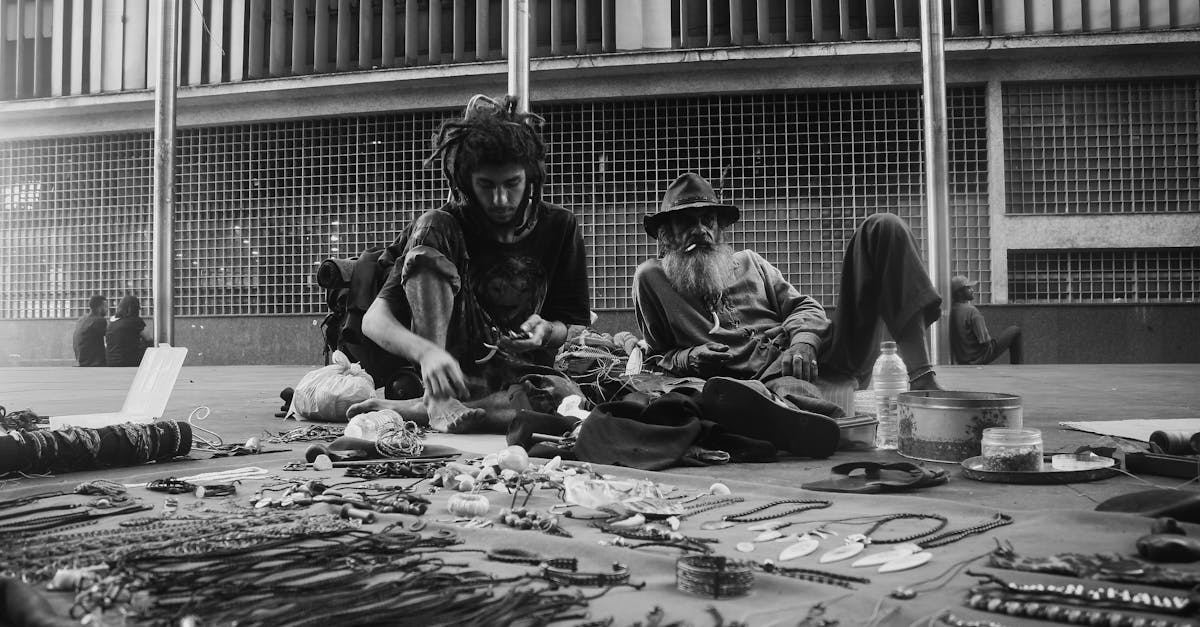

Antananarivo Merchants Face the Weight of Power Outages: A Daily Reality
In Antananarivo, Madagascar’s economic capital, business life takes place in a context where energy is becoming a rare and precious commodity, disrupting habits, weakening businesses, and increasing uncertainty. The regular disconnection of the power grid, which has become a daily conundrum, requires merchants to fundamentally revise their strategies. The situation, marked by a precarious situation for several years, unfolds through multiple challenges, both economic and social, and mobilizes ingenious local resilience. Between palpable weariness and bold innovations, a paradigm shift is taking place, demonstrating a collective commitment in the face of a phenomenon that is permanently hampering traditional commerce.

Power outages, while regular, are not simply deceptive; they are also disrupting the economic and social life of the Malagasy capital. Whether it’s the central market, small shops, or shopping centers like Espace Market, or luxury boutiques in the heart of the city, all are struggling to maintain their operations in the face of fluctuating energy consumption. The unexpected shutdown of operations leads to a decline in commercial activity, requiring adaptation methods ranging from the use of generators to changing opening hours.
📉 Decrease in turnover during power outages
- ⚠️ Deterioration in product quality, particularly in the Malagasy food and fresh produce sector
- 🔧 Need to invest in alternative, often costly, solutions
- 🤝 Strengthening local solidarity in the face of this energy crisis
- 📈 Emergence of new, innovative business practices
- Type of activity
| Main impact | Retailers’ response | Central Market |
|---|---|---|
| Sales interruption, product deterioration | Use of generators, shift to nighttime hours | Luxury Store |
| Loss of customers, withdrawal of investments | Installation of backup batteries, diversification of channels | Innovative Retailers |
| Limited effects, rapid adaptation | Online sales, workshops without electricity | Retailers’ inventive strategies in the face of energy shortages |
Faced with this desperate situation, local ingenuity has proven to be a valuable weapon. Retailers are not resigning themselves to their difficulties, but are actively seeking to overcome them through innovative solutions. Some have invested in backup generators, sometimes at prohibitive costs, to ensure business continuity. Others, more daring, are completely reorganizing their business models, integrating direct sales or exploring innovative forms of commerce such as local produce markets or craft shops. Diversifying offerings is becoming a necessity to retain customers, particularly in diverse sectors such as restaurants, the sale of artisanal jewelry, or the distribution of iconic Malagasy products in specialized boutiques.
At the same time, more and more retailers are taking steps to streamline their energy consumption by adopting electricity-saving practices and turning to sustainable energy solutions, such as the use of solar panels or long-life LED lamps. Resilience and creativity are amplified by collective will, with some establishments collaborating with local partners or NGOs to improve their energy autonomy.
🌞 Adoption of solar solutions to power points of sale
- 🛍️ Creation of a new concept: the artisanal boutique that promotes local products
- 💡 Implementation of energy-saving measures to reduce consumption
- 🚀 Development of a direct sales system to bypass dependence on the electricity grid
- 🤝 Cooperation between retailers to pool resources
- Discover our platform dedicated to retailers, offering innovative solutions to optimize your sales, manage your inventory, and build customer loyalty. Join a dynamic community to boost your business!

The energy challenges in Antananarivo are also serving as a lever for transforming retail. Initiatives are emerging, offering a new way of approaching commercial activity within a context marked by the need for sustainable energy. The opening of dedicated spaces, such as the
Espace Market, or the promotion of luxury stores that incorporate ecological principles, reflect this shift. The trend toward integrating high-tech solutions into store management, such as home automation or smart lighting systems, also reflects a paradigm shift.Innovative retailers are adopting a circular economy approach, particularly promoting local Malagasy and fair trade products. Direct sales, often based on short supply chains, are an effective response to energy supply and consumption issues.
Type of business
| Innovation implemented | Anticipated impact | Luxury store |
|---|---|---|
| Installation of smart lighting, use of renewable energy | Reduction of energy costs, strengthened ecological image | Antananarivo Bazaar |
| Creation of a market for local and sustainable products | Building customer loyalty, promoting Malagasy heritage | Innovative businesses |
| Direct sales via digital platforms, participatory workshops | Enhanced autonomy, new distribution channels | Cultural and economic influences on business habits in Antananarivo |
Madagascar’s socio-cultural context profoundly influences business practices, particularly in the capital. Attendance at markets like Zoma or the promotion of artisanal products, particularly in shops like
L’Histoire des rois de Madagascar , demonstrates the historical roots of local commerce. The reappropriation of traditional spaces and the promotion of local products are part of a broader national debate around food sovereignty and the preservation of ancestral know-how.New commercial trends are thus based not only on a desire for innovation but also on a strong cultural responsibility. The growth of the artisanal boutique segment and initiatives such as charity garage sales contribute to this dynamic, promoting Malagasy cultural richness while encouraging more responsible consumption.
🌺 Promoters of traditional and artisanal products
- 🌍 Commitment to direct sales and local consumption
- 📅 Revival of popular markets like Zoma
- 🔍 Promoting ancestral knowledge in products
- 🤲 Solidarity initiatives around the reinvention of local commerce
- Discover the fascinating world of merchants, where commerce comes to life and business opportunities flourish. Explore the strategies, trends, and innovations shaping today’s retail landscape.

The challenges of persistent drought, amplified by climate change, play a decisive role in the promotion of sustainable energy solutions in Antananarivo. Water scarcity and the degradation of the Malagasy ecosystem are accompanied by accelerated efforts for an energy transition. The installation of solar panels, mini-wind farm projects, and the development of markets for ecological products illustrate this desire to adapt the commercial sector to a changing environment. For some retailers, these solutions represent not only an environmental issue, but also an economic necessity. Their adoption would promote drastic cost reductions, secure energy supplies, and differentiate their market positioning.
Environmental Challenges
Business Responses
| Outlook | Prolonged Drought | Adoption of Sustainable Energy Solutions |
|---|---|---|
| Creation of Local Markets for Eco-Friendly Products | Ecosystem Degradation | Partnerships with Environmental NGOs |
| Implementation of Eco-Responsible Community Projects | Climate Change | Innovation in Water and Energy Management |
| Improving Business Resilience | Community Initiatives and Their Role in Business Rebuilding | Multiple associative, cooperative, and community initiatives are addressing the energy challenges in Antananarivo. With the goal of building a more local and resilient economy, these initiatives aim to foster a participatory dynamic that combines solidarity and innovation. Thus, projects such as solidarity markets, fair trade markets, and direct sales in renovated pop-up stores are contributing to a transformation of the commercial fabric, particularly in working-class neighborhoods. |
Through these initiatives, a new entrepreneurial culture is emerging, valuing local collaboration, the pooling of resources, and the promotion of artisanal expertise. Networking, training, and technical support are becoming essential levers to support this transition, illustrating the tenacity of a people in the face of electrical adversity. 🤝 Creation of solidarity merchant networks
🌱 Development of ecological and local markets
🛠️ Sustainable energy training workshops
- 💬 Platforms for exchange between local stakeholders
- 📚 Raising awareness of responsible consumption
- Frequently asked questions (FAQs) on the daily lives of merchants facing power outages in Antananarivo
- How are Antananarivo merchants adapting to power outages?
- The majority are investing in generators, adopting online sales, or reorganizing their hours to limit the impact.
What initiatives are promoting the energy transition in the retail sector?
- The implementation of solar solutions, energy-saving training, and the development of sustainable markets play a key role. Which sectors are most affected by the power outage?
- Food markets, local product boutiques, and luxury stores are particularly affected, forced to rethink their business models. Can traders truly achieve sustainable energy autonomy?
- Yes, by combining diversification of sources, technological innovations, and collaborations with specialized partners, autonomy can be envisaged. How do these challenges shape the future of commerce in Madagascar?
- By stimulating innovation, promoting local products, and the transition to a greener economy, these challenges can become sustainable opportunities. In summary, the adaptability of Antananarivo traders in the face of the energy challenge reflects their determination to build a more robust future, where innovation and solidarity are the watchwords. The energy crisis, while fraught with profound challenges, is also catalyzing bold initiatives that could ultimately transform the Malagasy economy as a whole.
- Source: www.rfi.fr
Découvrez notre guide complet — destinations, budget, visa, faune et conseils pratiques pour préparer votre voyage.

📖 Vous aimerez aussi

Transition à Madagascar : la société civile et la Génération Z face aux doutes sur le « Programme de la Refondation »
3 March 2026
Fermeture de l’aéroport de Dubaï : chaos et désarroi chez les voyageurs bloqués
2 March 2026


