
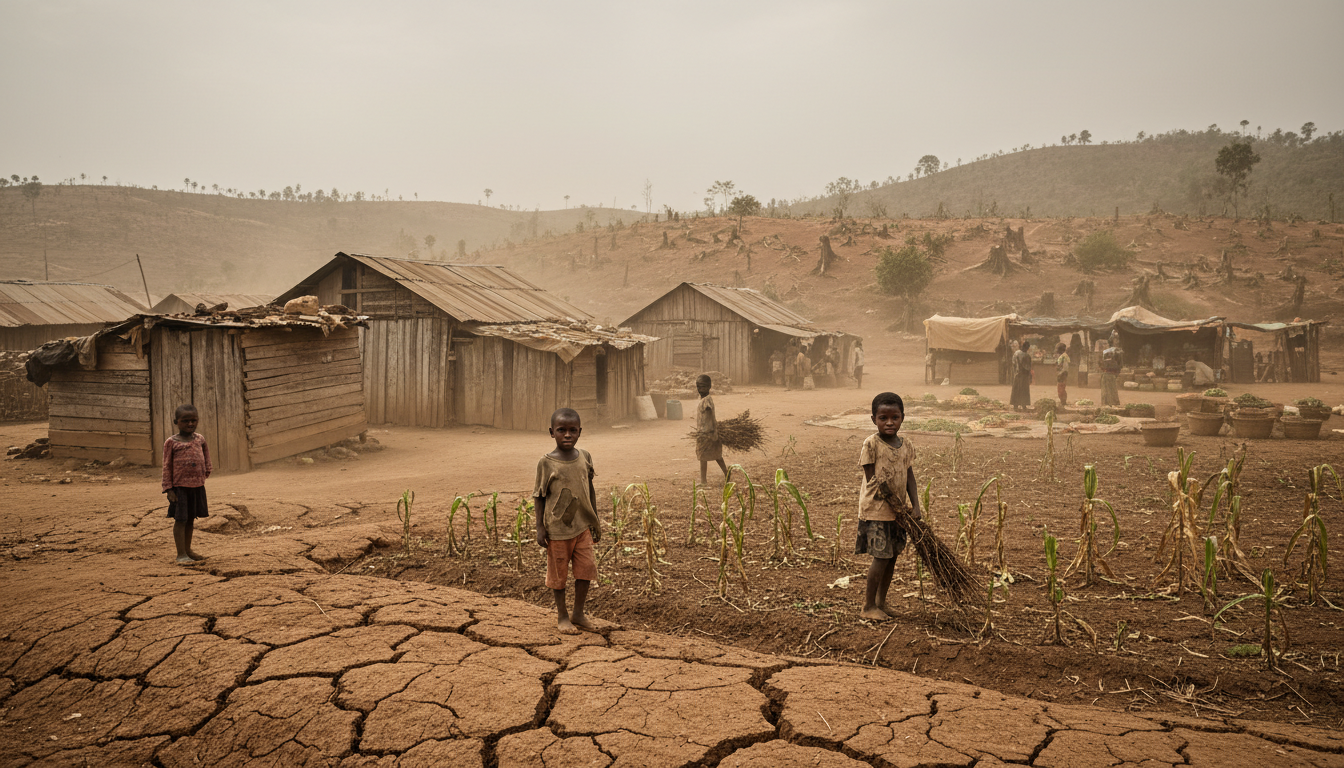

Madagascar, this fascinating island in the Indian Ocean, faces an economic and social reality that tests its resilience. While the spotlight often shines on its breathtaking landscapes and unique biodiversity, a persistent shadow hangs over the daily lives of its people: poverty. In the mid-2020s, reports are piling up, painting a complex picture where World Bank figures, notably the February 2024 assessment, continue to sound the alarm, highlighting that more than three-quarters of Malagasy people live below the poverty line. This enormous challenge is not just a matter of statistics; it translates into tangible social, economic, and environmental repercussions, shaping an uncertain future for millions of individuals. Urban areas, once seen as havens of opportunity, are seeing their own populations become impoverished at an alarming rate, while rural areas struggle with low agricultural yields and limited access to essential services. This situation creates a vicious cycle, where climate shocks, political instability, and economic underdevelopment feed off each other, making it increasingly difficult to escape poverty. Yet, there are ways to reverse this trend and build a new balance of growth and prosperity. In short: The realities of poverty in Madagascar 📈 National poverty affects more than 75% of the population, with a dramatic increase in urban areas.
📉 Urban poverty has jumped by 31.5%, particularly in secondary cities, signaling growing economic challenges.
- 🌾 Subsistence agriculture, while the backbone of employment, keeps 90% of its households in poverty.
- 👶 Child malnutrition and child labor perpetuate a cycle of intergenerational social exclusion. 🌪️ The
- Climate shocksand political instabilityexacerbate food insecurity and damage infrastructure.
- 💡 Massive investments in human capital and rural infrastructure are crucial for sustainable growth. Madagascar facing poverty: the figures of an alarming reality 📈When discussing poverty in Madagascar, it is crucial to understand the scale of the phenomenon. Recent data, particularly that published in February 2024 by the World Bank and which continues to resonate in 2026, is clear: a vast majority of the population lives in precarious conditions. Imagine that in 2022, no less than 75.2% of the national population was considered poor. This colossal proportion compels us to examine the underlying mechanisms. This figure reveals a worrying stagnation of poverty at the national level, but what is even more striking is the contrasting dynamic between rural and urban areas. Historically, poverty has always been more prevalent in rural Madagascar. In 2022, rural areas had a poverty rate of 79.9%, a figure that, while still high, decreased slightly over the decade from 2012 to 2022. This is a small step, but it is almost erased by the explosion of poverty in urban areas. Urban poverty saw a significant increase of 31.5% over the same period. Think about it for a moment: that’s a huge, game-changing leap. In some secondary cities, for example, the poverty rate jumped from 46% to 61%. It’s as if these centers, once symbols of hope and opportunity, have become traps for those seeking a better life there. Several factors can explain this rapid rise in urban poverty. We are witnessing a decline in economic opportunities, a deteriorating business environment, and a glaring lack of investment in vital sectors such as education, health, and urban infrastructure. Add to this unforeseen events with devastating consequences, such as the COVID-19 pandemic and the series of cyclones that struck the island, and you have a recipe for disaster. These shocks have led to massive job losses and a drastic drop in income for many urban households. Furthermore, the ongoing, albeit slow, migration from rural areas to cities, driven by extreme rural poverty, high fertility rates, and increased vulnerability to shocks, has further strained already limited urban resources. Curiously, this intensification of urban poverty has had the perverse effect of reducing national inequalities, with the Gini coefficient falling from 38.2 in 2012 to 36.7 in 2022. This does not mean that the situation is improving, but rather that the entire population is moving towards a more uniform level of insecurity, a downward leveling that is far from being a sign of progress.
- Understanding these dynamics is essential if we ever hope to reverse this trend and offer a more promising future to the Malagasy people. The challenge is immense, and it is not limited to statistics. It concerns lives, families, and children whose future is at stake every day. What are the manifestations of insecurity beyond income in Madagascar? 🌍 PovertyPoverty in Madagascar is not simply a matter of low income. It is a far more complex reality, a truly multidimensional poverty that hits the population hard. The deprivations are numerous and intertwined, explaining the persistence of widespread insecurity, both monetary and otherwise. The first observation is striking: a large part of the Malagasy population is mired in subsistence farming. It is a way of life, a daily struggle for survival, but one often characterized by very low productivity. In this vital sector, it is alarming to know that 90% of households are considered poor. Imagine the backbreaking work, the dependence on the vagaries of the climate, and yet, the absence of any real economic progress. This situation makes any attempt to escape poverty difficult, as yields are often insufficient to generate a surplus or allow for investment.
- Furthermore, the accumulation of human capital is disarmingly slow. This is a crucial factor preventing Malagasy people from accessing more productive and, consequently, better-paying jobs. Limited access to quality education is a major obstacle. Without a solid education and skills adapted to the modern job market, opportunities remain scarce. And when we look at the vulnerability of children, the picture is even bleaker. The rate of malnutrition is extremely high, with 39.8% of children suffering from stunted growth. This is a heartbreaking reality that jeopardizes their physical and cognitive development from a very young age. Added to this are problems such as child labor, early marriage, and teenage pregnancy. These factors are not simply isolated incidents; they constitute a vicious cycle, reinforcing the intergenerational transmission of poverty. Children today, deprived of a healthy childhood and a complete education, are highly likely to repeat their parents’ patterns, trapping Madagascar in a spiral that is difficult to break.
Finally, Madagascar is constantly at the mercy of external and climatic shocks. The country is regularly struck by natural disasters, from devastating cyclones to periods of intense drought, which ravage crops and infrastructure. These events have direct consequences on food prices and severely disrupt urban labor markets. They drastically reduce employment opportunities and sources of income for millions of people, exacerbating food insecurity and precarious living conditions. The political instability the country has experienced in the past, as can be seen in analyses from that time, does nothing to help build a solid foundation for the economy. The fragility of the environment, often linked to the overconsumption of natural resources by populations struggling to survive, also contributes to this downward spiral. It’s a veritable spiderweb where every thread is connected, making any intervention complex but all the more necessary to unravel these knots of precarity. For more information on cooperation, you can consult the page on the partnership between Madagascar and France. Invisible barriers: why does Madagascar remain trapped in structural poverty? 🚧 The data shows us one obvious thing:
poverty in Madagascar is not an isolated problem, but rather a tangle of structural barriers that lock the country into an endless cycle. One of the pillars of the Malagasy economy, agriculture, is a striking example. It represents 70% of total employment Which is enormous, isn’t it? Yet its share of total exports is only 37%, and its contribution to GDP amounts to 29%. This highlights low agricultural productivity, incapable of generating enough wealth to support overall development. Eight out of ten rural people are kept in poverty, not only because of these low yields, but also by a glaring lack of basic services. Consider the dilapidated roads that isolate communities, the lack of access to clean water or electricity, which hinders any form of local development. These infrastructural deficiencies create pockets of social exclusion, where people have little chance of seeing their situation improve. Human capital, this intangible but essential wealth, is also a weak link. Projections for a child born in Madagascar just before the COVID-19 pandemic were alarming: they would be 39% less productive than a child who had received a full education and enjoyed good health. This statistic demonstrates how fragile the foundations are. It is a direct consequence of limited access to education and an underfunded healthcare system. Furthermore, high fertility rates, especially among low-income households, contribute to this chronic poverty. Large families, often lacking sufficient resources, struggle to send all their children to school or provide them with the necessary care. This puts a heavy burden on households, hinders the educational attainment of young people, and further limits income-generating opportunities, creating a vicious cycle that is particularly difficult to break. But that’s not all. Madagascar is highly vulnerable to shocks. Climate disasters are a constant threat, destroying essential infrastructure and crops, leaving millions of people food insecure. Political instability, which has characterized recent periods, also disrupts productivity and discourages investment, plunging the country into uncertainty. The COVID-19 pandemic is a stark example: it has led to a 2.5% increase in poverty. Regions like the Great South are particularly affected by this combination of factors, where famine and resource scarcity are daily realities. Environmental degradation, often caused by unsustainable agricultural practices or deforestation for charcoal, further exacerbates this vulnerability, particularly in the face of soil erosion and desertification. It is a multifaceted challenge, where every aspect of life is impacted and solutions must be equally comprehensive and integrated to have a lasting impact.
Poverty Analysis in Madagascar Explore key data on poverty in Madagascar and its many facets. Use the filter to find specific information and sort the columns for better analysis. Reset Category Rural Areas / 2012 / Total Employment / National RateUrban Areas / 2022 / Total Exports / Impact
National / Increase / GDP / Consequence
No results found for your search.
Data based on information provided for the analysis of poverty in Madagascar. Towards a brighter horizon: concrete paths to break the cycle of poverty in Madagascar ✨ Despite the enormous challenges, there are real paths to break this vicious cycle of weak growth and poverty. high in Madagascar. Data on the drivers of poverty, whether urban or rural, highlight systemic obstacles, certainly, but they also point to levers for action. The country is trapped in a precarious balance, characterized by insufficient infrastructure and human capital to support genuine private sector growth and the creation of sustainable jobs. In this situation, poverty cannot be significantly reduced without establishing a new equilibrium, one that fosters broad and sustained growth, benefiting all Malagasy people.
So, how can this be achieved? First, it is essential to stimulate greater competition within the private sector and create a favorable business climate. This means simplifying procedures, ensuring transparency and legal certainty for investors, whether local or foreign. These are the kinds of measures that can create jobs and generate income for the population. At the same time, it is absolutely essential to improve connectivity, energy supply, and access to digital services. Think of the impact this would have on education, trade, and health, even in the most remote areas! These investments in modern infrastructure are an essential driver for economic development and for opening up new opportunities. Large-scale projects, like those supported by humanitarian initiatives in Madagascar, could make a real difference by addressing these crucial needs. Rural development is another key to reducing poverty.and, in turn, alleviate the pressure on urban labor markets. Improving rural infrastructure, particularly the often dilapidated road network, will be a crucial first step. Passable roads mean farmers can transport their produce to market more easily, children can attend school, and access to healthcare becomes a reality. It’s a silent revolution that can transform lives. Then there’s the investment in higher-quality human capital. This involves improving governance in the education and health sectors. Well-equipped schools, trained teachers, and functioning health centers are all pillars for enabling future generations to seek better opportunities, contribute to productivity growth, and escape poverty for good. It’s time to empower every Malagasy child to reach their full potential. Implementing genuine long-term strategies is therefore all the more important. We can look at the example of the aid plan for Madagascar, which aims to address these points. Strengthening resilience: the path to a sustainable future for Madagascar 🛡️ For Madagascar, the path to sustainable prosperity inevitably involves a massive strengthening of its resilience to the multiple shocks that affect it. Recent years have shown that the country can no longer afford to suffer climate disasters and political instability. or global crises without robust safety nets. It’s a matter of survival and dignity for its population. Building a greater capacity to absorb these shocks, recover more quickly, and even anticipate future challenges is absolutely essential. This requires effective early warning systems for cyclones and droughts, infrastructure designed to withstand them, and public policies that take into account the vulnerability of the most exposed communities. A fundamental aspect of this resilience is strengthening basic social safety nets. Imagine programs that provide direct support to the poorest families in times of crisis, emergency food aid during food insecurity, or crop loss insurance for farmers. These measures are not merely temporary crutches; they are the foundations of a more equitable and stable society. They prevent people from sinking even deeper into poverty and social exclusion with each setback. The experience of the COVID-19 pandemic, which saw poverty increase by 2.5%, is a stark reminder of the urgent need for these protection mechanisms. We must lay the foundations for a new balance of growth and prosperity, not only to avoid another “lost decade” for the Malagasy people, but also to offer them a future where economic growth is inclusive and social development is equitable. International collaboration plays a crucial role in this process. Strong, long-term partnerships that respect local priorities can provide essential technical and financial support. This is not just about aid, but about sharing expertise and transferring skills to enableMadagascar
to take control of its own destiny. Initiatives like those mentioned in the issue of solidarity for sustainable development are vital. By investing in youth, fostering innovation, and protecting the environment, Madagascar can transform its current challenges into opportunities for a fairer and more prosperous future. It is an ambitious vision, but it is the only way forward for an island that has so much to offer the world, and especially its own people. Clearly, efforts must be focused on sustainable solutions, far removed from piecemeal approaches that only treat the symptoms without addressing the deep roots of poverty. Why is urban poverty increasing so rapidly in Madagascar? 🌆 The alarming increase in urban poverty in Madagascar, including a 31.5% jump over the last decade, is multifactorial. It is attributed to a decline in economic opportunities, a deteriorating business environment, and a critical lack of investment in education, health, and urban infrastructure. External shocks, such as the COVID-19 pandemic and cyclones, have also exacerbated the situation by leading to job losses and income declines. Furthermore, ongoing migration from rural to urban areas, driven by widespread poverty and vulnerability in the countryside, has strained urban settlement capacities. How is child malnutrition linked to intergenerational poverty? 👶Child malnutrition, with a stunting rate of 39.8% among Malagasy children, is a major factor in the intergenerational transmission of poverty. A malnourished child’s physical and cognitive development is hampered, limiting their chances of academic success and, later, their opportunities for productive and well-paid employment. Coupled with problems such as child labor, early marriage, and teenage pregnancy, malnutrition creates a cycle where successive generations struggle to escape poverty due to a lack of sufficient human capital and good health from a young age.
What structural obstacles keep Madagascar mired in poverty? 🏗️ Several structural obstacles hinder Madagascar’s development. Low agricultural productivity, which employs 70% of the population but contributes little to exports and GDP, is a major constraint. The lack of basic services in rural areas, such as dilapidated roads and limited access to water and energy, isolates communities and hinders economic activity. Furthermore, low human capital, resulting from limited access to education and quality healthcare, reduces opportunities for better-paying jobs. Finally, high vulnerability to climate shocks and political instability disrupt the economy and destroy infrastructure, reinforcing the vicious cycle of poverty. What solutions are proposed to break the cycle of poverty in Madagascar? 💡 To break the cycle of poverty, several approaches are being considered. Establishing a new equilibrium that fosters broad and sustained economic growth is crucial, particularly through increased private sector competition and a favorable business climate. Improving essential infrastructure such as connectivity, energy, and access to digital services is also vital. Rural development, through improved road networks and access to basic services, is essential to reducing rural poverty and easing pressure on cities. Finally, significant investments in human capital (education and health) and strengthening social safety nets are necessary to build lasting resilience to shocks.
Découvrez notre guide complet — destinations, budget, visa, faune et conseils pratiques pour préparer votre voyage.

📖 Vous aimerez aussi

Transition à Madagascar : la société civile et la Génération Z face aux doutes sur le « Programme de la Refondation »
3 March 2026
Fermeture de l’aéroport de Dubaï : chaos et désarroi chez les voyageurs bloqués
2 March 2026


