
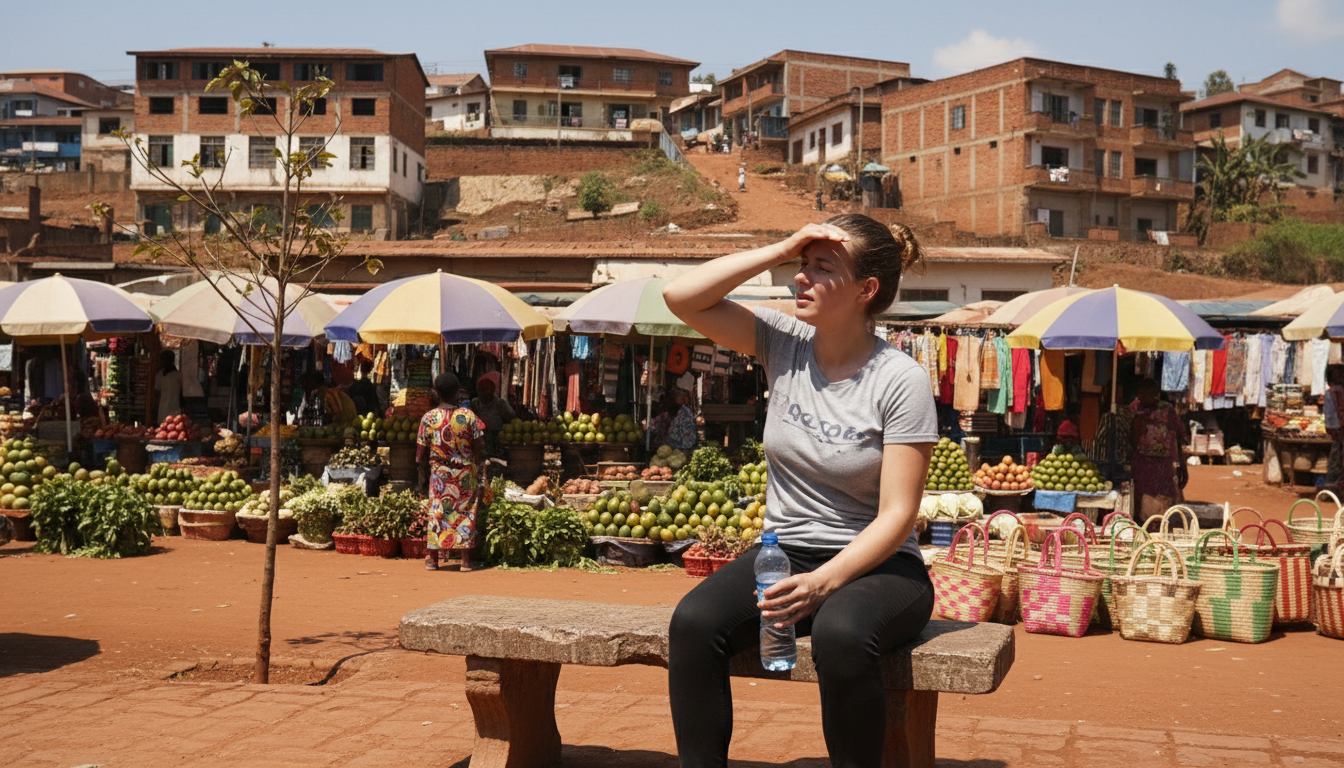

In the constant hustle and bustle of Antananarivo, a nagging question weighs heavily on the shoulders of its inhabitants, growing heavier each day: should they spend their precious free time searching for water or grant themselves a well-deserved rest to face the next day? This dilemma is not a mere play on words, but the harsh reality of a Malagasy capital where the shortage of drinking water has transformed existence into an obstacle course. Throughout the city, yellow jerrycans, emblems of precarious survival, line up by the hundreds, silent witnesses to shortened nights and days of toil. From 3 a.m., sometimes even earlier, lines form in the hope of obtaining a few liters of the precious liquid, transforming dawn into a marathon for hydration. This daily struggle not only exhausts bodies; it also erodes the spirit, deepening inequalities and threatening public health. Faced with this worsening situation, a dynamic community is searching for answers, navigating between resignation and unwavering resilience.
- In short:
- 💧 Water shortages have become a daily reality in Antananarivo, with queues forming at dawn to obtain water.
- 🤯 The dilemma between fetching water and resting weighs heavily on the population, impacting well-being and productivity.
- 🦠 Alarming health risks loom over the capital, particularly the proliferation of diseases linked to poor hygiene.
⚖️ A social divide is widening: those with the means escape the crisis, while others suffer the hardships. 🗓️ The authorities are under pressure to find lasting solutions, but temporary measures are struggling to alleviate the suffering of an exhausted population. 🌱 The resilience of Antananarivo’s residents is remarkable, but tensions are rising in the face of a failing climate and infrastructure. Antananarivo, the relentless quest for blue gold: Daily life under high pressureIn Antananarivo, the sight of yellow jerrycans lined up along the streets has become as familiar as the morning traffic jams. These containers, by the thousands, tell the story of a city that rises before the sun, not to work, but to hydrate itself. The scene is the same whether you’re in the bustling neighborhoods or the more remote areas: endless lines form, often as early as 3 a.m., around the few remaining functioning water points. We see entire families, from young to old, each with their jerrycans, patiently waiting for the tap to dispense a few drops. It’s an exhausting ballet that plays out every night, a never-ending marathon to satisfy a need as fundamental as it is vital. Water, which should be an abundant resource, has become a luxury in Antananarivo, a rare commodity hunted down with incredible determination. The stress is palpable: the worry of not having enough water to meet basic needs haunts the inhabitants. This raises the thorny dilemma: should they sacrifice precious rest to ensure their family’s hydration, or succumb to accumulated fatigue at the risk of running out of this vital liquid? Madagascar’s climate, marked by increasingly intense dry seasons and variable rainfall patterns, only exacerbates the situation. Groundwater levels are struggling to replenish, and the city’s aging infrastructure can no longer cope with the growing demand of a constantly expanding population. Water management It’s a colossal challenge, where each day brings its share of new difficulties. For those who can afford it, paying someone to stand in line or getting water from Mantasoa via tanker trucks becomes a solution—an expensive one, certainly, but one that allows them to gain hours of sleep. But for the vast majority of Antananarivo’s residents, this is not an option. They must persevere, day after day, night after night, in this exhausting quest. This situation not only creates physical and mental exhaustion but also exacerbates inequalities, widening the gap between those who can buy their peace of mind and those condemned to a perpetual struggle. Antananarivo, the city of a thousand, is collapsing, literally parched, and with it, the well-being of its inhabitants. Every liter of water is a victory, every drop a reminder of the fragility of daily life. When access to water dictates an entire day in Antananarivo
The impact of this shortage isn’t limited to the early hours of the day. It dictates the entire rhythm of life. Washing, doing the dishes, cooking—all these simple tasks elsewhere become here actions planned with military precision. We see women forced to do minimal laundry, reusing the rinse water for other, less crucial tasks. Children, often responsible for this morning chore, arrive at school already marked by fatigue, affecting their concentration and learning ability. How can you concentrate on your studies when you’ve spent half the night waiting for a trickle of water? Small shopkeepers and artisans all see their productivity plummet, their energy squandered in this struggle for hydration. Simply going to work becomes an additional challenge after braving the cold and the night for jerrycans of water. The drought Running dry taps are also drying up the local economy, slowing down activities that depend on a stable supply. The repercussions of this situation extend beyond temporary inconveniences, profoundly affecting the social and economic fabric of the capital. https://www.youtube.com/watch?v=ST0xG529J_g The alarming repercussions: health and inequalities exacerbated in Antananarivo The water shortage in Antananarivo is much more than a simple inconvenience; it is a direct and growing threat to public health and social cohesion in the capital. First and foremost, the health risks are alarming. The lack of clean water directly affects personal hygiene. Washing hands, an essential preventative measure against infections, becomes a luxury that many can no longer afford. In this context, the spread of waterborne diseases is inevitable and worrying. Diseases such as cholera, acute diarrhea, dysentery, typhoid, and hepatitis A and E find fertile ground to spread. We are witnessing a resurgence of these illnesses, severely straining an already fragile healthcare system. The most vulnerable—young children, the elderly, and those with weakened immune systems—are on the front lines of these threats. Imagine a city where people hesitate to drink tap water, even after obtaining it with difficulty, illustrating the extent of the problem. The quality of available water is often questionable, reinforcing the cycle of illness and fatigue from recurring infections. This health insecurity generates additional stress, adding another layer of anxiety to an already difficult daily life. To learn more about the risks associated with food and hygiene, it is helpful to consult information on food poisoning in Madagascar. These problems are often exacerbated by the lack of clean water. The dilemma of hydration then takes on a dramatic turn, with each glass of water consumed becoming an act of faith.
Beyond the health issues, the water crisis in Antananarivo starkly exacerbates an already gaping social divide. Access to water has become a blatant social marker. Those who can afford it equip themselves with private wells, install sophisticated filtration systems, or buy bottled water. Some do not hesitate to have tanker trucks brought in from Mantasoa, a nearby lake, transforming the shortage into a commercial opportunity for a few. These solutions, although costly, allow them to avoid the endless queues and preserve their rest. But for the majority of Antananarivo’s residents, this reality is unattainable. The poorest are forced to continue their daily quest, yellow jerrycans in hand, bearing the brunt of this crisis. This situation creates a profound sense of injustice, fueling anger and frustration. We see entire neighborhoods mobilizing to demand concrete action from the authorities, but responses are slow in coming, or are merely temporary fixes. Inequality is no longer measured solely in terms of income, but also in access to the most basic resources. Travel and adventures, like those offered in Madagascar for seniors, seem far removed from the daily concerns of those struggling for their water supply. This disparity threatens the social cohesion of the capital, making the construction of a shared future more complex. Collective well-being is sacrificed on the altar of scarcity. Inequality in the face of vital resources: Antananarivo at two speeds.
The city of Antananarivo is experiencing a stark contrast in conditions. On one hand, a minority enjoys relatively easy access to water, protecting their health and comfort. On the other, a majority suffers, facing daily scarcity and its consequences. This situation is not only economic; it is also geographical. Some neighborhoods are systematically better served than others, creating “areas of abundance” and “areas of drought” within the capital itself. Low-income families, often clustered in outlying neighborhoods, are the first to find their taps dry. This unequal distribution of the resource only exacerbates tensions. We hear poignant accounts from parents who describe how their children are forced to miss school to fetch water, or how they must choose between washing clothes and preparing meals. The lack of water also affects the ability to cultivate family vegetable gardens, which are essential for the food supply and survival of many households. The feeling of abandonment is strong, and resilience, although present, is beginning to crumble under the weight of repeated hardships. The water crisis then becomes a magnifying glass for the structural problems and deep inequalities that plague Malagasy society, and the dilemma between staying hydrated and resting transforms into a question of survival and dignity. https://www.youtube.com/watch?v=_1mYYDZL3SkAntananarivo: When Thirst Challenges Urban Resilience and Local SolutionsThe question of how Antananarivo arrived at this situation of water scarcity, in a country renowned for its natural resources, now haunts people’s minds. The answer is multifactorial, combining challenges related to climate, rapid urbanization, and water management infrastructure. outdated. On the one hand, global climate change is manifesting itself in more frequent and intense episodes of drought, reducing surface water reserves and groundwater levels. When rainfall does occur, it is often short and intense, causing flooding rather than effectively replenishing aquifers. On the other hand, Antananarivo has experienced exponential population growth in recent decades, without the drinking water distribution infrastructure keeping pace. Pipes are outdated, leaks are ubiquitous, and treatment capacity is insufficient. It’s a vicious cycle where demand far exceeds supply, and network losses are colossal. The city of a thousand, with its hills and valleys, also complicates distribution, requiring costly and energy-intensive pumping and storage systems. The direct consequence of this equation is a population struggling for every drop, exhausted and under constant stress. The question of rest
hydration
. We understand that for many, daily worries overshadow other concerns, such as the need to travel or take time for oneself, reflections sometimes necessary to avoid the stress and hangover of an overworked life. Faced with this crisis, the Malagasy authorities are under intense pressure to provide rapid and lasting solutions. Emergency measures, such as deploying water tankers to the hardest-hit neighborhoods, offer temporary relief, a fleeting respite. However, these solutions do not address the root of the problem. They are costly, logistically complex, and do not guarantee equitable and permanent access for all. The construction of new water reservoirs or the installation of compact treatment units are mentioned as long-term solutions, but their implementation is slow and requires massive investment. Meanwhile, the economy is faltering, poverty is increasing, and young people are either emigrating or rebelling, as evidenced by some analyses of the situation in Madagascar. The well-being of the population is suffering, and collective fatigue threatens social stability. The residents are demonstrating admirable resilience, adapting to the situation as best they can, but the recent history of other cities facing water shortages shows that, without swift and effective intervention, social tensions can erupt and turn into conflict. This is an urgent call for more strategic, inclusive, and environmentally responsible water management, so that today’s dilemma does not become tomorrow’s norm. The city needs to rethink its relationship with water, like other countries exploring solutions for a sustainable future, as evidenced by the search for a new harmony with nature in the Caribbean. In Antananarivo: Hydration vs. RestDiscover and compare the options available in Antananarivo for quenching your thirst or recharging your batteries.Whether you’re looking for a refreshing drink or a well-deserved break, this interactive chart will help you make the best choice. Show All
Hydration Rest Sort by NameName (A-Z) Name (Z-A)Category (A-Z) Cost (Cheapest) Cost (More Expensive)
Availability (Easy)
Option CategoryEstimated Cost Availability Main Benefit
Approx. Impact
Cost and time estimates are indicative and may vary. Icons are used to visually illustrate the options.The daily dilemma: Vital hydration or restorative rest in Antananarivo? The heart of the problem in Antananarivo lies in this agonizing choice faced by every household: prioritize the hydration necessary for survival or allow oneself the rest essential to cope. It’s a real logistical and emotional conundrum. Imagine, after a long day at work, having to spend hours carrying water jugs, or waking up in the middle of the night to stand in line. This chronic fatigue has direct consequences on physical and mental health. The body, constantly under strain, never fully recovers. Headaches, muscle pain, and general exhaustion become the norm. The stress linked to the uncertainty of the water supply adds to the pressure of daily life. How can you be productive at work, attentive in class, or simply happy at home when you are perpetually exhausted and anxious? Overall well-being is seriously compromised. We see this reality in the eyes of the residents, in their postures, in their resigned silence. The dilemma is not abstract; it materializes in every gesture, every decision, every sacrifice. The capital, gripped by drought and a failing water management system, forces its inhabitants to make choices no one should have to make. The quest for basic necessities overshadows all other aspirations, transforming life into a relentless struggle. This situation breeds a form of collective resignation, but also remarkable resilience. The people of Antananarivo have developed coping strategies, ingenious makeshift solutions to optimize every drop of water. But how long can this resilience last? The tension is palpable. We see frustrations mounting, and discontent simmering. Nights are punctuated not only by the search for water, but also by the rumblings of an angry population, exasperated by the contempt and inaction of the authorities. The political climate, like the weather, seems to be heating up dangerously. The choice between staying hydrated and resting is not just a personal one; it has social and potentially political repercussions. A weakened and angry population is a vulnerable population. It is urgent to provide structural solutions to preserve social stability and the well-being of the inhabitants. The time for temporary solutions is over; Concrete actions are needed to resolve this dilemma and for every resident of Antananarivo to regain a dignified life balance. This is a fight for dignity, for health, and for the future of an entire capital city. Efforts focused on safety and comfort, such as advice on car seats while traveling, seem outdated compared to these vital concerns. Vital Priorities: Choosing Between Health and Energy in Antananarivo The choice between hydration and rest is not insignificant for the human body. A lack of water leads to dehydration, which manifests as fatigue, headaches, and decreased cognitive function. A lack of rest, on the other hand, weakens the immune system, increases stress levels, and makes one more vulnerable to illness. The residents of Antananarivo face this double bind. They must choose which aspect of their well-being to prioritize.sacrificing, often at the expense of both. This vicious cycle weakens the population at every level. We observe reduced work capacity, declining school performance among children, and a diminished zest for life. This situation creates a profound sense of powerlessness. For many, the day never truly ends, as the night is devoted to the next water-fetching chore. It is a life in survival mode, where every resource, every minute of sleep, is counted and preciously guarded.Water management is not just about infrastructure; it directly impacts quality of life, public health, and human dignity. It is imperative that the solutions implemented be comprehensive and integrate the human and social impact of this crisis. The people of Antananarivo deserve to no longer have to face this unbearable dilection. Here are some of the daily consequences of this dilemma:
😩 Physical and mental exhaustion: Long waits and carrying jerrycans generate constant fatigue. 📉 Decreased productivity: Fatigue impacts the ability to work and learn. 🤒 Increased illness: Lack of sleep weakens the immune system, making people more vulnerable to infections due to a lack of clean water. 😡
Strained relationships, impatience, withdrawal.
Difficulty maintaining social connections, heightened tensions.Paths to the future: Reinventing the water future of Madagascar’s capital Faced with the scale of the water crisis in Antananarivo, it is imperative to look beyond emergency measures and consider sustainable solutions capable of transforming the daily lives of residents and ending the persistent dilemma between hydration and rest. Water management must be rethought holistically, integrating both the improvement of existing infrastructure and the exploration of new approaches. First, a massive investment in modernizing the distribution network is essential. Repairing leaks, replacing aging pipes, and extending coverage to underserved neighborhoods would be a giant leap forward. A compact water treatment unit would increase production capacity and ensure better quality of the distributed water. These long-term projects require substantial funding and strong political will, but they are key to a more secure future for the capital. The climate The climate is changing, and with it, we must adapt our systems. Large-scale rainwater harvesting solutions, coupled with larger storage infrastructure such as new reservoirs, could also play a crucial role, especially during the often underutilized rainy seasons. Such initiatives could draw inspiration from how some family destinations, like those explored on a road trip through the Northeast, adapt to their environment. Beyond infrastructure, an integrated approach to water management also involves community awareness and engagement. Educating people about good water conservation practices and hygiene is fundamental to optimizing available resources and preventing health risks. Local micro-project programs, where communities are directly involved in the maintenance and management of their water points, can strengthen their sense of ownership and effectiveness. We have seen the incredible resilience of the people of Antananarivo; it is time to capitalize on this strength. The use of innovative technologies, such as remote monitoring of water levels or low-cost local purification systems, could also offer solutions tailored to local realities. Finally, collaboration between the government, the private sector, and non-governmental organizations is essential to mobilize the necessary resources and coordinate efforts. Drought must not be seen as inevitable. The challenge is to transform this crisis into an opportunity to build a more resilient city, where the well-being of its inhabitants is no longer sacrificed for the sake of hydration. Antananarivo needs a fresh start, a clear commitment to the future, so that rest becomes a right again and not an unattainable luxury, and that fatigue is overcome. disappearing from faces. The capital deserves a long-term vision, a strategy that will allow every citizen to live with dignity. It is by looking towards a future of cooperation and innovation that we can finally resolve this dilemma and offer a better quality of life to the inhabitants of Antananarivo. Commitments for a sustainable city: Antananarivo facing its responsibilities The urgency of a sustainable solution for Antananarivo is not limited to technical considerations; it is also a matter of responsibility and equity. The authorities must fully grasp the situation and commit resolutely to transparent and efficient water management. This implies not only investments, but also strong governance, capable of fighting corruption and ensuring an equitable distribution of the resource. It is time to listen to the voice of the people, to integrate their experiences and needs into the development of public policies. We believe that dialogue is the first step towards reconstruction. Preventive measures, such as watershed management and the protection of water sources, are crucial to ensuring a sustainable water supply in the face of a changing climate. Without concerted action and commitment at all levels, the dilemma of hydration and rest will continue to plague the capital, undermining the morale and health of its inhabitants. Antananarivo has the opportunity to become a model of resilience in the face of climate and urban challenges, but this requires bold decisions and a long-term vision, where the well-being of all is the top priority. This is a call to action, a call to hope that fatigue and stress will no longer be the daily lot of Antananarivo’s residents. Why is the water shortage so severe in Antananarivo? Water scarcity is due to a combination of factors: climate change (more intense droughts), rapid population growth, and aging and inadequate water distribution infrastructure. The lack of new facilities and water loss through leaks also contribute to this major crisis. What are the main health risks associated with water scarcity? Water scarcity affects basic hygiene, promoting the spread of waterborne diseases such as cholera, diarrhea, typhoid, and hepatitis. The already vulnerable population is more exposed to infections due to the inability to wash hands or access safe drinking water. How does the dilemma between hydration and rest affect residents? Residents often have to choose between dedicating precious hours of sleep to searching for water (sometimes as early as 3 a.m.) or sacrificing their hydration. This situation leads to chronic fatigue, stress, decreased productivity at work and school, and a general decline in physical and mental well-being.
What solutions are being considered to resolve this crisis? Short-term solutions include the use of water tankers. Long-term solutions involve modernizing the distribution network, building new reservoirs, installing compact water treatment units, and improving overall resource management, including rainwater harvesting and community outreach. How does the water crisis exacerbate social inequalities? Access to water has become a marker of social status. Those who can afford it can install private wells, filtration systems, or buy bottled water, thus avoiding hardship. The poorest, on the other hand, are forced to queue for hours, exacerbating the social divide and creating a profound sense of injustice.
Découvrez notre guide complet — destinations, budget, visa, faune et conseils pratiques pour préparer votre voyage.

📖 Vous aimerez aussi

Transition à Madagascar : la société civile et la Génération Z face aux doutes sur le « Programme de la Refondation »
3 March 2026
Fermeture de l’aéroport de Dubaï : chaos et désarroi chez les voyageurs bloqués
2 March 2026


