

In 2026, a context marked by persistent political instability paints a complex picture where the line between legality and the usurpation of power remains blurred. In several nations, notably Madagascar, recent events have highlighted the skillful manipulation of legal appearances to conceal attempted coups, casting a shadow over the true nature of popular sovereignty. The swearing-in ceremony of a new head of state, orchestrated before the High Constitutional Court (HCC), illustrates the ambiguity staged by those seeking to preserve the apparent stability of their regime while avoiding the international stigma that a coup d’état invariably entails. The staging, involving political representatives, the diplomatic corps, as well as figures from the youth and the government, seems to demonstrate an effort to circumvent democratic rules in a quest for a fabricated legitimacy. The question remains: does this short-term victory for those who manipulate the constitutional order constitute a genuine step toward stability or, on the contrary, a prelude to an even deeper crisis?

The staging of constitutional legality versus the realities on the ground.
In this context, the mere formality of reinstating power through a simple act by the High Constitutional Court (HCC), sometimes described as an acrobatic decision, raises serious questions about the true scope of legitimacy. Historically, the Constitution should serve as the indisputable foundation for the transfer of power, but in 2026, it has become a flexible tool in the hands of those who wish to mask genuine dissent or an irregular seizure of power. Re-election or the reconstitution of the process, even if it takes place within a legal framework, does not necessarily guarantee moral or political legitimacy. The staging of this legal conformity, often perceived as an argument to neutralize criticism, masks a reality where force and manipulation play a dominant role. The tacit re-legitimization of contested leaders, through a judicial charade, fuels growing suspicion about the sincerity of the democratic process. The fundamental question then becomes: how far can we tolerate this institutional charade without irreparably eroding trust in democracy?
https://www.youtube.com/watch?v=lg6Qq05ixgc
Power dynamics and resistance to disguised coups d’état
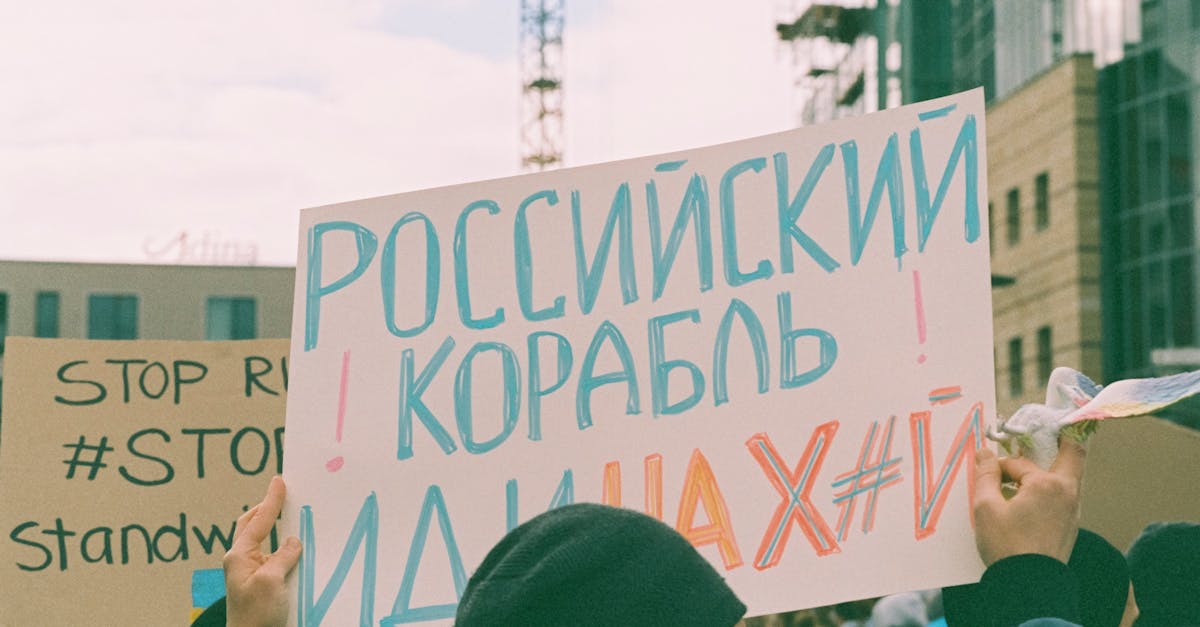
Beyond appearances, resistance to these strategies is manifesting itself in several spheres of society, notably through the mobilization of those aspiring to change. Young people, symbolized by Generation Z, as well as certain civic groups, are attempting to dismantle these strategies by denouncing the slide towards authoritarianism. However, resistance often proves fragmented or marginalized in the face of state apparatuses, whose effectiveness remains guaranteed by the skillful use of legislation and repression. On the ground, popular protest, although visible through demonstrations or public statements, sometimes fails to reverse the trend due to a tacit consensus within the circle of power. The logic of circumventing a constitutional coup masks an attempt to preserve power that some analysts describe as a veritable legal coup, making the stability so dear to all a fragile illusion. Will the resistance be able to overcome this insidious shadow to preserve freedom?
Legitimation Strategies and the Risks of Democratic DeclineIn this political charade, the legitimation strategy relies primarily on ideological mobilization and the manipulation of national discourse. The rhetoric of “the people’s return to power” or “historical responsibility” serves to justify actions that generally contradict the fundamental principles of democracy. This distortion of political language aims to circumvent international sanctions, which typically punish overt coups d’état.

Our societies thus risk becoming mired in a cycle where formal legality becomes an empty shell, eroding trust in the electoral process. The fragility of institutions could therefore lead to an inevitable democratic decline, as the line between legality and illegitimacy becomes increasingly blurred, undermining lasting political stability.
A coup d’état is a brutal and often illegal seizure of political power, generally carried out by a small group within a government or the military.
| International Consequences and the Dissonance of Regimes Under Tension | At the international level, classifying certain seizures of power as coups d’état significantly impacts the recognition of the regimes involved. Labeling is a strategic weapon, and the terms “legitimate attempt” or “internal crisis” often serve to mask reality. The distinction between a democratically validated change of power and an authoritarian seizure of power under a constitutional guise is becoming increasingly tenuous, particularly when external actors prioritize stability over their own vision of rights and freedoms. The dissonance is evident in the stance of many states, which, while openly denouncing these disguised attempts, continue to maintain diplomatic and economic relations. The international community is often faced with a difficult equation: preserving stability or defending democracy in the face of these pretenses, a dilemma that undermines the credibility of the world order. | |
|---|---|---|
| Aspect | Description | |
| Impact | International recognition | Effect of legal qualifications versus diplomatic denials |
| Credibility at stake | Economic sanctions | Measures applied or deferred depending on the label |
Stability or destabilization
Diplomatic reactionsSpoken or unspoken, depending on the context and the qualification Influence on legitimacy

regulation of foreign investment
and the monitoring of geopolitical issues. Stability must never take precedence over justice and democracy. Recent history teaches us that at every stage where popular sovereignty is disregarded, often disastrous consequences ensue. Discover the history, causes, and consequences of a coup d’état, a sudden and often violent overthrow of the existing power structure.
The Real Stakes of Resisting Constitutional Manipulation
Those involved in the resistance face several challenges: firstly, the need for massive mobilization to preserve the very essence of democracy; secondly, vigilance to thwart strategies of circumvention. The classification of an act as a coup d’état must remain a benchmark for the collective conscience, even if, in many cases, it is distorted by the elites. The
Warning
The key to combating this drift lies in recognizing that every circumvention process is likely to irreversibly erode the democratic structure. The resilience of citizens, institutions, and international organizations is essential for safeguarding a fragile balance that, in the face of sudden instability, can tip toward a disguised authoritarian regime. Vigilance thus becomes a civic duty, to prevent freedom from being truly swallowed up by the persistent shadow of political ambiguity.
Lessons to be learned for preserving democracy in a context of shadow and manipulation: A careful reading of past and present events reveals that democracy cannot be transformed into an invading fortress without a firm collective commitment. Vigilance must be based on transparency, accountability, and strict adherence to electoral processes. The international community, in partnership with civil society, must establish increasingly effective monitoring mechanisms capable of detecting early any attempt at manipulation or the disguise of a coup d’état. The strategy must also include raising awareness of the importance of popular sovereignty and denouncing populist and demagogic rhetoric that serves to mask strategies of domination. Prevention is the best weapon against a slide toward authoritarianism, and history teaches us that anticipating the threat often prevents chaos.
Frequently Asked Questions
What is the difference between a revolution and a coup d’état?
🔗 Sources & références
Pour aller plus loin, consultez les sources citées dans cet article :
Découvrez notre guide complet — destinations, budget, visa, faune et conseils pratiques pour préparer votre voyage.

📖 Vous aimerez aussi

Transition à Madagascar : la société civile et la Génération Z face aux doutes sur le « Programme de la Refondation »
3 March 2026
Fermeture de l’aéroport de Dubaï : chaos et désarroi chez les voyageurs bloqués
2 March 2026


