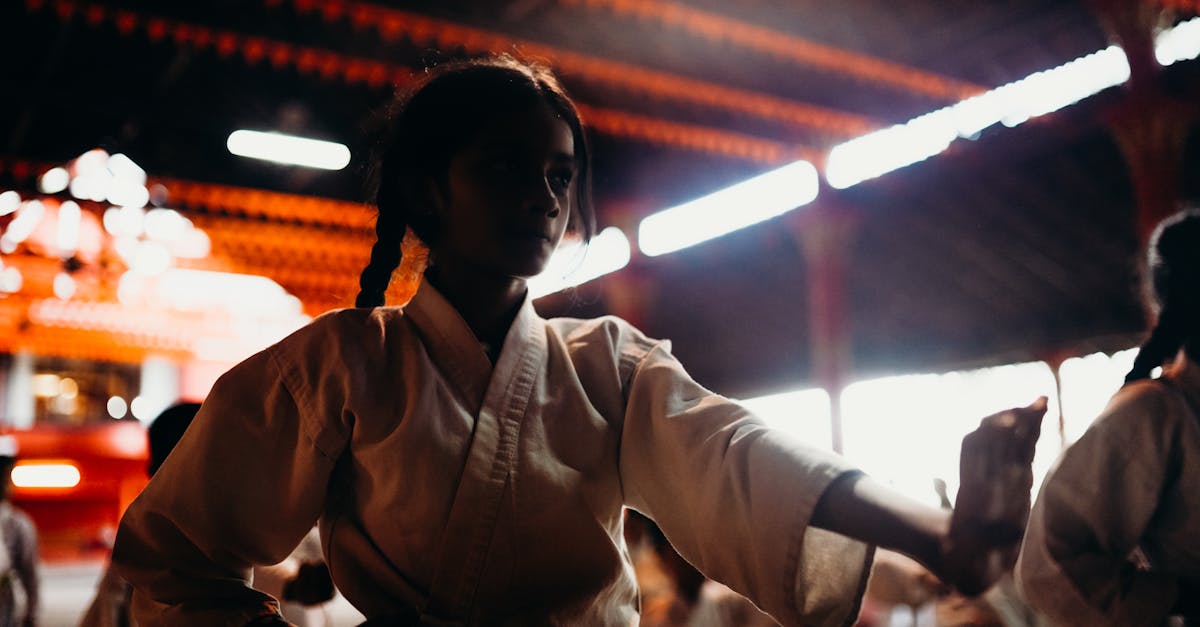

An in-depth analysis of the Tsokami kata performed by Rajoelina, holder of the 6th dan: a dazzling demonstration of mastery in the martial art.
Martial arts performances can often be perceived as a simple succession of movements, but when discussing a kata demonstration, particularly the Tsokami kata, it becomes clear that it represents a true quest for perfection, harmony, and discipline. In October 2026, an exceptional event captivated martial arts enthusiasts in Madagascar: the presentation by Andry Rajoelina, President of the Republic and seasoned practitioner, of his Tsokami kata, as a 6th dan in karate. This performance not only crystallized his technical skills but also highlighted the profound evolution of his mastery of karate, a discipline he has practiced with exemplary rigor for many years.
The Tsokami kata, in its apparent simplicity, demands rigorous discipline, precise body control, and absolute concentration. Rajoelina’s demonstration was not merely a formal execution; it embodied a manifesto of commitment and a perfect understanding of each movement. This performance sparked numerous debates regarding the interpretation, technique, and symbolic depth of the kata in the current context of Madagascar’s political and social crises, highlighting the inner strength needed to overcome adversity. Through this performance, Rajoelina seemed to want to convey a message: mastery in martial arts, mirroring national resilience, implies a constant pursuit of control and harmony in the face of global turmoil.
The fundamentals of the Tsokami kata: a pillar of Japanese martial arts.
In karate terminology, the tsokami kata refers to a predefined form, an articulated sequence of movements designed to develop technique, strengthen concentration, and perpetuate traditional heritage. Its practice demands precise instruction, rigorous technical accuracy, and a strong sense of body awareness. During his demonstration in 2026, Rajoelina illustrated how mastery of this form relies on the ability to synchronize movement, breath, and mind.
This kata is often considered the ultimate exercise for any high-level practitioner. It incorporates fundamental techniques such as punches, blocks, and rapid movement sequences, as well as a strategic and spiritual dimension essential to the discipline. Rajoelina’s performance revealed not only his physical skills but also his ability to integrate these intangible aspects into a fluid and precise execution.
For example, his body positioning, the balance in each movement, the fluidity of the sequences, all while maintaining a posture of great serenity, illustrates the quintessence of Japanese martial arts. This mastery testifies to years of regular practice, but also to an exceptional mental discipline, making karate a vehicle for personal development and strengthening identity. The hallmark of this performance is not only technical: it is also a cultural statement, a transmission of ancestral values to a new generation in the midst of change.
The emblematic techniques of the Tsokami kata: a synthesis of power and finesse
The technique in the Tsokami kata is distinguished by a harmonious combination of power, speed, and finesse. When performing the form, Rajoelina demonstrated perfect mastery of several fundamental techniques, which require extreme concentration and flawless precision. The fluidity of movement, the stable posture, and the impeccable timing of each strike illustrate a high level of skill.
Among the techniques observed, the rapid punches such as the uchi uke, the effective blocks in kamae (guard position), and the precise execution of the mawashi geri (roundhouse kick) stand out. The ability to modulate force to maintain a harmony between power and grace is essential for the execution of a kata of the Tsokami level. In this respect, the Malagasy president’s performance embodies an ideal that every serious practitioner should aspire to achieve. It is not simply a mechanical sequence, but a martial dance that demands feeling each movement, anticipating both internal and external adversaries. The ability to master these techniques helps forge a strong identity, self-confidence, and iron discipline, essential for facing daily challenges, such as the political and economic crisis Madagascar is experiencing in 2026. Thus, the kata becomes a symbol of balance and resilience, in tune with the country’s socio-political reality. Rajoelina’s interpretation of the Tsokami kata: between tradition and social message
More than a simple technical demonstration, Rajoelina’s performance of the kata can be seen as a metaphor for the national situation. The serenity displayed in the execution contrasts sharply with the turmoil shaking Madagascar. The apparent mastery of the tsokami kata evokes inner strength, a stability in the face of turmoil and external pressures.
This message is reinforced by the president’s posture, who, even after a series of demanding performances, maintains an Olympian calm. The martial discipline, in its traditional dimension, serves here as a reflection of the collective aspiration for peace and stability. The way he performs this kata, particularly in a tense socio-political context, sends a powerful signal: the pursuit of harmony should not be a utopia, but a daily quest embodied by rigor, perseverance, and determination—qualities taught in every martial arts school.
This implicit message solidifies his stature not only as a politician, but also as a symbol of resilience and commitment. The symbolism of the kata, as a ritual of purification and renewal, evokes Madagascar’s need to recover from crises. Mastering this traditional form then becomes a demonstration of hope, an invitation to persevere in effort, for personal and collective reconstruction.
The stakes of mastering the tsokami kata in the current Malagasy context
Beyond individual performance, mastering the tsokami kata requires a deep understanding of the context in which the martial art is practiced. In 2026, Madagascar faces several major challenges: a persistent political crisis, an economic crisis, and social tensions exacerbated by numerous protest movements. The practice of kata, in its highest form, then becomes a metaphor for combating inefficiency and instability.
Kata, as a discipline, demands constant mental and physical discipline. In this context, Rajoelina’s interpretation illustrates that internal stability stems from rigorous training, a will to control oneself, and resilience in the face of external pressures. Perfect mastery of the tsokami kata could thus inspire a more responsible and professional approach to managing a country in crisis, emphasizing the importance of consistency and determination.
The stakes are also cultural. Maintaining and transmitting this traditional art through public demonstrations, such as Rajoelina’s, strengthens national identity and fosters a renewed appreciation for Madagascar’s cultural heritage. Referencing this ancient art is a call for collective unity and cohesion in the face of challenges, embodying a model of personal and collective achievement.
The technical and symbolic aspects evaluated during Rajoelina’s demonstration: Rajoelina’s demonstration as a 6th dan was analyzed in detail by experts, highlighting the finesse of his movements and the depth of his technique. Every detail, from the Kihon stance to the fluidity of the sequence, testifies to rigorous training. The ability to maintain a perfect balance between power and lightness distinguishes a high-level performance.
Particular attention was paid to synchronized breathing, essential for concentration and energy conservation. The upright posture, fixed gaze, and precise muscular engagement reinforce the message of total mastery. Through this demonstration, he also conveys a crucial value: mastery is not limited to technique; it also encompasses firm mental preparation, a discipline of mind deeply rooted in Japanese martial culture.
The symbolism of the tsokami kata, such as the struggle against one’s own weaknesses, inner harmony, and balance in the face of adversity, takes on its full meaning in the Malagasy context. Rajoelina’s performance thus becomes a concrete illustration of the fundamental principles that every head of state or citizen should cultivate for a balanced and stable society.
The cultural influences and international reach of Rajoelina’s tsokami kataThis kata has also garnered international attention, particularly among martial arts enthusiasts and experts. Mastering this form of karate, especially in the hands of a head of state, projects a powerful image of discipline, rigor, and personal achievement. It helps to revitalize the image of karate, demonstrating that this discipline transcends the simple combat sport to become a vehicle for universal values.
Videos of his demonstration (# see here ) have gone viral. They have highlighted Rajoelina’s commitment to transmitting this cultural and martial heritage, reinforcing the legitimacy of his role as an exemplary leader.
Furthermore, several articles dedicated to this event, such as the one published by Madagascar Tribune and the official presidential publication, have confirmed the powerful symbolism of this demonstration at a critical moment for national unity.A Look at the Pedagogy and Preparation for Achieving 6th Dan
Obtaining 6th dan in a discipline as demanding as karate is no small feat. It requires advanced mastery of all techniques, a deep knowledge of kata, and exceptional mental qualities. Preparing for such a distinction often demands several years of intensive training and regular participation in competitions, as evidenced by official documents such as this diploma program .
Rajoelina’s example illustrates that the path to mastery is also an introspective journey, a process of humility and constant progress. Rigorous practice, perseverance in the face of adversity, and a philosophy of self-improvement are the pillars for reaching this level of excellence. The pedagogy of the
dojo academy
demonstrates just how structured and demanding the training is for all those who aspire to excellence.

Finally, Rajoelina’s performance in this tsokami kata contributes to strengthening national unity, demonstrating that discipline, rigor, and technical mastery can serve as a model for the entire society. In times of turbulence, this commitment to martial arts practice becomes a symbol, inviting everyone to persevere and demonstrate resilience in the face of crises.
Beyond its technical dimension, the kata thus becomes a vehicle for education, allowing the transmission of fundamental values in a context where national stability and social cohesion are more essential than ever. Rajoelina’s demonstration illustrates that martial mastery is not solely the domain of athletes, but that it can also convey a message of hope, discipline, and collective achievement.
Discover the Tsokami kata, a traditional form of martial arts training that combines precise techniques and fluid movements to improve your mastery and discipline.
https://www.youtube.com/watch?v=CjhNu5LdZlUThe Challenges and Stakes of Kata Transmission in Modern Malagasy Culture
The transmission of kata, particularly in a rapidly changing society like Madagascar, presents crucial challenges. In a context where sports and martial arts practices tend to be fragmented, the need for adapted teaching methods is becoming increasingly urgent. Rajoelina’s performance offers an inspiring example for revitalizing the interest of younger generations in this cultural heritage, often perceived as outdated or anecdotal. Highlighting discipline, valuing long-term training, and recognizing individual efforts are all elements that can contribute to a revival of traditional practice. In 2026, a national project aimed at integrating karate and its values into the education system could strengthen its transmission, particularly by leveraging emblematic figures like Rajoelina, whose commitment can unite a broad audience.
It is also essential to develop modern teaching tools, including video resources such as
these materials for learning katas.
Promoting the performances of artists and leaders, like this demonstration, can create new cultural touchstones, essential for establishing kata as part of the national heritage and ensuring its survival in the face of 21st-century challenges.
FAQ
What is the significance of the Tsokami kata in modern karate?
The Tsokami kata symbolizes harmony, concentration, and technical mastery, representing the synthesis of mind and body. Its execution demonstrates a high level of martial arts skill, blending tradition and personal performance. How did Rajoelina prepare for his 2026 demonstration of the Tsokami kata? He underwent rigorous training, combining technical practice, deep mental preparation, and guidance from experienced masters to ensure perfection in the execution of each movement.
🔗 Sources & références
Pour aller plus loin, consultez les sources citées dans cet article :
- The cultural influences and international reach of Rajoelina’s tsokami kata — youtube.com
- see here — midi-madagasikara.mg
- and the official presidential publication, have confirmed the powerful symbolism of this demonstration at a critical moment for national unity. — yamatokan.fr
- this diploma program — dojoacademy.fr
- https://www.youtube.com/watch?v=CjhNu5LdZlU — sites.google.com
Découvrez notre guide complet — destinations, budget, visa, faune et conseils pratiques pour préparer votre voyage.

📖 Vous aimerez aussi
Transition à Madagascar : la société civile et la Génération Z face aux doutes sur le « Programme de la Refondation »
3 March 2026
Fermeture de l’aéroport de Dubaï : chaos et désarroi chez les voyageurs bloqués
2 March 2026