
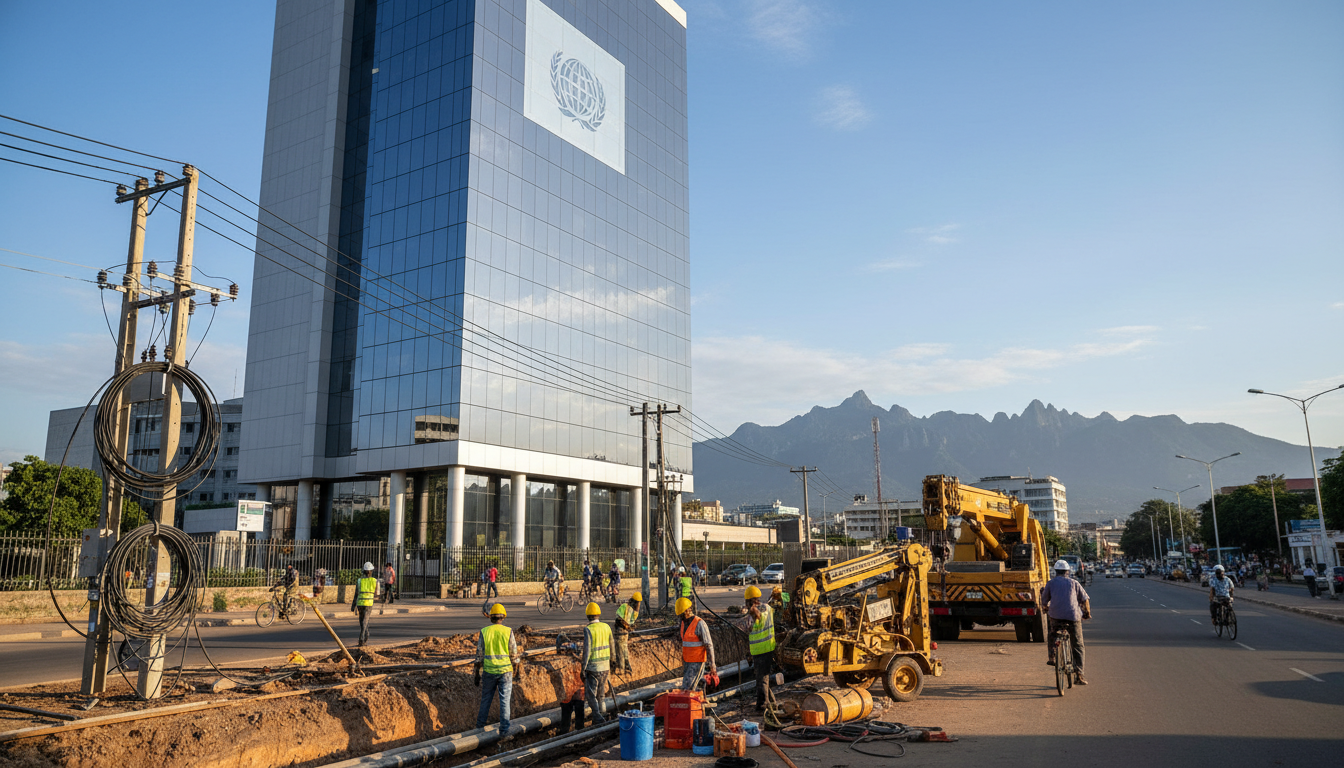

The energy situation in Madagascar, often complex and a source of debate, receives a significant boost with the announcement of a major new investment from the World Bank. This funding, amounting to $100 million, is specifically allocated to the recovery of JIRAMA, the national electricity and water company. This is not simply a cash transfer, but genuine conditional financial support designed to bring about profound and lasting transformations. This ambitious initiative, approved by the Council of Ministers in Antananarivo, aims to radically improve the performance of this entity, which is essential to the daily lives of Malagasy people. The objectives are clear: better governance, increased efficiency in service delivery, and restored financial stability. By targeting these levers, this energy project is designed as a catalyst for the country’s infrastructure, promising a brighter and more stable energy future for all of Madagascar, and is part of a sustainable development approach. The results-oriented approach, known as the “Program for Results,” ensures that each disbursement is linked to the achievement of specific milestones, instilling the rigor and accountability essential for the success of this colossal undertaking. In short: 💰 A $100 million investment from the World Bank for JIRAMA. 🎯 The financing is conditional on governance, performance, and service continuity objectives. ⚡️ Aims to support the recovery of Madagascar’s national energy and water company. 🗓️ The program was approved by the Council of Ministers in 2026, reflecting a long-term vision. 🤝 This financial support is a “Program for Results,” linking disbursements to tangible outcomes. 📈 The objective is to improve infrastructure and promote Sustainable development A vital boost: The World Bank’s investment for Madagascar’s energy futureThe World Bank’s announcement of a $100 million investment for JIRAMA represents much more than a simple capital injection; it is a strong signal sent to Madagascar, marking a deep commitment to improving its energy infrastructure. This substantial sum is intended to revitalize a national company, a key pillar of water and energy distribution in the country, which has faced considerable structural challenges for years. It is a results-oriented program, a pragmatic approach that directly links the disbursement of funds to the achievement of specific and measurable objectives. These include strengthening governance, optimizing operational performance, and ensuring greater continuity of electricity and water services. Imagine a pilot who, after identifying the critical systems on their aircraft that need upgrading, receives massive financial support to carry out these repairs in exchange for the promise of improved safety and efficiency. This is precisely the spirit behind this partnership. By approving the technical framework of this “Program for Results,” the Council of Ministers has clearly demonstrated the political will to commit to this path of reform. This program does not simply address emergencies; it aims for a sustainable transformation of the sector. It is essential to understand that JIRAMA is at the heart of the island’s sustainable development challenges. Reliable and accessible energy is the cornerstone of all economic growth, improved public health, and education. When electricity and water fail, the entire social and economic fabric suffers. This investment from the World Bank The aim is therefore to break this vicious cycle and propel Madagascar towards a more resilient future. The millions of dollars are not just numbers, but concrete opportunities to modernize equipment, train staff, and implement more transparent management systems. The recent World Bank mission, which was the subject of a joint communication between the Ministries of Economy and Finance and of Energy and Hydrocarbons, laid a solid foundation for this collaboration. This is a truly encouraging step for the entire Malagasy nation. The stakes are enormous, but the approach is promising. Rather than simply replenishing coffers, this program demands tangible results. JIRAMA is being asked to reform from within, improve its management, reduce technical and commercial losses, and offer more regular and higher-quality service to its users. It is a contract of trust where the money follows the progress of the reforms. This model has proven successful in other contexts and could well be the lever that Madagascar needs to stabilize its energy sector. The ultimate goal is for every inhabitant of Madagascar to have reliable access to electricity and water, fundamental rights that are still a luxury for many. Considering the scope of this investment means imagining hospitals operating without interruption, schools lit in the evenings for studies, and businesses able to grow without fear of unexpected power outages. It is a true energy project that could transform the lives of millions of people. This approach is part of a comprehensive vision to support the country’s development efforts, as evidenced by the various initiatives for donor support in Madagascar. The technical framework and its ambitions for JIRAMAThe “Program for Results,” approved by the Council of Ministers, leaves nothing to chance. It is a detailed roadmap that clearly articulates the expectations of the World Bank and the commitments of the Malagasy government. This technical framework defines key performance indicators that will be closely monitored. These indicators cover a range of areas, from reducing power outages and improving bill collection rates to establishing more transparent governance structures. It is a rigorous, almost military-like approach to ensure that every million dollars spent delivers tangible added value. Transparency is a cornerstone of this program, as better management of public funds is essential to regaining the trust of citizens and international partners. It is fundamental that the funds be used wisely, for the acquisition of quality infrastructure equipment, for appropriate training, and for targeted investments that will have a direct and positive impact on the population. The ambitions are high, but necessary. The program addresses the root causes of JIRAMA’s problems, including technical losses due to aging infrastructure and commercial losses often linked to billing and collection issues. It’s a long-term undertaking, but with clear objectives, significant progress can be expected by 2026 and beyond. For example, part of the investment could be directed towards acquiring new transformers and more efficient distribution networks for cities like Toamasina, where JIRAMA’s equipment needs are greatest.
are crucial. This is a giant leap for a country seeking to strengthen its energy resilience and reduce its dependence on fossil fuels by exploring sustainable development solutions. The stakes are high: it is about ensuring that JIRAMA can not only meet current demand but also anticipate future population and economic growth, while contributing to a cleaner future for Madagascar. The support of the World Bank is therefore a powerful catalyst for these reforms, and it is vital that all stakeholders work together to achieve these objectives.
- Optimizing performance: levers for action for a transformed JIRAMA The recovery of JIRAMA, supported by the World Bank’s $100 million, is based on clear levers for action aimed at fundamentally transforming the company. This is not about superficial fixes; the idea is to rebuild the foundations for lasting efficiency. One of the major pillars is improved governance. Strengthening transparency and accountability within the company is crucial to ensuring that every million dollars of financial support is used optimally. This involves reorganizing internal processes, implementing stricter control mechanisms, and greater clarity in decision-making. It’s a bit like a pilot reviewing all flight procedures to guarantee maximum safety and increased efficiency, eliminating ambiguity and establishing rigorous discipline. This governance overhaul is essential to combat the inefficiencies and potential abuses that have weakened JIRAMA in the past. Furthermore, improving operational performance is central to this energy project. This refers to JIRAMA’s capacity to produce and distribute energy. and water reliably and continuously. This requires modernizing infrastructure, optimizing production plants, reducing leaks in water distribution networks, and decreasing electrical losses. It’s a colossal undertaking that will mobilize technical expertise and significant investments. The goal is to minimize power outages and water service interruptions, which are unfortunately all too frequent and directly affect the quality of life of Madagascar’s inhabitants. Service reliability is a key factor for the country’s sustainable development, as it directly impacts attractiveness for investment, business productivity, and household well-being. These are concrete actions that, when combined, can be game-changers. Think of it like an aircraft engine that, after meticulous maintenance and the replacement of defective parts, regains its full power and reliability for smooth flights. One might wonder what this year represents for the reality of the year in Madagascar in terms of progress. The third major focus is financial performance. A company cannot offer quality services if it is not financially sound. The financial support from the World Bank aims to help JIRAMA regain financial stability, particularly by improving bill collection and optimizing its expenditure management. This involves rethinking billing systems, strengthening payment mechanisms, and raising consumer awareness about the importance of paying their bills. This is a delicate but essential aspect for JIRAMA to become self-sufficient and sustain its operations. The money collected must then be reinvested in the continuous improvement of services and infrastructure, thus creating a virtuous cycle. The millions of dollars These are a boost, but JIRAMA’s ability to generate its own revenue is key to its long-term viability. This is a truly ambitious plan that requires the commitment of everyone, from management to employees, and of course, the citizens. It is hoped that the reforms will help avoid the recurring crisis situations that Madagascar has experienced in crisis management. Strengthening Governance for Greater TransparencyGovernance is the skeleton of an organization. Without a solid skeleton, the body cannot stand. For JIRAMA, this means establishing clear rules, well-defined responsibilities, and effective controls. The World Bank’s investment is conditional on the establishment of these transparent structures. We no longer want gray areas where decisions are unclear or responsibilities are diluted. This involves modernizing the organizational chart, defining robust decision-making processes, and ensuring that the accounts are independently audited. This transparency is crucial to attracting future investments and reassuring the public about the sound management of public funds and financial support. It is a concerted effort that will mobilize management and auditing experts to support JIRAMA in this transformation. Training will likely be implemented for senior managers and staff to familiarize them with international best practices in corporate governance. The goal is for JIRAMA to be a management model for other public companies in Madagascar.
- Improving operational and financial performance: Performance is the heart of the matter. For JIRAMA, this means producing more energy and water with fewer losses and collecting revenue efficiently. The $100 millionare in place to enable this upgrade. Operationally, this translates into investments in new technologies, the repair and maintenance of existing infrastructure, and improved maintenance capabilities. This includes smarter electrical grids, more energy-efficient water pumping systems, and reduced outages. Financially, the goal is to stabilize the company’s cash flow. This includes strategies to increase bill collection rates, combat fraud, and optimize operating costs. It’s a delicate balance to strike between fair tariffs for consumers and the financial viability of JIRAMA. The World Bank’s investment is designed to empower the company to achieve this dual performance, thereby creating the conditions for sustainable development for all of Madagascar. They say time is money, and for JIRAMA, every minute without a power cut or leak counts. The Widespread Impact: Transforming Energy and Infrastructure in Madagascar The World Bank’s financial support of $100 million goes far beyond simply ensuring the survival of JIRAMA. This investment is intended to be a catalyst for transformation across the entire energy and infrastructure sector in Madagascar. We are talking about a systemic impact that will affect the daily lives of millions of people. When energy becomes more reliable and accessible, the entire economy thrives. Small businesses can operate longer, industries can increase their productivity, and households benefit from greater comfort and security. It’s a virtuous cycle where every improvement to the electrical or water infrastructure opens up new opportunities. An energy project This scale of investment, with a vision of sustainable development, is essential for the country’s future. It’s about moving from a model of precarious supply to one of robust and predictable supply, much like transitioning from a bumpy road to a smooth, well-maintained highway. This impetus provided by the World Bank could well be the necessary catalyst for Madagascar’s growth. Strengthening the energy infrastructure will have a direct impact on Madagascar’s economic diversification. Imagine rural areas where access to electricity was once a distant dream, now connected to the grid. This allows for the emergence of new economic activities and the improvement of health and education services. It’s a boon for sustainable development. Agriculture, for example, could benefit from modernized, electrically powered irrigation systems, thereby increasing yields and food security. We may see new businesses emerge, attracted by the stability of the energy supply. This is an often underestimated aspect: the quality of the infrastructure is a key decision-making factor for both national and international investors. The World Bank’s message is clear: Madagascar has the potential, and this investment is here to help unlock that potential. We think of the challenges Malagasy leaders have faced, such as when they had to send a strong message to the population during difficult times. This energy project is a concrete response to those challenges.
- https://www.youtube.com/watch?v=zFgTQ9GCLsw
- Stabilizing the National Electricity Grid A stable electricity grid is the backbone of energy. For Madagascar, this means drastically reducing power cuts, voltage fluctuations, and outages that regularly paralyze activity. The $100 million
- from theWorld Bank will allow the JIRAMAis investing in the modernization of its power plants, but also and especially in improving its transmission and distribution network. This involves installing new equipment, preventive maintenance, and implementing more sophisticated network management systems. The goal is to minimize technical losses, which are unfortunately high and represent a considerable waste of energy. This work will involve engineers and technicians in the field, often in difficult conditions. Network stability is essential to attract new investments in industry and services, and to guarantee the continuity of economic activity. This is a truly important step towards greater energy independence and sustainable development.
Towards broader and more reliable access Access to energy is a right, and in Madagascar, it remains a major challenge. This investment aims to expand network coverage, particularly in semi-urban and rural areas where access is still limited. The World Bank emphasizes sustainable development that leaves no one behind. This includes extending power lines, installing mini-grids, and using decentralized renewable energy solutions where connecting to the main grid is too expensive or complex. Reliable service is just as crucial as access. Having electricity is not enough if it is cut off for several hours a day. That is why the program stresses the performance of JIRAMA. to maintain continuous service. This focus on access and reliability is a powerful driver for education, health, and the overall well-being of the population. Consider the possibilities that electricity offers for lighting homes, preserving food, or accessing information. A true silent revolution is underway, supported by this substantial financial support. The role of this investment in Madagascar’s sustainable development Sustainable development is at the heart of the World Bank’s strategy, and this $100 million investment in JIRAMA is fully aligned with this objective. By improving energy efficiency, reducing losses, and paving the way for cleaner energy sources, this energy project contributes to a greener future for Madagascar. It aims to minimize the carbon footprint, preserve natural resources, and build infrastructure resilient to climate change. This is a unique opportunity to reorient the country’s energy priorities towards long-term solutions that are less dependent on costly and polluting fossil fuels. The World Bank encourages innovation, the adoption of green technologies, and long-term planning so that energy is no longer a burden, but a driver of growth that respects the environment and future generations. This is an exciting path for Madagascar, with objectives that go far beyond simply generating electricity. JIRAMA Performance Comparison: Before and After Investment Targets Filter by sector: Reset SectorBefore Investment After Investment Target Visual ComparisonThe numerical values are illustrative and can be adjusted. The green bar indicates an improvement, the red a starting point or a regression. ${afterWidth > 15 && item.unit === ‘%’ ? `${item.after}%` : ”} ${item.before}${item.unit === ‘%’ ? ‘%’ : ‘ ‘ + item.unit} → ${item.after}${item.unit === ‘%’ ? ‘%’ : ‘ ‘ + item.unit}
`; tableBody.appendChild(row); }); } // — SORTING FUNCTIONS — /** * Sorts the table by column. * @param {string} key – The key of the column to sort. * @param {boolean} isNumeric – Indicates whether the column contains numeric values.
function sortTable(key, isNumeric) { // Reverse the sort direction if the same column is sorted, otherwise reset to ‘asc’ if (sortColumn === key) {sortDirection = (sortDirection === ‘asc’) ? ‘desc’ : ‘asc’; } else { sortDirection = ‘asc’; sortColumn = key; } currentData.sort((a, b) => {// For numeric values, we compare directly if (isNumeric) {// Since the data is already numeric, there’s no need for parseFloat for the initial conversion
// However, `isBetterHigher` can influence the sort order in certain contexts (not implemented here for simple sorting)
} else { // For text, use localeCompare valA = String(valA).toLowerCase(); valB = String(valB).toLowerCase(); }if (valA < valB) return sortDirection === 'asc' ? -1 : 1;
if (valA > valB) return sortDirection === ‘asc’ ? 1 : -1; return 0; }); / Update the sort icons updateSortIcons(); renderTable(currentData); } /** * Updates the sort icons in the table headers. */ function updateSortIcons() { tableHeaders.forEach(header => {
header.classList.remove(‘sorted-asc’, ‘sorted-desc’);
header.querySelector(‘.sort-icon’).textContent = ”; // Clear the previous icon if (header.dataset.sortKey === sortColumn) {header.classList.add(`sorted-${sortDirection}`); header.querySelector(‘.sort-icon’).textContent = sortDirection === ‘asc’ ? ‘ ▲’ : ‘ ▼’; } }); } // — FILTERING — /** * Filters the table data based on the search. * */
function filterTable() { const searchTerm = searchInput.value.toLowerCase();const filteredData = JIRAMA_COMPARISON_DATA.filter(item => item.sector.toLowerCase().includes(searchTerm) currentData = filteredData; // Update the current data for sorting after filtering renderTable(currentData); } // — EVENTS —// Sorting Events on Headers tableHeaders.forEach(header => { header.addEventListener(‘click’, () => { const key = header.dataset.sortKey;const isNumeric = header.dataset.numeric === ‘true’; sortTable(key, isNumeric); });
}); / Search/Filter Event searchInput.addEventListener(‘input’, filterTable); // Event to reset sorting and filtering resetBtn.addEventListener(‘click’, () => { searchInput.value = ”; // Clear the search field sortColumn = null; // Reset sorting sortDirection = ‘asc’; // Reset the sort directionupdateSortIcons(); // Update the sort icons renderTable(currentData); // Display the reset table }); / — INITIALIZATION — renderTable(currentData); // Display the table on initial load});
A roadmap for the future: concrete steps and sustainable prospects With the$100 million investmentfrom the World Bank , JIRAMA has a clear roadmap for its recovery. This involves concrete steps and a multi-year action plan, extending well beyond 2026, to ensure a lasting impact. The “Program for Results” is not a blank check, but a structured support system that requires evidence of progress at each stage. The Ministries of Economy and Finance and of Energy and Hydrocarbons are at the forefront of overseeing this process. They will be required to report on the progress of reforms, the use of millions of dollars, and the results achieved in terms of improved energy services. and water. This is an approach that commits the Malagasy government to exemplary transparency and rigor. Imagine a top-level coach preparing their team for a major competition: every training session, every strategy is designed for ultimate victory. Here, victory means a high-performing JIRAMA serving Madagascar. The first actions will undoubtedly focus on upgrading the most critical infrastructure equipment, as well as strengthening JIRAMA’s internal capacity. This will involve intensive training programs for technicians and managers, enabling them to master new technologies and best management practices. A streamlining of operations is also expected, which could include digitizing certain processes to improve efficiency and reduce costs. The financial support from the World Bank is a unique opportunity to modernize a company that has long suffered from a lack of resources and sometimes complex management. It is essential that these reforms be carried out with determination and with consideration for local specificities. Sustainable development is not just about clean energy; it’s also about the efficient and responsible management of existing resources. It’s a program that must truly transform JIRAMA into a key player in Madagascar’s prosperity. We can look at the promises made in other sectors within Madagascar to see what this represents in terms of expectations.JIRAMA’s roadmap following the agreement Following the agreement with the World Bank, JIRAMA has a well-defined roadmap. This roadmap includes several priority action points. First, a thorough assessment of the electricity and water distribution networks will be conducted to identify weaknesses and areas requiring urgent intervention. Second, calls for tenders will be launched for the acquisition of modern, high-performance equipment, including smart meters, more efficient transformers, and low-energy water pumps. Third, pilot projects could be implemented in certain regions to test new approaches to service management and the integration of renewable energies. The goal is to create successful models that can be replicated nationwide. These steps are crucial for the $100 million investment to bear fruit and for JIRAMA to provide quality service that meets the public’s expectations and international standards. This is an immense undertaking, but it is guided by a clear vision of what Madagascar can become with a robust energy infrastructure. The role of ministries in project oversight: Ministerial oversight is essential for the success of this energy project. The Ministries of Economy and Finance and of Energy and Hydrocarbons share responsibility for monitoring and evaluating the program. Their role is not limited to validating documents, but includes ensuring that reforms are effectively implemented on the ground. They will need to coordinate actions with the management of JIRAMA, facilitate administrative processes, and guarantee the proper use of financial support. Regular monitoring committees will likely be established to assess progress against set objectives and adjust the strategy as needed. This close collaboration between the government and JIRAMA is a key success factor. Transparent communication on the program’s progress is expected, not only to the World Bank, but also to the Malagasy public, who are the primary beneficiaries of these improvements. This oversight ensures the accountability and relevance of the actions undertaken, enabling every million dollars to achieve its intended purpose.Exploring the potential of renewable energy for Madagascar’s energy needs
The World Bank’s investment offers a valuable opportunity to further explore and integrate renewable energy into Madagascar’s energy mix. The island has immense potential in solar, wind, and hydropower, which can significantly contribute to sustainable development and reduce dependence on fossil fuels. Part of the $100 million could be allocated to feasibility studies for new renewable energy projects or the modernization of existing hydroelectric power plants. Integrating these energy sources is not only beneficial for the environment, but it also diversifies supply sources and makes the grid more resilient. This is a modern aspect of infrastructure that we hope to see develop. Imagine villages powered by solar panels, reducing costs and emissions. This is an inspiring vision for the future of energy in Madagascar, and this financial support is a concrete step toward making it a reality. The World Bank is pushing for solutions that are not only efficient but also environmentally sound.
Expectations and challenges: realizing JIRAMA’s vision The ambitious $100 million investment by the World Bank for JIRAMA naturally raises high expectations, but it also faces significant challenges. For this financial support to translate into genuine transformation, it is crucial to remain realistic about potential obstacles. Implementing a “Program for Results” requires seamless coordination among all stakeholders: JIRAMA itself, the relevant ministries, the World Bank, and even the people of Madagascar. The complexity of the existing, sometimes outdated, infrastructure represents a major initial technical challenge. Furthermore, governance reforms are never simple and can encounter internal resistance. But the vision is clear: a functioning JIRAMA means a country moving forward. The dream is a system where energy and water are available without interruption, where bills are fair, and management is transparent. It’s a bit like preparing an airplane for a transcontinental flight after a series of breakdowns: everything must be reviewed, tested, and the team must be perfectly synchronized to guarantee a smooth landing. The millions of dollars are there for that purpose, but human effort remains paramount.The success of this energy project will be measured by precise indicators, as the World Bank has opted for a results-oriented approach. Significant progress will be expected on areas such as reducing technical and commercial losses, increasing access to electricity and drinking water, and improving service quality. Every million dollars disbursed will depend on achieving these objectives. This is an additional incentive for JIRAMA.to accelerate its reforms. However, there are many challenges. Beyond the technical and governance aspects, the company’s ability to manage such a change of scale and adapt quickly will be essential. It will also be necessary to maintain open and honest communication with users, explaining the reforms and the expected benefits, even if this involves tariff adjustments necessary for the company’s long-term viability. This is a journey that requires perseverance and a long-term vision of sustainable development for Madagascar. And if we look at the challenges the nation has overcome, we know that the spirit of resilience is there. https://www.youtube.com/watch?v=_f8mBmNL7q0 Measuring the program’s success: key indicators for JIRAMA To ensure that the World Bank’s investment produces the desired effects, rigorous key performance indicators (KPIs) have been defined. These KPIs are the compass that guides the energy project. Consider the average duration of power outages: the goal is a drastic reduction, so that the energy supply is constant. The bill collection rate is another crucial indicator for the financial health of JIRAMA: a significant improvement is targeted so that the millions of dollars in financial support are merely a boost and not a permanent crutch. The extent of service coverage, particularly access to drinking water and electricity in remote areas, will also be a major sign of success, reflecting genuine sustainable development. Regular audits and independent assessments will allow us to monitor these indicators and adjust actions as needed. This rigorous approach ensures that money is well spent and that the results are measurable and tangible for the citizens of Madagascar. This demonstrates the importance of this program for the overall improvement of living conditions in Madagascar. 📊 Significant reduction in the number and duration of power outages. 📈 Improved electricity and water bill collection rates. 💧 Increased access to drinking water for the population. 💡 Extension of electricity coverage to underserved areas. 📉 Reduction of technical and commercial losses for JIRAMA. ✅ Strengthening of transparency and accountability in the company’s governance. Challenges to overcome in the transformation of JIRAMADespite the substantial investment, the transformation of JIRAMA will not be a smooth process. The challenges are numerous and complex. Overcoming institutional inertia is a primary obstacle: changing old habits and entrenched ways of operating requires time and strong leadership. The company’s technical capacity to absorb and manage new infrastructure and technologies will also be put to the test. This includes staff training, skills development, and managing large-scale projects. The social and economic context of Madagascar, with its own realities and constraints, will add another layer of complexity. For example, combating illegal connections and raising awareness about responsible energy and water consumption require ongoing efforts. Millions of dollars are a powerful tool, but the human will to change and innovate is the true driving force behind this transformation. It is an enormous challenge, but also a historic opportunity to modernize a company vital to the country. It is crucial that this energy project be embraced by everyone. 🔑 Key Indicator
📉 Current Situation (estimate)
🚀 2026 Target (with investment) Electricity Coverage Rate ~20% (national) ~30% (target)Bill Collection Rate ~60-70% ~85-90% Average Outage Duration (hours/month)High and variable 30% Reduction Technical and Commercial Losses (%)~30-40% ~20-25% Access to Drinking Water (urban) ~60% ~75%The Importance of Local Mobilization and International Support The success of this large-scale energy project depends on a dual mobilization: local and international. The World Bank’s investment is a strong sign of international financial support, but it cannot succeed without the commitment of local communities, JIRAMA employees, and the Malagasy government. Raising public awareness of the importance of reforms, the need to pay bills, and the responsible use of energy and water is fundamental. It is a collective effort that will shape the future ofMadagascar. Sustainable developmentcannot be decreed; it is built with everyone’s participation. International expertise, provided by the World Bank and other partners, combined with local knowledge and determination, is the key to overcoming the challenges. These synergies will enable the $100 million to truly transformJIRAMA and build a stronger and more equitable infrastructure for all Malagasy people. This is not just an investment,
it is a collaboration for a better future. Why is the World Bank investing $100 million in JIRAMA? The World Bank is investing this$100 million to support the recovery ofJIRAMA, the nationalenergy and water company of Madagascar. The goal is to improve its governance, operational and financial performance, and the continuity of its services. This is crucial financial support for the country’s infrastructure and sustainable development. What is the ‘Program for Results’ and how does it work? The ‘Program for Results’ is an approach where the disbursement of millions of dollars is linked to the achievement of specific and measurable objectives. JIRAMA and the government of Madagascar must demonstrate progress in governance, performance, and service quality to receive the funds. This ensures that the investment is used effectively for the energy project. What are the main objectives of this energy project? The main objectives of the energy project are to stabilize the national electricity grid, expand access to electricity and drinking water, strengthen the transparency of JIRAMA’s management, and reduce its technical and commercial losses. It aims to build a more robust and equitable infrastructure for Madagascar, promoting sustainable development. What are the major challenges for JIRAMA in implementing this program? The challenges include modernizing a sometimes outdated infrastructure, managing resistance to governance reforms, training and adapting staff to new technologies, and raising user awareness about responsible consumption and service payment. Financial support from the World Bank is a lever, but everyone’s commitment is essential. How will this investment contribute to Madagascar’s sustainable development? By improving energy efficiency, reducing losses, and paving the way for cleaner and renewable energy sources, this investment directly contributes to Madagascar’s sustainable development. It aims to minimize the country’s carbon footprint, preserve natural resources, and build climate-resilient infrastructure, while simultaneously stimulating economic growth and social well-being.