
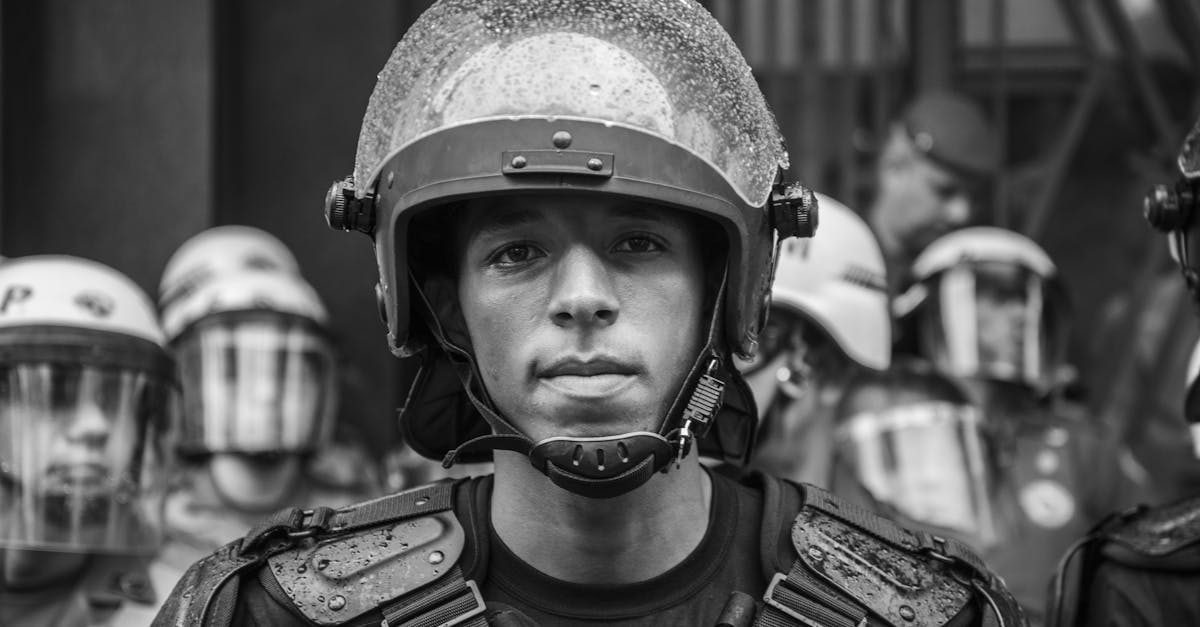
The turmoil witnessed in Antananarivo at the start of 2026 perfectly illustrates the fragility of a social equilibrium severely tested by a particularly unfavorable political and economic climate. In recent months, the Malagasy capital has been the scene of a political and social realignment marked by a series of protest movements, fueled by legitimate demands and a clear deterioration in living conditions. The recent surge in tension, which culminated during this electrifying weekend of riots and urban unrest, exposes a population at its breaking point, ready to express its frustration by any means necessary. The crisis, exacerbated by recurring water and electricity cuts, was already simmering with anger, but the violent escalation has ushered in a new era of social chaos. The initially peaceful demonstrations quickly transformed into open clashes, with widespread looting and unprecedented violence in the capital’s recent history. This explosion of violence, reported in detail by several local media outlets, reflects a combination of frustration, powerlessness, and distrust of the authorities. Faced with a weakened public security system, the feeling of abandonment has grown, fueling a vicious cycle where each incident seems to strengthen the protesters’ resolve to make their voices heard. The deteriorating situation raises serious questions about the Malagasy government’s handling of the crisis, but above all, it reveals the depth of a social malaise that, if nothing is done quickly, could well further exacerbate the unrest in this city, which until now seemed capable of withstanding the winds of insurrection.
In this context, the palpable tension in the city streets has sparked both citizen and political mobilization. The streets have now become the heart of a struggle where, on the youth side, the desire for change clashes with a police response often perceived as insufficient, even repressive. The scale of the protests testifies to a collective commitment, the essence of which now transcends simple protests against water and electricity cuts, becoming part of a broader political dynamic that questions the legitimacy of those in power and their ability to ensure the country’s stability. The situation remains uncertain, and the coming weekend could well determine whether the tension subsides or, on the contrary, the movement intensifies, potentially elevating Antananarivo to the status of a capital in a state of perpetual turmoil.
The rise in urban unrest is also contributing to a growing international awareness of the issues shaking Madagascar. The international community is watching this deterioration with concern, fearing that governance failures and economic instability could trigger a major crisis. The events of this weekend are at a critical juncture: they illustrate the need for a concrete and concerted response to prevent the capital from becoming a battleground where each side can fuel the spiral of violence. At stake is not only immediate stability, but also the political future of a country where the unity of social actors remains crucial for overcoming these successive crises.

Violence and looting in Antananarivo: a weekend of chaos reveals social fragility.
This weekend, Antananarivo was the scene of unprecedented violence, marking a turning point in the crisis that Madagascar has been experiencing for several years. The initial demonstrations, peaceful at first, were quickly derailed by an intensification of the unrest and an eruption of violence. Emblematic neighborhoods such as Analakely, Antaninandro, and Ambondrona were the sites of systematic looting and the burning of businesses, creating an atmosphere of chaos unimaginable just a few months ago. The phenomenon is not confined to a single area: several key locations, often under threat of vandalism, experienced outbreaks of violence throughout the capital, attesting to a genuine social breakdown. Images circulating on social media and in the local press show scenes of devastation, with property left as ashes or rusted by contagious attacks. Shops, banks, workshops—everything was targeted in this surge of popular anger. The widespread looting, which lasted through the night, has severely disrupted the local economy and further weakened a sector already struggling due to recurring power outages. The question then arises: what measures could urgently restore stability? Finding an answer seems difficult given a crisis that transcends mere security management and requires strong political mobilization and collective awareness.
Testimonies gathered from residents confirm an atmosphere of unprecedented fear and distrust, where every interaction becomes an act of resistance against authority. Economic and social distress is leading to an inevitable escalation toward a state of total mobilization, where public safety becomes the primary concern to prevent further tragedies. This turbulent context must not preclude strategic thinking to address the deep-seated expectations of the population and prevent a more serious collapse of the social fabric. Authorities are also emphasizing the need to involve all local stakeholders, including unions and citizen groups, to address this multidimensional crisis tearing Antananarivo apart.
The analysis of this violence highlights the urgent need for a short-term plan to secure the city, as well as a long-term project aimed at rebuilding trust between the governed and those who govern. The stability of this capital is a central concern for the entire country, as the continuity of essential public services and the preservation of the economic fabric now depend on effective management of the unrest and renewed governance. Here is a summary table outlining the main consequences of the urban unrest in Antananarivo:
Impact
Description
| Immediate Consequences | Long-Term Consequences | Economic 💰 | Disruption of businesses and financial services |
|---|---|---|---|
| Loss of income, business closures | Lasting decline in economic attractiveness | Sociopolitical 🗳️ | Crisis of confidence between citizens and authorities |
| Increased political instability, rising social tensions | Risk of a wider conflict | Public Security 🚓 | Increased checks and risk of escalating violence |
| Increased police interventions, deployment of the army | Loss of control and deterioration of social cohesion | International image 🌍 | Crisis focused on a strategic country in the region |
| Diplomatic difficulties, isolation | Negative perception, decrease in international aid | Antananarivo: a capital divided between passions and hopes for the future | Faced with these scenes of chaos, Malagasy youth and their various social actors are demonstrating a fierce desire for change. The mobilization of Generation Z, although born in a context of crisis, shows its resilience and its will to reclaim its collective destiny. Despite the outbreaks of violence, these young people are seeking to make their voices heard by multiplying gathering points throughout the city, notably by opening new protest sites in outlying neighborhoods. The strategy of repositioning and multiplying locations indicates a clear desire to decentralize the protest and assert a strong presence on the ground. This movement has also been joined by a broader social front, where unions, citizens’ groups, and some members of parliament are mobilizing together to obtain concrete reforms. The teachers’ union, Sempama, as well as the Solidarity of Trade Unions of Madagascar, are now at the forefront, lending increased legitimacy to the protests. These unexpected alliances reflect a shift in approach, where the street has become a space for political dialogue embodied by a plurality of actors. |
It is important to emphasize that this collective dynamic should not be underestimated. It could constitute a powerful force for change in governance and for initiating a refounding of the social contract. However, this gradual political engagement could also exacerbate the fragility of a social fabric already severely strained, if violence persists or if repression becomes more brutal. In this situation, the challenge lies in transforming this collective passion into constructive mobilization, in order to prevent any drift that could further destabilize the already precarious stability of Antananarivo.
The future of the capital will depend, to a large extent, on the authorities’ ability to navigate these numerous open fronts while avoiding an escalation of violence. Vigilance remains essential in the face of crucial issues: security, dialogue, and participatory governance. The current situation offers a unique opportunity to build a national consensus for lasting change, if civil society and political leaders manage to join forces to overcome these successive crises. Discover comprehensive information and in-depth analysis on the riots, their causes, consequences, and the social and political responses.
Mobilization and Decentralization Strategies of Protests in Antananarivo
The protest movement in Antananarivo is no longer confined to the traditional central neighborhoods. New hotspots are now emerging on the outskirts, creating a dynamic of decentralization that makes repression more complex and less predictable for the authorities. Sites like Ankazomanga, Ampasika, Anosizato, and Andranobevava are becoming rallying points where crowds flock in massive numbers, strengthening the territorial network of the protest.
This strategic shift demonstrates a clear desire among young people to focus their demands on a central hub, while also seeking to evade the near-constant surveillance of security forces. By multiplying these focal points, the movement hopes to create a logistical nightmare for the government, disrupting law enforcement efforts and increasing the risk of protracted clashes. Peripheral roads, such as those in Mahitsy and Ambohidratrimo, are becoming natural corridors for the marches, indicating that the protest is expanding geographically. This new tactic, blending radicalism and strategy, amplifies the pressure on the state and could lead to dramatic consequences if no negotiated initiative is implemented quickly.

https://www.youtube.com/watch?v=cSsK9pg28FQ
The Changing Role of Political Actors in the Antananarivo Crisis
Since the beginning of the unrest, political involvement in managing the conflict has intensified. Members of parliament, belonging to the Firaisankina coalition or the Gasikara movement, have taken a central role by directly overseeing some gatherings in their respective neighborhoods. This active participation demonstrates a shared desire to exert influence in the face of a large-scale social crisis.
The phenomenon is not isolated, as some local officials and political actors are now oscillating between supporting the youth and attempting to co-opt the movement for their own ends. The dividing line is becoming blurred, and the protests are becoming a major issue for the entire Malagasy political spectrum. The government is forced to adopt a more open and responsive stance to avoid losing control.
It is important to emphasize that this approach also allows for the mobilization of new legitimacy by involving actors who were previously marginal or barely visible on the national political scene. Paradoxically, such openness could strengthen the capacity for resolution by uniting all actors around a common project, while also preventing the protests from descending into violence.
However, this process requires heightened vigilance. Crowd management, discipline in maintaining order, and the ability to establish constructive dialogue are becoming absolute priorities to prevent the situation from spiraling out of control, as has already been seen in previous episodes in Antananarivo. The key lies in the ability to bring divergent interests together toward a lasting, peaceful solution at the national level.
Discover everything about riots: causes, impact, and solutions to understand these major social events.
The risks to national stability in the face of major urban unrest

This crisis situation foreshadows significant risks, particularly to political stability. The authorities’ inability to control the situation could be exploited by opposition or external forces to further destabilize the current regime. The restrained police response, often deemed insufficient, fuels distrust and risks pushing the situation into more systematic violence.
It is crucial for the government to implement a comprehensive strategy integrating de-escalation, social dialogue, and strengthened security. Without this, the crisis could escalate into open conflict with irreparable repercussions, permanently undermining governance and social development. The international community, through its various diplomatic missions, must demonstrate a stronger commitment to supporting a peaceful resolution to this crisis. While all possible scenarios remain open, the urgency is undeniable: any delay could plunge Antananarivo, and by extension Madagascar, into irreversible instability. The ability of all parties to act responsibly will be crucial to preventing this critical period from dragging on and leading to catastrophic consequences.