The phenomenon of desertification is today one of the major environmental challenges facing many regions of the globe. In 2025, nearly 13 distinct areas of Madagascar, representing more than 9 million hectares, are threatened by this scourge, which is equivalent to approximately 15.36% of the national territory. Warding off climate change, combined with uncontrolled exploitation of natural resources, is exacerbating soil deterioration, compromising both biodiversity and the local economy. While international actors, notably NGOs such as Greenpeace, WWF or France Nature Environnement, are warning of the urgency of concerted mobilization, institutional responses are struggling to keep pace with this growing crisis. The situation does not only concern Madagascar: on a global scale, desertification affects around 40% of the land surface, a phenomenon that threatens food security, social stability and the survival of ecosystems in many contexts. The need for collective commitment, bringing together governments, non-governmental organizations and citizens, is the only way to overcome these challenges and preserve the planet for future generations.
Understanding desertification: causes, mechanisms and issues on a global scale
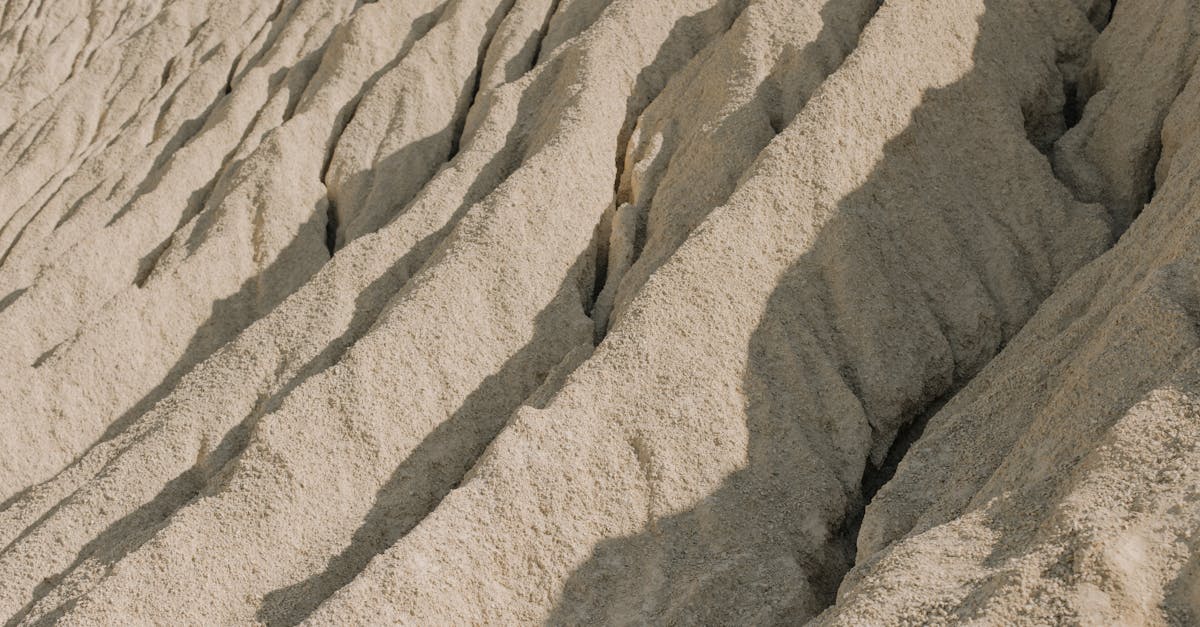
Desertification refers to land degradation in arid, semi-arid, and sub-humid areas, resulting from various environmental and anthropogenic factors. It represents an ecological, social, and economic challenge of renewed urgency in a context marked by climate change. The gradual transformation of fertile soils into barren land is accompanied by a significant loss of biodiversity and a drastic reduction in agricultural production capacity. The complexity of this phenomenon lies in its multifactorial nature, combining deforestation, overexploitation of land, inefficient irrigation, uncontrolled urbanization, and climate change. For example, the Sahel perfectly illustrates these dynamics, where increasing droughts, combined with demographic pressure, have led to profound soil degradation, despite numerous efforts to combat it over the past several decades. Desertification Drivers 🌍
| Impacts 🎯 | Concrete Examples | Climate Change |
|---|---|---|
| Reduced rainfall, rising temperatures, more frequent droughts | Desertification of the Sahara, advanced degradation in certain regions of Madagascar | Excessive soil exploitation |
| erosion, loss of fertility, land depletion | Agricultural sector in the Betsiboka region of Madagascar | Deforestation |
| Reduced vegetation cover, lack of protection against erosion | Semi-arid areas of West Africa | Urbanization and infrastructure |
| Soil compaction, fragmentation of natural habitats | Peri-urban areas in Madagascar | Inadequate water management |
| Salinization, declining water tables | Regions facing prolonged drought | The most threatened sites today: focus on Madagascar and the regions at risk |
Desertification is particularly prevalent in several regions of Madagascar, including Boeny, Melaky, Betsiboka, Menabe, and Atsimo Andrefana. These areas, characterized by their semi-arid climate, are seeing their land degrade at a worrying rate. The degradation of more than 9 million hectares, or nearly 16% of the territory, undermines food security and increases the vulnerability of local populations to climate hazards. The situation is worsened by the uncontrolled exploitation of resources, particularly deforestation combined with inefficient water management, primarily in the context of chronic water stress. The loss of fertile soils, combined with insufficient corrective policies, significantly reduces the ability of communities to ensure their self-sufficiency. The accelerated degradation is such that some regions, such as Atsimo Atsinanana and Ihorombe, risk eventually becoming completely desert areas if no strong action is taken. Discover the challenges of desertification, a worrying ecological phenomenon that threatens arable land and biodiversity. Learn more about its causes, consequences, and possible solutions to combat this scourge.
The root causes of desertification in Madagascar: the conflict between development and conservation

Increased deforestation linked to the search for affordable energy 🔥
Mismatch between economic policies and environmental issues ⚖️
- Lack of coordination between public actors and international NGOs 🌍
- Lack of incentives for sustainable agricultural practices 🌱
- Institutional responses and their effectiveness in the face of the desertification crisis
- Despite a robust legislative framework established since 1997, with the ratification of the United Nations Convention to Combat Desertification, the effectiveness of the measures taken remains largely insufficient. Madagascar has numerous tools, including a National Action Plan for 2015–2025, a land degradation neutrality policy, and a national policy brief. However, their practical implementation is hampered by fragile political will, a lack of intersectoral coordination, and a lack of rigorous enforcement. Land degradation continues, fueled by ineffective, if not nonexistent, water resource management and the abusive exploitation of agricultural and forest lands. Civil society, with the contribution of groups such as Friends of the Earth and the Nicolas Hulot Foundation, emphasizes the need to strengthen these policies, while emphasizing the urgent need for a paradigm shift based on sustainability and resilience.
- Discover the challenges of desertification, an alarming ecological phenomenon that threatens ecosystems and livelihoods worldwide. Learn how to prevent and combat this environmental crisis.
Concrete strategies to effectively combat desertification in Madagascar
To reverse this trend, integrated strategies involving all stakeholders must be implemented. Sustainable approaches combine land restoration, the adoption of agroecological farming practices, and the rational management of water resources. The need to restore degraded soils is not only a matter of ecological preservation, but also of the right to a viable future for rural populations. Concrete examples include the establishment of adapted species plantations, the reduction of erosion through soil conservation techniques, or the rehabilitation of arid zones through projects led by NGOs such as the Surfrider Foundation or Climate Action Network. Priority Actions 🌱

Examples of Initiatives
Soil restoration through planting resilient species
| Increasing vegetation cover, combating erosion | Reforestation projects in the Melaky region | Promoting sustainable and ecological agriculture |
|---|---|---|
| Improving yields while maintaining fertility | Agroecology training programs in Madagascar | Integrated water management 💧 |
| Reducing the impact of drought and preventing salinization | Construction of water reservoirs and sustainable irrigation | Support for local populations 💪 |
| Food sovereignty, fighting poverty | Training and microcredit for farmers | International engagement and collaboration |
| Sharing experiences, financing sustainable development | Partnerships with WWF, Greenpeace, and other NGOs | The importance of citizen mobilization and the role of NGOs in protecting land |
| Beyond government initiatives, civil society plays a crucial role in the fight against desertification. NGOs such as Friends of the Earth, the Nicolas Hulot Foundation, and the Surfrider Foundation conduct awareness campaigns, promote environmentally friendly agricultural practices, and participate in land restoration programs. Their commitment is all the more essential given that the resilience of ecosystems depends largely on awareness and collective action. Citizens, by changing their consumption habits or supporting local initiatives, can strengthen this effort. Mobilizing around participatory or community-based projects, particularly in rural areas, would bring concrete results to a challenge that goes far beyond a simple environmental issue to become a matter of human survival. | Eurasian Innovations and Solutions to Desertification: Towards More Sustainable Land Management | Solutions to the ecological crisis cannot be limited to local actions: technological innovation and international trade also play a decisive role. Methods such as bioengineering, the use of resistant seedlings, and smart water management systems make it possible to address soil degradation. The implementation of satellite monitoring systems, in partnership with institutions such as the Ecology Research Group and Oxfam France, makes it possible to establish a precise inventory and quickly trigger targeted actions. International experiences, particularly those undertaken in the European Union and Asia, offer models that Madagascar could adapt. The dissemination of these innovations, coupled with strong political will, appear to be the foundation for sustainable land management. |
Technological Innovations 🚀
Expected Impact 🎯
International Examples
Satellite Monitoring Systems
| Precise Monitoring of Soil Conditions, Risk Anticipation | European Copernicus Program | Bioengineering and Reforestation with Resistant Species |
|---|---|---|
| Erosion Reduction, Rapid Restoration of Degraded Areas | Pilot Projects in East Asia | Smart Water Management 💦 |
| Resource Optimization, Salinization Prevention | Automated Drip Irrigation Systems | International Partnerships 🌐 |
| Knowledge Sharing, Crowdfunding | Oxfam, WWF, Climate Action Network | FAQ on Desertification in 2025: Issues, Actions, and Outlook |
| What is the main cause of desertification in Madagascar? | A combination of climate change, excessive land use, deforestation, and inadequate water resource management. What are the main impacts of desertification? | Loss of agricultural land, food insecurity, declining biodiversity, population displacement, vulnerability to natural disasters. |
How can we effectively combat this phenomenon?
- Through soil restoration, the adoption of sustainable agricultural practices, rational water management, and community mobilization, in addition to institutional actions.
- What role can NGOs play in this fight?
- Mobilizing civil society, raising awareness, supporting restoration projects, providing technical expertise, and promoting innovative solutions.
- What national or international initiatives could make a difference?
- Strengthening sustainable development policies, implementing innovative technologies, regional partnerships, and global mobilization for prevention.
Découvrez notre guide complet — destinations, budget, visa, faune et conseils pratiques pour préparer votre voyage.

📖 Vous aimerez aussi

Transition à Madagascar : la société civile et la Génération Z face aux doutes sur le « Programme de la Refondation »
3 March 2026
Fermeture de l’aéroport de Dubaï : chaos et désarroi chez les voyageurs bloqués
2 March 2026