
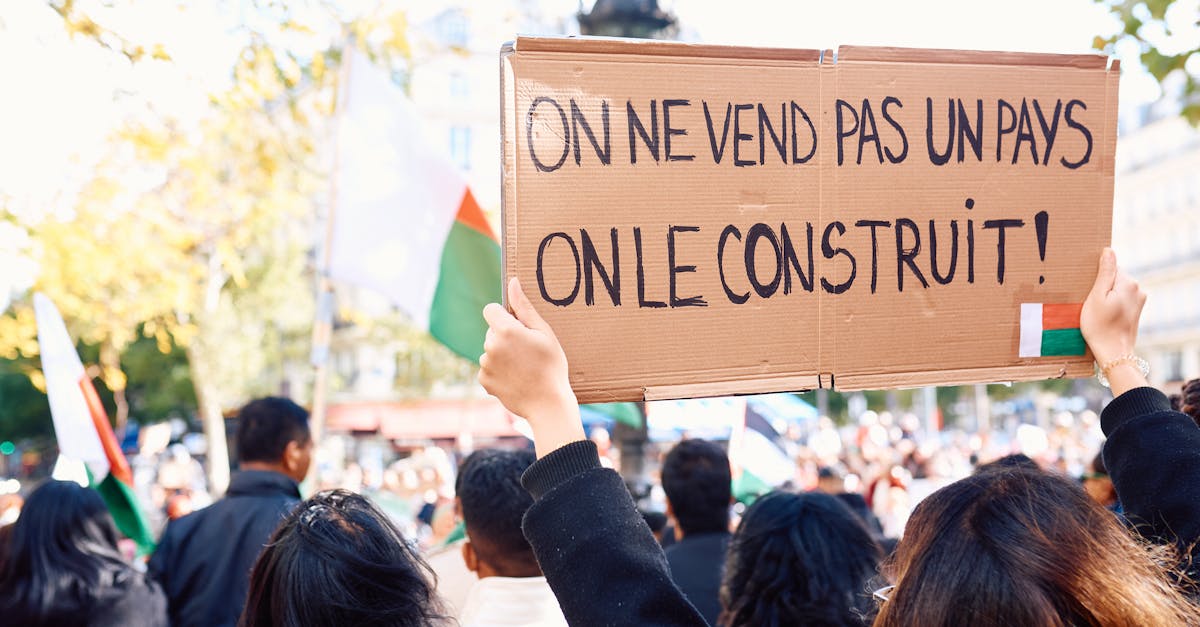
In 2025, Madagascar witnessed an unprecedented movement embodied by a bold generation of young people, reminiscent of Generation Z. Inspired by successful uprisings in other nations like Nepal, this segment of the Malagasy population harnessed the power of social media to demonstrate an unprecedented level of political engagement. Their revolt, initially focused on denouncing the energy crisis and power outages, quickly transformed into a broader protest movement against a governance perceived as archaic, corrupt, and disconnected from the country’s socio-economic realities.
The stakes are high, encompassing the legitimacy of institutions, the sustainability of the current power structure, and the capacity to bring about lasting change. For several years, the Malagasy political scene has been weakened by chaotic governance, characterized by electoral fraud and widespread impunity, which fuels massive public distrust, particularly among young people. Faced with this situation, Generation Z is asserting itself as a key player in transformation, capable not only of acting, but also of redefining traditional power dynamics.
Through this mobilization, young Malagasy people are expressing their desire to be agents of their own future, a significant challenge in a context where the government seeks to maintain its grip by any means necessary, including brutal repression and the manipulation of the masses. The virality of the messages, the digital solidarity, and the ability to unite around simple yet impactful objectives illustrate a paradigm shift: that of a youth that refuses to be mere spectators and now wishes to participate directly in the history of Madagascar. The continuation of this commitment raises crucial questions about political stability, the role of youth in governance, and also about the risks of escalation or the co-opting of this popular energy by those seeking to preserve their influence.
Discover Generation Z in Madagascar: its aspirations, its challenges, and its impact on modern Malagasy society.
A rise in the power of the Malagasy youth movement in the face of the social and energy crisis.
Thursday, September 25, 2025, marks a decisive step in the contemporary history of Madagascar. The massively mobilized Generation Z crowds unequivocally voiced their demands against the recurring water and electricity outages that paralyze urban life on a daily basis. The emergence of this mobilization resonates as a challenge to the current government, embodying a generation driven by the urgent need for profound and immediate change.
Social media played a central role in disseminating and coordinating the movement, with images and videos quickly going viral, strengthening solidarity and galvanizing even more young people. The intensity of the protests was heightened by the symbolic use of a reimagined Malagasy flag, inspired by pop culture, particularly the “pirate” symbol from the manga One Piece, embodying bravery and rebellion against the established order.
Despite this strong mobilization, the day was marred by excesses, including acts of violence, looting, and arson, which tarnished the initially peaceful image of the movement. These excesses illustrate the complexity of a social phenomenon that, while offering hope and a path to change, also has destabilizing, even destructive, aspects.
Excesses during demonstrations: a deliberate tactic or an uncontrollable spiral?
Attempts by the police to control the demonstrations revealed worrying dysfunctions in their handling of the protests. Opposition to the demonstration, which had been banned by the police chief, Angelo Ravelonarivo, precipitated an escalation of violence, particularly due to the presence of vandals and groups who punished the movement both symbolically and materially. The repressive strategy, sometimes violent and inconsistent, fueled the authorities’ sense of impunity and exacerbated tensions. What was intended as a show of force actually opened a breach: that of a struggle where manipulation and staging play a central role. The difficulty law enforcement has in distinguishing between legitimate protesters and troublemakers raises a major issue: it is entirely possible that this could be mistaken for a deliberate strategy aimed at discrediting the movement.
The repercussions on several cities, such as Antsirabe, Mahajanga, and even Toamasina, have been dramatic. The loss of numerous lives—often young victims or looters killed during clashes—underscores the scale of the crisis. The question remains: are these excesses the result of chaos or an organized maneuver to legitimize police repression and weaken the protest movement?

For several decades, the manipulation of protests by certain actors within the Malagasy government has no longer been a mere hypothesis. The repeated strategies aimed at infiltrating and discrediting the youth protest movement demonstrate that the Rajoelina regime has consistently attempted to instrumentalize violence, thus facilitating the use of disproportionate repressive measures.
The context of 2025 is no exception to this logic: special intervention groups, often drawn from military or paramilitary backgrounds, are sometimes used to orchestrate deviations within the movement, with very specific strategic objectives. The tension is palpable: while Generation Z asserts its rights and positions itself as a driver of change, the government seeks to limit its influence by all means, including state violence. Malagasy leaders seem to have understood that violence, even if it fuels short-term insecurity, could paradoxically serve as a pretext to strengthen their grip on power. The staging of unrest, the dissemination of fake news, and the orchestration of confrontations are all tools used to delegitimize the movement and potentially justify a repressive escalation, thus preventing any prospect of lasting peaceful change.
Discover Generation Z in Madagascar: its aspirations, its challenges, and its impact on Malagasy society.
| Arrogance and Legitimacy: The Double Face of Leaders in the Face of Youth Anger | The arrogant behavior of Malagasy leaders toward youth and civil society in general has profoundly fueled the crisis. For several years, repeated electoral fraud, the squandering of public resources, and widespread impunity have transformed the relationship between the government and the population into one of extreme mistrust. | The systematic refusal to acknowledge the legitimate demands of young people or to engage in calm dialogue, combined with contemptuous responses such as “6% of idiots on Facebook,” crystallizes a disdain that, rather than calming the situation, feeds the revolt. The social and political crisis is rooted in this persistent arrogance, which suggests that the regime prefers to silence the youth rather than engage in genuine dialogue. |
|---|---|---|
| This denial of legitimacy has weakened the country’s stability. The exasperated population now sees any further action as a last chance to change the system. Weak authority, coupled with rising anger, could lead to irreversible deterioration of the social fabric if no opening is initiated quickly. | Factor | |
| Description | Impact | Impunity |
| Waste and corruption | Loss of trust and increased tensions | Repression |
Violence and arbitrary arrests
Increased distrust and radicalization
Arrogance of leaders
Refusal of dialogue and social contempt
Rise of popular revolt
- Malagasy youth: engine or risk for the country’s future?
- Generation Z is now seen as the spearhead of necessary social change, but the flip side lies in its maturation process. This generation’s ability to mobilize quickly, organize on social media, and defend its demands demonstrates immense potential that could ultimately reset the way Madagascar is governed.
- However, this spontaneity and lack of long-term vision also leave the door open to political co-optation, excesses, and indiscriminate violence. The crucial question remains: how can the energy of Generation Z be transformed into a sustainable engine of reform without descending into anarchy or manipulation?
- Some analysts suggest uniting this generation around a common project, a structured platform for dialogue, and a clear commitment to peace, stability, and development. The risk is high if the movement becomes unstructured or politicized uncontrollably, potentially leading to a fragmentation of the social front and transforming a legitimate revolt into dangerous chaos. The main demands of the youth movement in Madagascar
✅ Immediate improvement of access to water and electricity
✅ Reform of the electoral system and transparency of elections
✅ Imperative fight against corruption at all levels
✅ Increased autonomy and funding for youth education

Actors involved in the dynamics of the Malagasy youth uprising
Several actors play a crucial role in this crisis: mobilized youth, social networks, institutions, as well as certain political parties and social movements. Their interaction largely determines the stability or destabilization of the country.
The link between young people and influencers on digital platforms is crucial for understanding the structure of the movement. These influencers, often perceived as the new voices of society, guide and direct their audiences toward specific demands.
Discover the characteristics, aspirations, and impact of Generation Z in Madagascar, a connected youth engaged in the country’s development.
A path to sustainable social change: between reform and revolution
The leaders in power are facing a real deadline. The question is no longer just about responding to immediate demands, but also about rethinking their relationship with young people and the entire population. The implementation of profound reforms, transparency, and sincere dialogue are more necessary than ever. To avoid an uncontrollable explosion of violence, a mixed strategy must be considered: reconciling firmness in the face of violence with openness to dialogue, while also undertaking a thorough reform of Malagasy governance. Generation Z, if united and supported, could become a source of hope, provided its legitimate aspirations are treated seriously and with respect.
Ideally, such a dynamic could usher in a new phase in the recognition of civil, social, and economic rights, thereby restoring confidence in Madagascar’s future.
https://www.youtube.com/watch?v=_YxZwTMdS3Y What is the key role of Generation Z in the protests in Madagascar?
Découvrez notre guide complet — destinations, budget, visa, faune et conseils pratiques pour préparer votre voyage.

📖 Vous aimerez aussi
Transition à Madagascar : la société civile et la Génération Z face aux doutes sur le « Programme de la Refondation »
3 March 2026
Fermeture de l’aéroport de Dubaï : chaos et désarroi chez les voyageurs bloqués
2 March 2026