
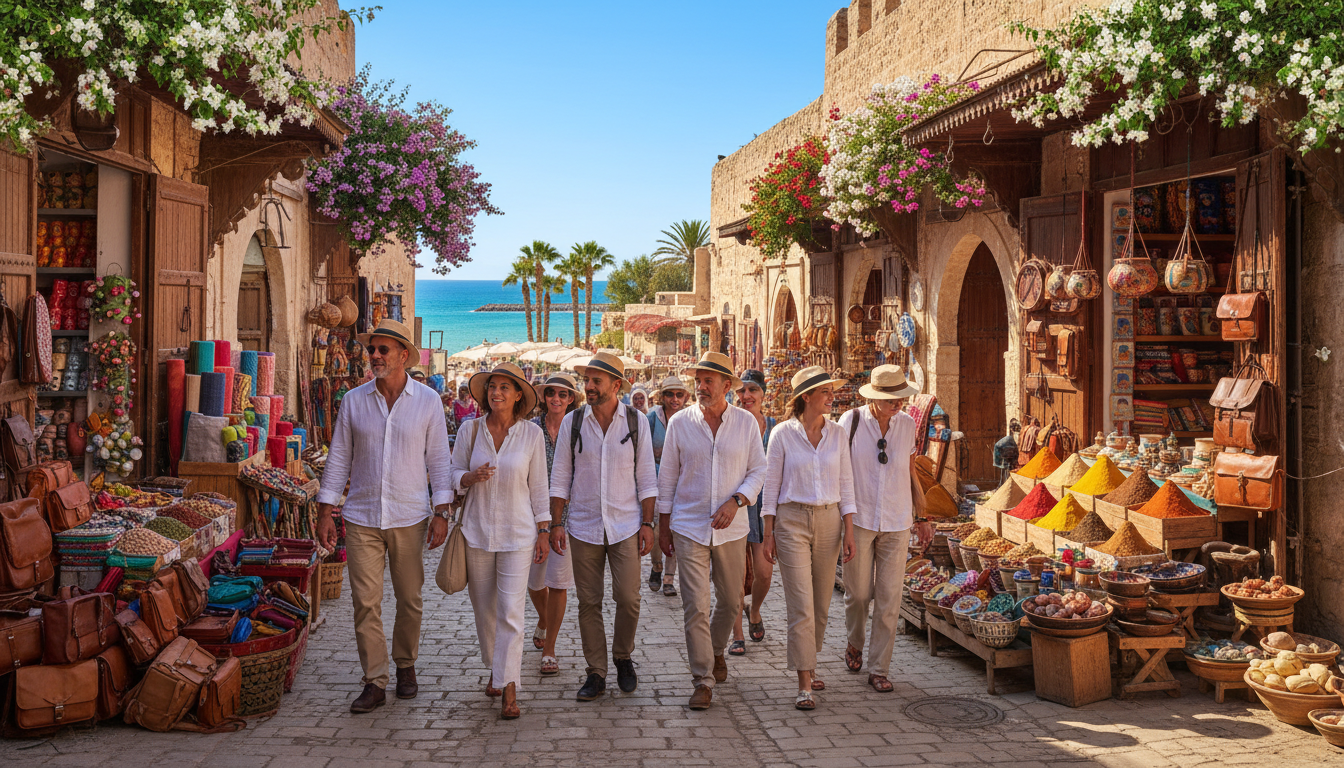

Traveling to Tunisia in April promises a blend of historical discoveries, beach relaxation, and desert adventures under a generous sun, but without the summer heat. It’s an ideal time for those seeking to immerse themselves in the richness of Tunisian culture and explore its diverse landscapes, from ancient ruins to the verdant oases of the Sahara. Spring offers an exceptional setting to fully enjoy activities without the crowds of peak season, allowing for a more intimate and authentic exploration. Whether you’re drawn to the vibrant medinas, the serenity of the beaches, or the mystery of the desert, Tunisia’s April climate proves to be a major asset, transforming every excursion into a pure moment of pleasure. We guarantee that planning your trip to Tunisia during this period means choosing the perfect balance between discovery and tranquility. Every detail counts, and we’re here to guide you through the must-sees and helpful tips to ensure your adventure is simply unforgettable. The energy of spring infuses the country with a special vitality, making every encounter and every landscape even more memorable. We truly fall in love with this time of year when everything seems to awaken, offering unique colors and atmospheres that will stay with you long after you return home. It’s the perfect time to let yourself go and experience Tunisia intensely.
- In short: Your express guide to traveling in Tunisia in April! ☀️ Ideal Climate:
- Enjoy abundant sunshine with mild temperatures, perfect for all activities. 🏛️ Accessible Historical Sites:
- Explore Carthage, El Jem, and Dougga without the summer heat or crowds. 🚶♀️ Lively Medinas:
- Stroll through the souks of Tunis and Sousse in a pleasant atmosphere. 🏖️ Peaceful Beaches:
- Relax on nearly deserted beaches in Hammamet, Djerba, or Sousse. 🐫 Desert Adventures: The Sahara awaits you with unforgettable excursions to Douz, the gateway to the desert.
- 🍽️ Authentic Cuisine: Savor local gastronomy in less crowded restaurants.
- 🏨 Varied Accommodation: A wide selection of hotels and guesthouses, often at more affordable rates than during peak season.
- 🚗 Easy Transportation: A well-developed network makes getting around the country easy. 💡 Practical Tips: Pack a versatile wardrobe and always carry local currency.
- 💖 Authentic Experience: Springtime tourism in Tunisia promises enriching encounters and lasting memories.
- Why traveling to Tunisia in April is a great idea for your trip! Choosing Tunisia in April means choosing the perfect timing for a truly immersive experience. It’s a month when the country reveals its best side, far from the sweltering heat of summer and the chill of winter. The Tunisian climate in April is simply idyllic. Average temperatures hover around 20-25°C, with abundant sunshine that invites exploration without ever being oppressive. Mornings are mild, ideal for cultural visits, and afternoons are perfect for relaxation or outdoor activities. Evenings remain pleasant, allowing you to dine al fresco and soak up the local atmosphere without needing to bundle up. It’s a real joy to be able to stroll leisurely, feel the sea breeze or the desert warmth without worrying about extremes. Truly, this time of year is a favorite for holidays. It has been noted that rainfall is infrequent and generally short, maximizing sunny days. This is a key factor for those looking to maximize their time for exploration and relaxation. Spring transforms the landscapes, making them lush and colorful, a far cry from the arid image one might imagine in the height of summer. Olive groves and citrus orchards teem with life, offering stunning vistas at every turn.
In addition to the magnificent weather, spring tourism in Tunisia in April is synonymous with tranquility. The massive crowds of the peak summer season are avoided, meaning less crowded historical sites, more secluded beaches, and restaurants where it’s easier to find a table. This allows for a much more authentic and serene experience. You can take your time to admire the details of Roman ruins, chat with merchants in the souks without being jostled, and feel truly connected to Tunisian culture. This is a time when locals are often more relaxed and approachable, fostering enriching interactions and encounters. We’ve seen travelers who regret not having chosen this period, as the atmosphere is so much more peaceful. Families will particularly appreciate this calmer ambiance for traveling with children, offering a gentler, less stressful pace. You truly feel like you’re discovering the country as it is, far removed from the clichés of mass tourism. For photography enthusiasts, the light in April is exceptional, offering soft hues and striking contrasts, ideal for capturing the beauty of the landscapes and local architecture. It’s the perfect time to capture the very essence of what it means to
travel to Tunisia in April. April is also a pivotal month when nature is bursting with life. Tunisia is lush and blooming, particularly in the northern regions and along the coasts. The scents of jasmine and orange blossom fill the air, creating an enchanting atmosphere that complements the visual beauty. It feels as if the entire country is awakening and inviting a celebration of life. Gardens and parks are magnificent, offering oases of coolness and vibrant colors. It’s a truly wonderful spectacle not to be missed if you love nature and landscapes. Migratory birds are still plentiful, providing a visual and auditory delight for birdwatchers. For the more active, it’s also the perfect time for hiking and trekking, especially in national parks like Boukornine, where the trails are pleasant and the views are panoramic. We found that outdoor activities are much more enjoyable when the sun is shining without being scorching. The sea is also starting to warm up, and while it’s not yet at its hottest, it’s already pleasant enough for a refreshing dip at the end of the day or for enjoying some light water sports. It’s a transitional period that offers the best of both worlds: the promise of summer without its drawbacks. We highly recommend considering these aspects when planning your trip to Tunisia and making it a truly memorable experience. Historical sites and cultural treasures to explore: Tunisia’s hidden gems in April Tunisia is a veritable open-air museum, and April offers the perfect conditions to delve into its millennia-old history. Tunisia’s tourist sites are incredibly accessible and enjoyable to visit during this time. You could start with Carthage.This legendary city, which stood up to Rome, is a sight to behold. In April, the ruins are magnificent under the gentle sun, allowing you to wander among the remains of the Baths of Antoninus, Roman villas, and the Punic port without the summer crowds. You can take the time to imagine the past grandeur of this civilization. Archaeologists have done an incredible job preserving these sites, and you feel a special energy when you walk on these stones steeped in history. We love exploring every nook and cranny, discovering the mosaics still visible and the breathtaking views of the Mediterranean. It’s truly worthwhile to take a guide to fully grasp the richness of this site, as every stone has a story to tell. A visit to the Carthage Museum perfectly complements the experience, offering a glimpse of the treasures discovered there. It’s a total immersion in the past, a life-sized history lesson that takes on its full meaning under the mild spring skies. We recommend setting aside at least half a day, or even more, to make sure you don’t miss anything at this iconic place. Next, head towards El Jem.
and its impressive Roman amphitheater, a true architectural gem. It’s one of the best-preserved amphitheaters in the world, rivaling the grandeur of Rome’s Colosseum, but with the added advantage of being much less crowded in April. You can wander freely through the arena, exploring the underground passages where gladiators and beasts awaited their fate. The scale of the structure is breathtaking, and you feel tiny in the face of such a feat of ancient engineering. Standing in the center of the arena and imagining the roar of the crowd is a truly immersive experience. The spring light highlights the ochre stones of the amphitheater, creating magnificent plays of light and shadow. The nearby El Jem Museum houses an exceptional collection of Roman mosaics discovered in the region, remarkable for their finesse and state of preservation. It’s an essential stop to complete your visit and understand the refinement of Roman life in Africa. We highly recommend this visit; it’s truly memorable. History and architecture enthusiasts will find plenty to enjoy here. For those who want a broader overview of the country’s beauty, we also suggest destinations like Tunisia in May or December, which also have their charm, but April is definitely the best time. Don’t miss Dougga! Dougga, often considered the best-preserved Roman site in North Africa, is a UNESCO World Heritage Site offering spectacular views of the surrounding countryside and an architectural ensemble of rare beauty. In April, the lush vegetation around the site adds to its charm. Here you’ll discover a virtually intact Roman theater, temples dedicated to the gods, an imposing capitol, thermal baths, and dwellings, all within a peaceful and verdant setting. What’s so great about Dougga is the feeling of traveling back in time, far from the hustle and bustle of big cities. You can stroll at your own pace, sit on the theater steps, and imagine the performances of yesteryear. We truly fell in love with this site for its tranquility and authenticity. Lovers of beautiful architecture and history will be delighted. Picnics in the surrounding area are also an excellent way to enjoy the setting. We loved exploring this site, less well-known than Carthage or El Jem, but just as fascinating. This is an excellent example of Tunisian cultural heritage. The medinas, like those of Tunis and Sousse, are living labyrinths where getting lost is a pleasure. In April, the souks are bustling, but you can still stroll and haggle without being overwhelmed by the heat or the crowds. You’ll discover local crafts, spices, colorful fabrics, and savor mint tea in a traditional café. It’s a complete sensory experience, a true journey through time that awakens all the senses. You’ll find treasures, unique atmospheres, and memorable encounters. When planning a trip to Tunisia, including these medinas is an absolute must—it can’t be stressed enough! https://www.youtube.com/watch?v=hheAWKOygBY
Adventures and relaxation: between idyllic beaches and the majesty of the Tunisian desert After the historical immersions, it’s time to relax and embark on an adventure! Tunisia offers incredibly diverse landscapes, and April is the perfect month to fully enjoy them. You can start with the Tunisian beaches, which are simply sublime. In April, they are still very peaceful, far from the hustle and bustle of summer. Imagine yourself on the fine sand of Hammamet, your feet in turquoise waters that are just beginning to warm up, with only the sound of the waves for company. It’s pure bliss! The beaches of Djerba, with their palm trees and tranquil atmosphere, are also a true haven of peace. We loved strolling along the coast, collecting seashells, and admiring the scenery. In Sousse, you’ll also find beautiful beaches, perfect for relaxing or a refreshing dip. It’s the perfect opportunity to read a good book, soak up the sun without worrying about heatstroke, or simply dream while gazing at the vastness of the Mediterranean. Children can play peacefully on the sand, building castles undisturbed. It’s truly one of the best times to enjoy the Tunisian coastline before the massive influx of tourists. We noticed that many hotels are already offering their beach facilities, but with a much more exclusive and relaxing atmosphere. It’s a unique opportunity to enjoy a privileged experience. It’s also a chance to discover charming little fishing villages along the coast, savor fresh seafood, and soak up the local ambiance. We assure you that this tranquility is truly precious for recharging your batteries. For those who prefer gentler water sports, such as paddleboarding or kayaking, the conditions are often ideal with calm seas and light winds.
But Tunisia isn’t just about the sea; it’s also the Sahara Desert.
April is the perfect time for an unforgettable adventure. A camel trek or 4×4 excursion into the majestic dunes is an experience not to be missed. The “gateway to the desert,” Douz, is the ideal starting point for these explorations. You’ll be struck by the immensity and silent beauty of the landscapes, where orange sand dunes stretch endlessly beneath a deep blue sky. April temperatures are perfect for the desert: warm during the day but not scorching, and mild enough at night to enjoy a starry night around a campfire. You truly feel like you’re at the edge of the world, experiencing an indescribable sense of freedom and grandeur. Nights under the Saharan stars are an absolutely breathtaking spectacle; you feel connected to the universe. Discover verdant oases, true miracles of nature amidst the sand, where you can refresh yourself and experience the gentle pace of nomadic life. Meet Bedouins, share tea, and listen to their stories: authentic moments of connection that greatly enrich the trip. It’s an adventure that leaves a lasting impression and creates memories for a lifetime. We recommend choosing an organized tour with experienced guides for optimal safety and immersion. For those with a larger budget, you can even consider spending a night in a Bedouin tent for an even more intense experience. You’ll see life differently after such a trip. It’s one of the most spectacular activities in Tunisia in April. Activities in Tunisia in April aren’t limited to these two extremes. You can also explore Berber villages perched in the mountains, such as Chenini and Douiret. These areas offer a fascinating glimpse into troglodyte architecture and traditional life. Hiking in these regions is particularly pleasant in spring, with verdant landscapes and breathtaking panoramas. It’s an opportunity to discover another facet of Tunisian culture, far from the more typical tourist routes. We’ve always been fascinated by the resilience and ingenuity of these communities. There are also charming coastal towns like Sidi Bou Said, with its white and blue houses, flower-filled alleyways, and magnificent sea views. It’s the perfect place for a romantic stroll, sipping mint tea on a terrace, and admiring the sunset. We absolutely love the artistic and bohemian atmosphere of this village. The local markets, or souks, are vibrant hubs of activity where you can find everything: spices, handicrafts, clothing, and fresh fruits and vegetables. It’s a guaranteed sensory experience! For golf enthusiasts, Tunisia boasts several high-quality courses, and April is an ideal season to enjoy this sport in perfect weather. Truly, whether you’re looking for relaxation, adventure, or cultural discoveries, spring tourism in Tunisia in April has something to satisfy every desire. For more inspiration, you can take a look at what Tunisia has to offer in September, but April is a cut above the rest in terms of weather.Tasting and immersion: authentic Tunisian gastronomy and culture
A trip to Tunisia wouldn’t be complete without total immersion in its vibrant culture and, of course, without a passionate tasting of its delicious cuisine. April is an exquisite time for this, as local restaurants are less crowded, allowing you to leisurely savor traditional dishes and appreciate the warm hospitality of the Tunisian people. Tunisian cuisine is an intoxicating blend of Mediterranean and Middle Eastern flavors, rich in spices and fresh produce. You inevitably start with couscous, the national dish, served in countless variations: with lamb, chicken, fish, or even vegetarian, always accompanied by vegetables and a fragrant sauce. Each region has its own specialty, and you truly feel like you’re discovering a new facet of the dish each time. It’s a delight for the taste buds, a generous and convivial dish to share with family or friends. We recommend trying the fish couscous in Djerba—it’s absolutely divine! Another must-try is brik, a thin sheet of pastry filled with an egg, tuna, capers, and parsley, fried and served crispy. It’s a delicious appetizer, perfect for starting a meal. We love to eat it while it’s still warm, with the yolk still runny inside—a real guilty pleasure. We found that the quality of ingredients is exceptional in the spring, with sun-drenched seasonal vegetables. For a trip to Tunisia in April, gastronomy is a cornerstone of the experience, believe us! The Tunisian tajine, not to be confused with its Moroccan namesake, is a type of gratin or thick omelet made with meat (often chicken or lamb), eggs, cheese, parsley, and potatoes. It’s a hearty and comforting dish, perfect for a satisfying lunch. We truly appreciated the diversity of flavors offered by each version of the tajine. Soups, like chorba, are also a must-try. These are also very popular, especially as appetizers, with their flavors of spices and fresh vegetables. You’ll also find many fresh and colorful salads, such as mechouia salad (peppers, tomatoes, grilled and chopped onions) or Tunisian salad (tomatoes, cucumbers, onions, mint, hard-boiled eggs, and tuna). It’s light, refreshing, and full of flavor. We were always impressed by the generous portions and the hospitality of the restaurant owners. To accompany these dishes, we recommend trying the traditional bread, often baked in a wood-fired oven, with its soft crumb and crispy crust. We have a weakness for harissa, this red chili paste that enhances every dish, but be careful, it can be spicy! Always ask for “a little spicy” if you’re not used to it. Tunisian culture is also experienced through its markets and grocery stores, where you’ll discover a profusion of local products. We loved strolling through these places, inhaling the aromas of spices and herbs. You realize that every meal is a celebration, an important moment of sharing. Tunisian pastries are another chapter not to be missed. The makrouds (semolina cakes filled with dates), the baklava (layered pastries with pistachios and honey), and the kaak warka (small rings of thin dough filled with almonds) are absolutely divine. Enjoy them with a sweet mint tea—it’s the ultimate indulgence. We guarantee you’ll come back a few pounds heavier, but with unforgettable culinary memories. It’s a real opportunity to treat yourself without restraint. Cultural immersion doesn’t stop at the table. Taking a Tunisian cooking class can be a truly enriching experience. You learn the secrets of preparing iconic dishes, discover ancestral techniques, and leave with authentic recipes to recreate at home. We found it to be an excellent way to connect with the local culture and meet passionate people. Tunisians are very proud of their cuisine and delighted to share it. You can also attend traditional music and dance performances, particularly common in the cultural cafés of major cities. Malouf or mezwed music enlivens the evenings and transports you to a festive and welcoming atmosphere. We loved the contagious energy of these performances. Simply walking through the streets, observing daily life, scenes of everyday existence, and artisans at work all contribute to a profound immersion. Traditional cafés are places for meeting and exchanging ideas, where you can sip Turkish coffee or mint tea while watching the world go by. You feel truly at ease there, and it’s an excellent way to capture the essence of Tunisian life. Conversations flow easily, and you learn a lot about local customs and traditions. For travel tips to Tunisia Remember to always carry small bills for markets and small shops; it makes transactions and exchanges easier. It’s also a great opportunity to discover cultural events specific to spring, such as music festivals or craft exhibitions, which add a unique dimension to your trip. Don’t forget to explore museums of art and folk traditions, like the Bardo Museum in Tunis, famous for its collection of Roman mosaics, which is an absolute must for understanding Tunisia’s rich artistic past. Truly, there is so much to see and experience that your stay will be filled with discoveries at every turn.
https://www.youtube.com/watch?v=mlLFnAH7C-0Preparing your trip: accommodation, transport, and practical tips for Tunisia in April To ensure your adventure in Tunisia in April goes smoothly, good preparation is essential. Let’s start with…Accommodation in Tunisia The country offers a wide range of options, from large luxury resorts to charming traditional guesthouses and apartments for rent. In April, prices are generally lower than during peak season, and availability is excellent, making it easy to find the perfect option for your budget and preferences. We recommend booking in advance if you have very specific requirements or are traveling during the April school holidays (often in Europe), as even though it’s the low season, some periods can be more popular. For an authentic experience, guesthouses, or “dar,” in the medinas of Tunis or Sousse are a fantastic choice. They offer a glimpse into traditional architecture and a personalized welcome. We loved the charm of these places, often featuring beautiful interior patios. If you’re looking for relaxation and beach facilities, hotels along the coasts in Hammamet, Djerba, or Sousse offer full-service amenities with pools, spas, and restaurants. We noticed that many of them offer attractive deals in the spring, so don’t hesitate to compare. For a more independent stay, renting an apartment can be an economical and flexible solution, especially if you’re traveling with family or friends. You can find some excellent deals on online booking platforms. The important thing is to choose accommodation that suits your travel style to properly prepare for your trip to Tunisia and feel at home, even far from home. As for transportation in TunisiaThe country has a relatively well-developed transportation network that makes travel easy. Most international flights land at Tunis-Carthage (TUN), Djerba-Zarzis (DJE), or Monastir (MIR). Airfares can be more affordable in April than in the summer, so it’s always a good idea to search and compare prices several months in advance. Once there, you have several options. Renting a car is an excellent solution for those who want to explore the country at their own pace and get off the beaten track. The main roads are in good condition, but be careful in cities and on secondary roads. We recommend having good insurance and a GPS or navigation app. Taxis are plentiful and relatively inexpensive in cities. Make sure the meter is running, or negotiate the price before setting off if it isn’t. Shared taxis, called “louages,” are widely used for intercity travel. It’s a very authentic and economical local experience, but you have to be prepared to share your vehicle and wait until it’s full before setting off. Trains connect major cities like Tunis, Sousse, and Sfax, offering a comfortable and scenic way to travel. We found that train journeys offer beautiful views of the landscape. Buses are also a cheap alternative, but can be slower. For travel tips in Tunisia, remember to always carry local currency, the Tunisian dinar (TND), as not all businesses accept cards. We also found communication easy, as French is widely spoken, especially in tourist areas, which is a real plus for French speakers. We advise you to pack a small first-aid kit with basic medications and to be careful with tap water; opt for bottled water.
which also offers its own charms. We guarantee that these small adjustments will make a big difference in ensuring your stay is truly fantastic and hassle-free!
Detailed Comparison: Traveling to Tunisia in April vs. JulyUse this interactive chart to visualize the key differences between traveling to Tunisia in April and July.Click on the month headings to activate “Focus Mode” and compare more easily! Tips for Smart Shopping and Respectful Immersion
🛍️ Bargaining:In the souks, bargaining is a tradition. Don’t hesitate to haggle, always with a smile, to get the best prices. It’s a fun part of the cultural experience! 🎁 Local Crafts: Choose local crafts: Nabeul pottery, Kairouan carpets, silver jewelry, babouches (traditional Moroccan slippers), spices. Buying directly from artisans supports the local economy.
🕌 Respect for customs: When visiting places of worship, dress modestly (shoulders and knees covered). Always ask permission before taking photos of people. 🗣️ A few words in Arabic:Learning a few words of Arabic (Hello, Thank you, Please) will be greatly appreciated and will facilitate interactions. 💧 Hydration:Drink plenty of bottled water, especially if you are exploring the desert or sites in full sun. When is the best time to travel to Tunisia? April is truly an ideal time to travel to Tunisia. The Tunisian climate in April is mild and sunny, with average temperatures around 20-25°C (68-77°F), which is perfect for exploring historical sites, enjoying beaches without the crowds, and venturing into the desert. It’s springtime, nature is lush and green, and the landscapes are magnificent.
Should we pack specific clothing for Tunisia in April?
Yes, it’s advisable to pack a versatile wardrobe. Lightweight clothing for the day is essential, but don’t forget to bring a light sweater or cardigan for the evenings, which can be cooler, especially if you’re going to the desert or near the coast. Comfortable walking shoes are a must. When visiting religious sites, dress respectfully, covering your shoulders and knees. Are tourist sites crowded in April? No, in April, tourism in Tunisia is significantly less intense than during the peak summer season. This means you can explore iconic sites like Carthage, El Jem, or Dougga with fewer crowds, allowing for a more immersive and enjoyable experience. The beaches are also quieter and the restaurants less crowded, offering a more serene atmosphere to savor Tunisian culture. What are the must-do activities in Tunisia in April?There are many and varied activities to do in Tunisia in April. We recommend exploring archaeological sites like Carthage and El Jem, getting lost in the vibrant medinas of Tunis and Sousse, relaxing on the tranquil beaches of Hammamet or Djerba, and venturing into the Sahara Desert from Douz. Don’t miss the chance to savor the delicious Tunisian cuisine and immerse yourself in the local culture. How do you get around in Tunisia, and what are some transportation tips?For transportation in Tunisia, you have several options. Renting a car is ideal for flexibility. Taxis are plentiful and affordable in cities. For intercity travel, louages (shared taxis) are an economical and local option. Trains connect the main cities for a comfortable journey. We advise you to always carry local currency, and French is widely spoken, which facilitates communication.
Découvrez notre guide complet — destinations, budget, visa, faune et conseils pratiques pour préparer votre voyage.
