
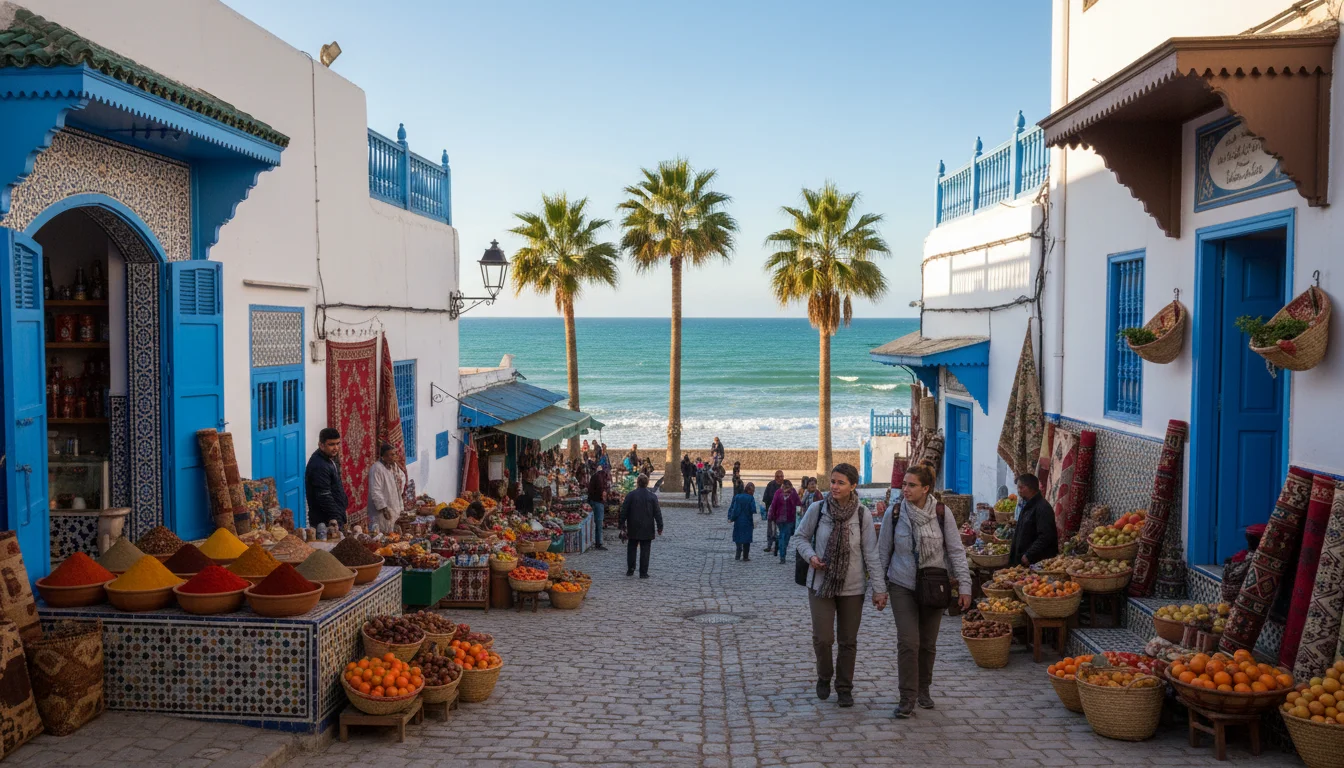

Planning a trip to Tunisia in November means choosing the perfect time to discover this Mediterranean gem away from the summer crowds. The particularly mild and sunny climate invites you to explore ancient treasures and relax on still-welcoming beaches. Whether you’re drawn to majestic Roman ruins, the colorful labyrinths of the medinas, or the silent vastness of the desert, this month offers an authentic and serene experience. It’s the perfect opportunity to immerse yourself in the local culture, savor generous cuisine, and enjoy warm hospitality without the constraints of peak season. A November stay in Tunisia promises unforgettable memories, combining adventure, history, and relaxation in an enchanting and more intimate setting.
- In short:
- ☀️ Mild and sunny climate ideal for all activities.
- 🏛️ Fewer crowds to explore historical sites like Carthage and El Jem.
- 🛍️ Enjoy a leisurely stroll through the medinas of Tunis and Sousse.
- 🏖️ Relax on the quieter beaches of Hammamet and Djerba.
🐪 Experience unforgettable adventures in the Sahara Desert.
🍽️ Savor Tunisian cuisine without the crowds. ✈️ Best travel deals in November.
Travel to Tunisia in November: Ideal weather for enriching visits
Choosing a trip to Tunisia in November means opting to discover a serene and authentic side of this vibrant country. Far from the intense summer heat that can make sightseeing tiring, and before the more pronounced chill of winter, November offers a near-perfect climatic balance. The weather forecast for this period is generally very favorable, with average daytime temperatures pleasantly ranging between 18 and 22 degrees Celsius in coastal regions, such as around Tunis, Sousse, or even Djerba. These conditions are ideal for exploration, allowing you to spend long hours outdoors without suffering from sunburn or excessive heat fatigue. The sun remains generous, offering magnificent light that enhances the landscapes and historical monuments, while any rain, if it occurs, is generally short and refreshing, a far cry from the harsh winter weather. The mild climate of November
This is a major asset for tourism, transforming every outing into a truly enjoyable experience. Imagine strolling through the ancient ruins of Carthage, a gentle breeze caressing your face, or wandering through the bustling souks of Tunis’s Medina without being overwhelmed by crowds. It’s also a perfect time for more relaxed water sports or walks along the deserted beaches of Hammamet or Sousse, where the water temperature remains surprisingly mild, inviting a final swim or simply contemplating the shimmering Mediterranean. The air is crisp, the landscapes are adorned with subtle autumnal hues, and the low-angled light of late summer lends a special, almost magical atmosphere to Tunisia’s most iconic sites. This shoulder season also often means better rates for accommodation and flights, making a trip even more appealing for budget-conscious travelers. It’s a precious window to fully immerse oneself in the Tunisian spirit, far from the hustle and bustle of peak tourist season, and to enjoy a calm environment conducive to discovery and rejuvenation.
Impact of Climate on Activities and Local Life The influence of November’s climate isn’t limited to pleasant temperatures; it also redefines the dynamics of tourism and daily life. With the summer heat subsiding, locals adopt a more relaxed pace of life, and travelers are often welcomed with greater warmth. Markets regain a more local vibrancy, where seasonal fruits and vegetables abound, inviting authentic culinary discoveries. Restaurants, less crowded, offer a more intimate dining experience, allowing visitors to fully appreciate the richness of Tunisian cuisine at their leisure. Tourist staff are generally more available, offering personalized travel advice and more enriching interactions. For hiking enthusiasts and outdoor explorers, November is a gift. The inland landscapes, often arid in summer, turn green, and the dry air makes walks particularly invigorating. This is the perfect time to venture into ancient olive groves, discover hilltop villages, or explore nature reserves regaining their tranquility. Visits to olive farms or vineyards are also worth considering, offering a glimpse into local agriculture under optimal conditions.Tourism in November
Visiting Tunisia in November is synonymous with gentleness, serenity, and a deep immersion in the country’s culture, without the logistical constraints and crowds encountered at other times of the year. It’s a unique opportunity to see Tunisia in a different light, calmer and more authentic, where every moment of discovery is enhanced by a most welcoming natural and human environment. The mild days invite you to extend your walks, linger over a panoramic view, or savor a mint tea on a terrace—simple yet profoundly memorable moments for the traveler seeking tranquility. Historical Dive: Tunisia’s Must-See Archaeological Sites in NovemberTunisia, a true crossroads of civilizations, is a land steeped in history, and November offers optimal conditions for delving into its glorious past. The moderate temperatures and low tourist crowds transform exploring archaeological sites into an immersive and almost meditative experience. Imagine yourself, without the sweltering summer heat or hordes of tourists, wandering among ruins that tell millennia of stories.
Carthage
The ancient Phoenician and Roman city of El Jem is an obvious starting point. Its scattered ruins, spread along the coast near Tunis, include the Baths of Antoninus, the Punic quarter, the Tophet, and the amphitheater. Every stone seems to whisper the epics of Hannibal and the rivalries with Rome. The November sea breeze makes the visit particularly pleasant, allowing time to imagine the grandeur of this former maritime power. The surrounding hills offer superb panoramas of the Mediterranean Sea, a perfect setting for photographs or simply to soak up the atmosphere. It’s easy to spend a whole day exploring its different sectors, each telling a different story of its rich past. A little further south stands the impressive El Jem Amphitheater, a Roman coliseum comparable in size to Rome’s, and one of the best preserved in the world. Its majesty is absolutely breathtaking, and in November, the chance to wander through it almost alone is a rare privilege. You can easily lose yourself in its underground galleries, walk across the arena where gladiators and wild beasts once fought, and climb to the top for a stunning panoramic view of the modern city. This UNESCO World Heritage Site is a powerful testament to the grandeur of the Roman Empire in Africa. Its exceptional state of preservation allows for a true immersion in antiquity. The absence of crowds allows you to fully appreciate its magnificent architecture and feel the echo of past acclamations. This is a visit not to be missed to understand the scale of the Roman presence in Tunisia. The soft autumn light highlights the ochre stone of the structure, creating plays of light and shadow that enhance its curves and arches, making the experience even more memorable for all travelers. https://www.youtube.com/watch?v=M5IyFmH29fE Dougga and the Lesser-Known Gems: Unforgettable Visits
Beyond the most famous sites, Tunisia is brimming with archaeological treasures that deserve special attention, and November is the perfect month to discover them. Dougga is undoubtedly one of Tunisia’s finest archaeological achievements, often less frequented than Carthage or El Jem, but no less spectacular. Perched on a hill, this Roman city, also a UNESCO World Heritage Site, offers an exceptional array of monuments: a remarkably well-preserved theater, an imposing capitol, temples dedicated to various deities, thermal baths, and magnificent houses. The view of the surrounding countryside is absolutely spectacular, providing an idyllic setting for this immersion in the past. Exploring Dougga is a true journey through time, and the tranquility of the site in November allows you to appreciate every detail, every mosaic, every sculpture. The site is vast and invites leisurely strolls, allowing visitors to discover its narrow streets and buildings. It’s the perfect opportunity to take memorable photos in an unparalleled setting.
Other sites, such as Thuburbo Majus or Sbeitla, while less well-known, also offer fascinating glimpses into Roman and Byzantine life. Visiting these places in November ensures a more personal experience, where you can take the time to appreciate the richness of history and the beauty of the landscapes without the pressure of time or crowds. Local guides, often more available off-season, can enrich the visit with anecdotes and detailed explanations that bring the stones to life. It’s a chance to truly understand the culture. and Tunisia’s heritage, to see how the past has shaped the present. Archaeological visits in November thus become a moment of pure intellectual and visual escape, an opportunity to connect deeply with the soul of the country. The softer, more diffused autumn light highlights the contours of the ruins, creating atmospheres conducive to contemplation and discovery, making each moment a true celebration of time regained.Cultural Immersion: Strolls through the Medina and Gourmet Getaways in November
November in Tunisia is an invitation to a deep cultural immersion, far from the frenetic pace of the high summer season. It’s the ideal time to get lost—literally and figuratively—in the medinas, the historic hearts of Tunisian cities that jealously guard their ancestral soul. The Medina of Tunis, a UNESCO World Heritage Site, is a sensory labyrinth where every alleyway reveals a new surprise. The bustling souks, with their stalls overflowing with colorful fabrics, heady spices, local crafts, and sparkling jewelry, are much more pleasant to explore in the mild November weather. You can stroll without being jostled by crowds, take the time to admire the architectural details of carved doorways and wrought-iron balconies, and above all, interact more freely with the artisans and merchants. Haggling, an integral part of the souk experience, becomes a more convivial and less hurried exchange. It’s the perfect opportunity to buy authentic souvenirs, from ceramics and Berber rugs to handmade slippers. The Medina of Sousse offers a similar ambiance, but with its own distinct character, dominated by the majestic Ribat fortress. Its ramparts offer breathtaking views of the city and the sea. Exploring these ancient quarters in November allows you to fully immerse yourself in the unique atmosphere of these timeless places. You can stop for mint tea in a traditional café, observe local life unfolding at a leisurely pace, and feel the pulse of the city. Museums, such as the Bardo Museum in Tunis, with its exceptional collection of Roman mosaics, are also less crowded, offering a more tranquil and in-depth visit. This period is ideal for discovering traditions, the Tunisian way of life, and forging genuine human connections. The melodies of the muezzin, the scent of jasmine, and the distant hum of the souks compose a symphony that awakens all the senses. It’s a true window onto the soul of Tunisia, revealed in all its splendor without the trappings of the high tourist season. Narrow alleyways and hidden passages beckon you to adventure, and every corner conceals a story or a little treasure waiting to be discovered.Tunisian Cuisine: A Feast of Flavors in the Off-Season
Beyond the architectural wonders, a trip to Tunisia in November is a celebration of the senses, and gastronomy plays a central role. Tunisian cuisine is renowned for its richness, its spicy flavors, and its Mediterranean influences. In the off-season, local restaurants, from small street stalls to more refined establishments, are less crowded, allowing you to savor traditional dishes at your leisure and connect more easily with the owners. It’s a unique opportunity to discover authentic local cuisine, often homemade, using fresh, seasonal ingredients. Couscous
The quintessential national dish, Tunisian beef, comes in a multitude of versions, with lamb, chicken, fish, or vegetables. Each region, even each family, has its own recipe, and November is perfect for exploring these variations. Don’t leave without trying brik, a thin sheet of pastry filled with egg, tuna, potatoes, or parsley, then fried until crispy. The Tunisian tajine, quite different from its Moroccan namesake, is a kind of thick quiche made with meat, vegetables, and cheese. For adventurous palates, harissa, a paste of red chilies, garlic, and olive oil, is ubiquitous and adds character to many dishes. Sweet pastries, often made with honey, almonds, and pistachios, such as makroudh or baklava, are perfect to enjoy with mint tea after a meal. 🍵 The flavors are intense, the portions generous, and Tunisian hospitality is fully on display at the table. It’s a true immersion in culinary culture, a gastronomic journey that perfectly complements the discovery of historical sites and medinas. Enjoying Tunisian cuisine in November is to treat yourself to an authentic, warm, and deliciously memorable experience, where each dish tells a story and each flavor awakens the senses, making every meal a moment of pure shared bliss.Infinite Horizons: Saharan Adventures and the Gentleness of the Tunisian Coast in November
November in Tunisia is an exceptional time for those who dream of distant horizons and contrasting landscapes. It’s the ideal time for an unforgettable adventure in the Sahara Desert, where the climate becomes perfectly temperate, making exploration pleasant and free from the rigors of summer or the chilly nights of winter. The “gateway to the desert,” DouzThis is the ideal starting point for enchanting excursions. Imagine yourself on the back of a camel 🐪, traversing majestic dunes that stretch as far as the eye can see, the colors of the sand shifting with every ray of sunlight. 4×4 vehicles offer a thrilling experience, allowing you to reach peaceful oases and isolated Berber villages where time seems to stand still. These excursions are a true immersion in an ancient nomadic culture, offering unparalleled starry nights, far from any light pollution. The silence of the desert is broken only by the wind and the sounds of wildlife, providing a feeling of absolute peace and freedom. It’s an unforgettable experience, an opportunity to reconnect with nature and with yourself. Local guides, often from nomadic communities, passionately share their knowledge of the desert, its secrets, legends, and traditions, enriching every step of the journey. It’s an invitation to escape, to contemplate landscapes of raw and timeless beauty, where time seems suspended, offering indelible memories to all adventurers seeking a change of scenery. After the vastness of the desert, Tunisia offers a striking contrast with the gentleness of its coastline. In November, Tunisian beaches, famous for their fine sand and crystal-clear waters, regain a welcome tranquility after the summer bustle. Destinations like
Hammamet
, DjerbaSousse and the surrounding area offer idyllic settings for relaxation and long walks along the seafront. The absence of crowds allows you to fully appreciate the natural beauty of these stretches of sand, often deserted at this time of year. The water temperature remains surprisingly pleasant for the more adventurous, inviting a refreshing swim or more leisurely water sports like paddleboarding or kayaking. It’s also a perfect time to discover the charms of the coastal towns, with their colorful fishing ports and picturesque alleyways. Hotels and resorts often offer attractive deals, and services are more attentive during the off-season. Strolling along the beach, collecting seashells, or simply sitting and watching the sunrise or sunset over the Mediterranean becomes a truly serene experience. The sea breeze is gentle and the air is pure, providing a feeling of absolute well-being. Whether you’re seeking adventure or relaxation, November in Tunisia is a blessed time to explore its many facets, from the grandeur of the desert to the tranquility of its coasts. A trip that balances these two worlds promises a complete and profoundly enriching journey for both mind and body.
https://www.youtube.com/watch?v=wJwI2vnZBq8Preparing Your Trip: Essential Tips for a Peaceful Stay in Tunisia in November Traveling to Tunisia in November requires careful preparation to guarantee a most pleasant and peaceful stay. As a savvy traveler, it’s essential to consider a few practical tips to optimize your experience. First, regarding accommodation, although November is the low season, it’s always recommended to book in advance, especially if you’re aiming for specific establishments or if your trip to Tunisia
The issue of security is an essential aspect of any travel planning. Tunisia is a welcoming and safe country for tourists, and the government has implemented enhanced measures in tourist areas. It’s always wise to stay informed about your country’s travel advisories and to exercise common sense, such as avoiding unlit areas at night and keeping a close eye on your belongings. Regarding currency, the Tunisian dinar (TND) is the local currency. Currency exchange offices and ATMs are readily available in cities and tourist areas. Consider carrying some cash for small expenses and for visits to souks, where card payments are not always accepted. Communication is facilitated by French, which is widely spoken in tourist areas and cities, in addition to Tunisian Arabic. Learning a few words of Arabic, such as “Hello” (Salam alikoum) or “Thank you” (Choukran), will always be appreciated and will make interacting with the locals easier. These small gestures can transform a simple interaction into a warm and memorable moment. A well-planned trip in November ensures you make the most of every moment.
Luggage and Cultural Aspects: Top Travel Tips When packing for Tunisia in November, it’s important to consider the temperature variations between day and night. While the days are mild and sunny, evenings can be cooler, especially in the desert where temperature differences are more pronounced. It’s therefore recommended to pack light clothing for the daytime, as well as a light jacket, sweater, or cardigan for the evenings. Comfortable shoes are essential for exploring historical sites and long walks in the medina. Don’t forget a hat, sunglasses, and sunscreen, as the sun remains strong even in autumn. When visiting places of worship, it’s advisable to wear clothing that covers your shoulders and knees out of respect for local customs. Travel tips also include respecting Tunisian culture and traditions. Tunisia is a predominantly Muslim country, and showing respect for local customs is essential. A smile and an open demeanor will always facilitate interactions. It’s also helpful to be aware of bargaining practices in the souks, where polite negotiation is expected.
Traveling in Tunisia in November: Regional Comparison
Discover the unique characteristics of each Tunisian region in November to best plan your trip. Click on a column to highlight it and compare more easily! Switch to map view (mobile) All categories
The main advantage is the mild and pleasant climate, which allows you to explore sites like Carthage, El Jem, or Dougga without the oppressive summer heat. Furthermore, there are far fewer tourists, making the visit more immersive and peaceful. Is it safe to travel to Tunisia in November? ✈️ Tunisia is a safe country for travelers, with enhanced security measures in tourist areas. It is always recommended to follow common-sense travel advice and stay informed of your embassy’s recommendations.
Découvrez notre guide complet — destinations, budget, visa, faune et conseils pratiques pour préparer votre voyage.
