In 2025, global aviation remains marked by a breath of mystery and growing concern. Incidents involving certain Boeing 777s, despite their reputation for reliability, continue to fuel fear and suspicion. The circumstances surrounding their mysterious disappearance or grounding highlight not only potential flaws in aviation safety, but also geopolitical and financial issues that go beyond mere technicalities. The recent revelation of temporary and then fictitious registrations in Madagascar, used to circumvent an international embargo, only exacerbates the situation. The complexity of these cases raises legitimate concerns about the transparency of the actors involved, oversight by authorities, and passenger safety. The possibility of aircraft being diverted or hijacked in geopolitical or economic circumvention strategies highlights the fragility of the aviation sector’s stability. Faced with these challenges, all stakeholders in the aviation industry must ask themselves: how far can we trust technology and regulations when some players seek to exploit their flaws with disregard for collective safety?
The remarkable ambiguities surrounding the fraudulent registrations and operations of Boeing 777s in 2025
Recent events, as illustrated by the Malagasy case, reveal a genuine porosity in the management of aircraft registrations. In January 2025, five Boeing 777-212 aircraft were provisionally registered in Madagascar. These registrations, under seemingly legitimate references, were quickly withdrawn, leaving questions as to their true destination. The fact that these aircraft never visited Malagasy territory, remaining immobilized in China, fuels the theory of manipulation intended to conceal their traceability. Their subsequent passage to Iran, via a scheme involving false nominees, underscores a clear desire to circumvent the Western embargo. The creativity in the use of shell companies, notably the Malagasy company UDAAN Potentials Ltd, demonstrates a sophistication that goes far beyond simple bureaucratic procedures. The key question concerns the true identity of the operators behind these maneuvers and their underlying motivations. The implicit collaboration with foreign actors, such as the Iranian airline Mahan Air, adds a worrying geopolitical dimension. The case also illustrates the risk of aircraft being diverted from their legitimate use, with implications for national security and the integrity of the global aviation market.

The historical evolution and anomalies in the management of the Boeing 777 in 2025
Since its introduction, the Boeing 777 has been considered a symbol of safety and innovation in commercial aviation. However, recent hijacking and fraudulent registration cases are a reminder that even the most reputable aircraft are not immune to elaborate manipulation. In 2009, aviation experienced several incidents involving Boeing 777s, mainly due to technical or human failures. Until 2018, statistics showed a flawless reputation, reinforced by exceptional flights in Africa, Asia, and Europe operated by Air France, Emirates, Singapore Airlines, Qatar Airways, Cathay Pacific, Delta, United, and American Airlines. However, this apparent solidity has been undermined by recent incidents, such as the mysterious abandonment of flight MH370 and anomalies in registration. These incidents have prompted a review of safety and surveillance protocols, revealing previously underestimated vulnerabilities. The question raised by this development is the aviation sector’s ability to adapt quickly in the face of increasingly sophisticated circumvention strategies, particularly those used by state or clandestine actors, such as those revealed regarding Mahan Air’s purchase of aircraft and their transfer to Iran. Managing this crisis of confidence requires increased vigilance from all authorities involved in regulating and supervising the global aviation market.
The geopolitical and economic stakes behind the manipulation of the Boeing 777 in 2025
The current period is marked by an escalation of tensions between several world powers, particularly over economic sanctions and embargoes. The recent attempted purchase of Boeing 777s by an Iranian company, using a shell company in Madagascar to circumvent restrictions, illustrates the extent to which geopolitics influences the aviation sector. The transfer of these aircraft across different countries, through shell companies and concealing their true owners, demonstrates a deliberate attempt to destabilize international control over air traffic. The implicit complicity of certain local actors, such as the Malagasy company UDAAN Potentials Ltd, reveals a vulnerability in the international surveillance system. This situation highlights the risk that new aircraft, originating from illegal trafficking or circumventing regulations, could be inserted into legitimate commercial fleets, with potentially disastrous consequences for collective security. The resulting question is whether the control mechanisms deployed by entities such as ICAO or national authorities are robust enough to prevent such manipulations. The answer to this question could determine the future stability of international aviation in the face of a persistent and increasingly sophisticated threat.
| Key facts about Boeing 777 manipulation in 2025 | Potential impacts |
|---|---|
| Fictitious registrations in Madagascar, then transfers to Iran 🚩 | Sanctions evasion, risk of unverified aircraft 🛫 |
| Use of shell companies to mask true owners 🕵️♂️ | Lack of traceability, vulnerabilities in international surveillance 🔍 |
| Involvement of companies like Mahan Air in these operations 🛬 | Possibility of using these planes for illicit or terrorist activities ⚠️ |
Global security risks from handling Boeing 777s in 2025
Incidents linked to Boeing 777s, during fraudulent or misappropriated operations, are not only of an economic or geopolitical nature. Their impact on global security remains worrying. The presence of these devices in questionable circuits or their clandestine transfer via complex networks can open the way to several major risks:
- 🎯 Trafficking in arms or illicit substances : planes contaminated or used to hide illegal cargo.
- 🧭 Misuse for malicious purposes : as part of terrorist plans or coordinated attacks.
- 🌐 Compromise of civil aeronautics : weakening of controls, with devices that can be manipulated remotely or misused.
- 💥 Risks of unintentional accidents : due to falsification of documents or alteration of control systems.
The serious cases involving Malagasy complicity, as well as covert cooperation with Iran, underline that apparent weakness in surveillance can have dramatic consequences. The vulnerability of such a strategic sector requires a total questioning of protocols and reinforced cooperation. The situation shows that a device, even sophisticated and designed for security, can become a vector of global insecurity when it escapes regulation. The legitimacy of global aviation is based on the confidence that everyone must have in a rigorous and transparent system, essential to preserving stability and security on a global scale.

Future Trends and Outlook for Boeing 777 Safety in 2025
Faced with the challenges posed by these cases of manipulation and hijacking, the global aviation community must consider new strategies to strengthen security. Several avenues are emerging to ensure better traceability, increased surveillance, and more effective international cooperation:
- 🔎 Strengthening customs and aviation controls: implementing more sophisticated digital tools to track every aircraft movement in real time.
- 🛡️ Improving registration verification protocols: strict operations against shell companies and suspicious registrars. 🌍
- Rapprochement between states and international organizations: Information sharing, creation of common databases, coordinated interventions.
- 🔐 Use of advanced technologies:
- Artificial intelligence, blockchain, to ensure the authenticity of aircraft identities and the traceability of operations.
🛫
Particularly pilots, technicians, and controllers, to detect any suspicious anomalies.
- The only way to address these threats is a combination of technology, regulation, and collective commitment. The credibility of international aviation depends on the ability to anticipate and counter these schemes, to preserve passenger confidence and the sector’s economic stability. Enhanced oversight could also lead to more effective harmonization of standards and regulations to prevent similar breaches from recurring in the future. Vigilance remains the best weapon against a threat that is increasingly no longer limited to isolated cases, but is structuring a global network of illicit activities. https://www.youtube.com/watch?v=0aBVriqU0LI The Implications of Non-Transparency: A Crisis of Confidence in the Aviation Industry in 2025
- The Boeing 777 cases, particularly those related to hijackings and administrative fraud, highlight a decline in transparency within the aviation industry. Mistrust is growing not only among governments, but also among passengers, who are demanding greater assurances regarding the reliability of the aircraft they use every day. The complexity of the offending networks, often hidden behind shell companies or fictitious registrations, compromises the authorities’ ability to exercise effective oversight. 💼 Loss of credibility of regulatory authorities
- : despite efforts, the fight against forgery is proving insufficient. 🧐 Rising suspicion among users
- : fear is growing in the face of deliberate silence in certain circuits. ⚠️ Increased risk of major incidents
: without rigorous controls, an error or malicious act could trigger a catastrophe.
Need for new global governance
: stricter regulations, dissuasive penalties, and total transparency.
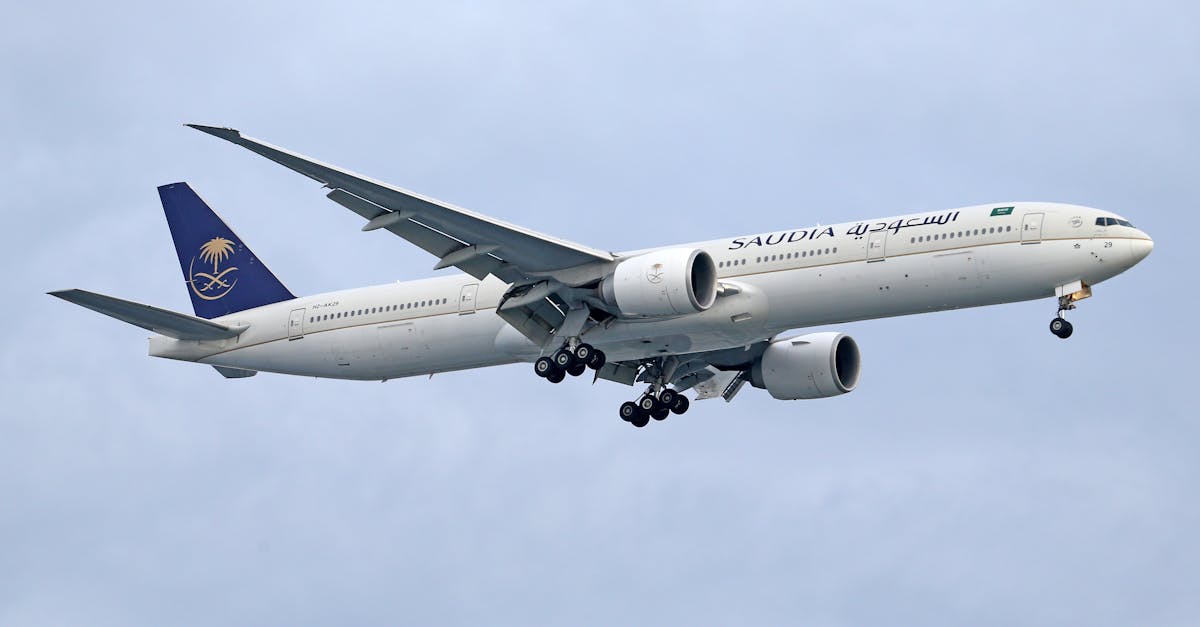
- In short, the crisis of confidence linked to these cases highlights the urgent need to restore genuine international control over aviation safety. Cooperation between states, reinforced by innovative technologies and strengthened governance, could be the desired response to preserve the preeminence of civil aviation in the face of increasingly complex challenges. Discover the Boeing 777, one of the world’s most efficient commercial aircraft, combining comfort and efficiency. Explore its advanced features, its remarkable range, and its impact on modern aviation. The technical and regulatory challenges to be addressed to prevent future manipulations in 2025
- Protecting the integrity of aircraft such as the Boeing 777 today requires constant adaptation to new fraud and manipulation strategies. The technical and regulatory challenges are numerous: 🛠️ Modernization of control systems:
- integration of new digitalization and automation technologies to monitor every stage of maintenance and registration as much as possible. 📜 Strengthening international standards : standardizing verification and certification protocols to ensure consistency.
- 🔍 Increased monitoring of operators and owners : strengthened controls on management companies, particularly those based in countries with weak regulation.
- 🚨 Implementation of early warning systems : automated systems detecting anomalies or inconsistencies in operations and registrations.
👔
: dissuasive sanctions against those who attempt to circumvent the system, with a particular focus on unscrupulous state or industrial actors.
- The key remains international cooperation, combining strict regulations and technological innovations, to ensure that no one can hijack the destiny of such a critical aircraft. Vigilance must also extend to all issues related to air sovereignty, because collective security depends on effective regulation capable of addressing new forms of manipulation.
- https://www.youtube.com/watch?v=6HZkISu_nn8
- Frequently Asked Questions (FAQ) about the mysterious Boeing 777s in 2025
- Why has there been so much controversy surrounding the registration of the Boeing 777s in 2025?
- Cases show that many aircraft were registered through shell companies to circumvent sanctions or conceal their true origin, which undermines traceability and collective security.
- What is the true identity of the actors behind these fraudulent operations? It is difficult to precisely determine the individuals or entities responsible due to the complexity of the circumvention networks, but international cooperation is attempting to identify accomplices in various countries.
- What challenges does this situation pose for global security?
- It increases the risks of hijackings, terrorist attacks, and illicit activities, undermining the stability of the aviation sector and requiring an immediate global response.
- How can authorities strengthen regulations to prevent such manipulations in the future?
- By improving digital traceability, introducing stricter controls, and creating an international database accessible to all regulatory stakeholders.
Découvrez notre guide complet — destinations, budget, visa, faune et conseils pratiques pour préparer votre voyage.

📖 Vous aimerez aussi

Transition à Madagascar : la société civile et la Génération Z face aux doutes sur le « Programme de la Refondation »
3 March 2026
Fermeture de l’aéroport de Dubaï : chaos et désarroi chez les voyageurs bloqués
2 March 2026