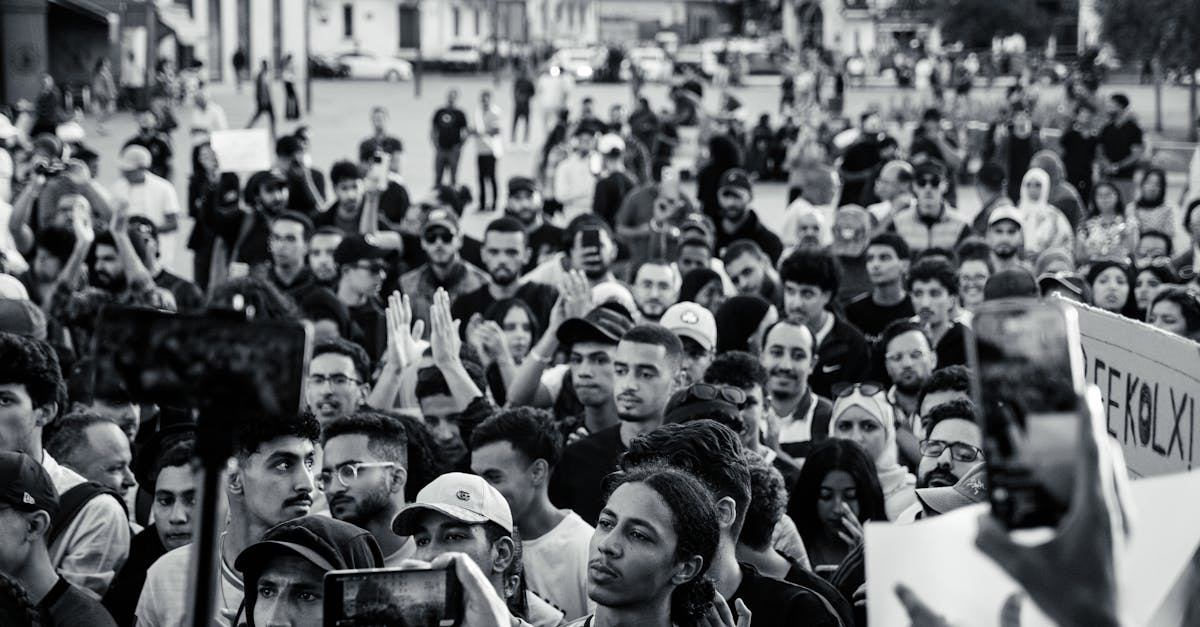

As 2026 dawns, the political scene in Madagascar reveals a particularly intense dynamic, driven by young people, especially Generation Z, who are engaging with renewed vigor. Protests are growing in several regions, but it is in Antsiranana, in the north of the country, that this movement has taken on exceptional proportions, resembling a popular uprising more than a traditional demonstration. Thousands of young activists take to the streets every day, determined to make their demands heard in the face of a government perceived as disconnected and repressive. The brutal repression unleashed on the capital, Antananarivo, contrasts sharply with the relative passivity observed in Antsiranana, where the crowds, more cautiously managed by the security forces, march in an atmosphere marked by defiance but also resilience.
The Context of Youth Movements in Madagascar: A Social and Political Crisis Fueled by Generation Z The protests in present-day Madagascar are taking place within a context marked by chronic political instability, intertwined with a profound socio-economic crisis. For several years, the population, particularly its youth, has expressed growing dissatisfaction with a governance model perceived as inaccessible, corrupt, and incapable of meeting basic needs. This distrust intensified when President Andry Rajoelina attempted to tighten his grip on power while simultaneously hindering previously initiated reforms. Young activists of Generation Z
Born into a context already marked by crises and rapid social change, they decided to assume a leadership role in this collective movement. Their civic engagement is not limited to simple demonstrations but reflects a desire to bring about real change, rooted in their aspiration for a more just and equitable society. Their mobilization thus testifies to a global phenomenon, comparable to other movements around the world, where young people are claiming their place in shaping the future. Antsiranana: A Hotbed of Protest with the Guise of a Popular Uprising Against the RegimeIn Antsiranana, the situation has taken on an unprecedented dimension in the recent Malagasy context, with a protest that seems to want to go beyond simple demands and become a full-blown uprising. The mobilization of young people, particularly those close to Generation Z, is not limited to criticizing the president or the government, but aims for a systemic challenge to power relations. The movement has grown in intensity, with daily gatherings drawing thousands of people, sometimes led by figures forgotten by the traditional political system. In some cases, these former allies of the regime join the crowds, illustrating a real shift in the local political dynamics.
This movement is distinguished by the strong participation of young activists, who use innovative strategies, particularly through social media, to coordinate their actions and circumvent repression. The mobilization in this northern region, often less controlled for a long time, reflects a deep-seated discontent and a desire for radical change. The regime’s security response remains indiscriminate, but the protests are not weakening, reinforcing the idea that this stage could permanently transform the political balance in Madagascar.
Contrasting forms of mobilization in other major cities of the country: While Antsiranana stands out for its geographical isolation and its insurrectionary protests, other cities like Toliara illustrate more contained, but nonetheless significant, forms of mobilization. In Toliara, the mobilization often centers around official figures, such as the governor of the Atsimo Andrefana region, who has mobilized his supporters to defend the regime. However, here too, the credibility of the current government is being undermined. Accusations persist of misuse of public funding, with participants paid up to 5,000 ariary to swell the ranks of pro-regime demonstrations, thus revealing a superficiality in the commitment,” which masks a deep unease.
This phenomenon, illustrating a concerted strategy to maintain a facade of popular support, is not enough to erase the accumulated frustration. Popular anger, though divided in its forms of expression, remains palpable throughout the country, fueled by a perception of a government incapable of addressing the crucial issues that have shaken Madagascar for several years. The credibility of the elites is thus severely tested, and these contradictions feed the protest movement, as demonstrated by the continued demonstrations in Antananarivo and the growing tensions that threaten future stability.
The stakes and risks of confrontation between youth and the government
The potential clashes between the Generation Z movement and the government raise the question of the possibility of lasting change or an escalation of violence. Young people, particularly in Antsiranana, are showing exemplary determination, unafraid of the violent repression they sometimes face. Social anger, fueled by increased repression—particularly in Antananarivo where riot police are perceived as veritable militias—risks accelerating the radicalization of the movement.
The international context, with growing global awareness of the situation in Madagascar, could ultimately play a mediating or catalytic role in resolving the crisis. However, tensions remain high, and the prospect of a large-scale confrontation cannot be ruled out. The central question remains: how far can this youth mobilization go in the face of a regime that seems incapable of reforming its governance? The answer also depends on the ability of political actors to engage in genuine dialogue and respect the popular will, which is being expressed with increasing clarity through these massive demonstrations.
Levers for Action for Sustainable and Peaceful Citizen Mobilization
To prevent the protests in Madagascar from escalating into unacceptable violence, it is imperative to unite all stakeholders in constructive dialogue. Young people, particularly Generation Z, must find ways to express their demands peacefully, while maintaining their ability to exert pressure on the government. Digital platforms, increasingly used across the country, represent a significant lever for amplifying the voices of protesters and coordinating actions to prevent escalation.
Furthermore, the international community must play a more active role by supporting inclusive dialogue initiatives and condemning all forms of excessive repression. The implementation of a genuine reform process, bringing together all stakeholders—civil, political, and social—could pave the way for gradual stabilization. What is certain is that citizen engagement remains a crucial driver for establishing more transparent and accountable governance, capable of meeting the legitimate aspirations of Malagasy youth.
Social Change Underway, Driven by Madagascar’s Generation Z
The demands of Generation Z in Madagascar are not limited to immediate grievances. They are part of a broader dynamic of social transformation, where young people are claiming their place in a democratic process. Protest is thus becoming the driving force behind significant changes: issues of freedom, access to education, employment, and the fight against corruption. Malagasy youth are no longer simply confronting a contested power structure, but are seeking to redefine their own rights and responsibilities within a rapidly changing society. This movement, which extends far beyond the local level, is part of an international context where global youth, as demonstrated by a rule of engagement in many countries, play a crucial role in social change. The mobilization of young people in Antsiranana is a testament to this: making their voices heard has become a vital necessity for forging a more egalitarian society. Their mobilization appears unwavering, despite systematic repression, and calls for increased vigilance regarding the capacity of institutions to respect the popular will.
Table: Main Demands of Malagasy Youth in 2026
| 🔸 Demand | 🔸 Description | 🔸 Observation |
|---|---|---|
| 🗳️ Strengthening the Democratic Process | Institutional reforms, increased transparency, and the fight against corruption | Now essential to gain the trust of young people |
| 💼 Employment and Economic Development | Job creation, support for young entrepreneurs | Key to reducing socio-economic frustration |
| 🗣️ Civil Liberties and Civic Engagement | Freedom of expression, participation in political life | Crucial indicators of expected social change |
| 🌱 Education and Training | Improved education systems, access to vocational training | Guarantee of empowerment for younger generations |
| 🚫 Fight against Repression and Abuses | Protection of protesters, end to police violence | A prerequisite for a peaceful process |

FAQ
What is the role of Generation Z in the mobilization in Madagascar?
Generation Z plays a central role as a force for protest and change, notably using social media to coordinate peaceful demonstrations and express their rejection of injustice and poor governance. Their commitment reflects a desire to bring about profound and lasting change.
How does repression influence the dynamics of protests?
Increased repression can radicalize some young people, but it can also strengthen their determination to make their voices heard. The key lies in the ability of political actors to create a space for dialogue to prevent escalation and initiate a peaceful transition.
What can the international community and civil society do?
They can encourage dialogue, support reform initiatives, and condemn all excessive violence, while facilitating mediation between the different parties to enable a peaceful resolution to the crisis.
What are the major social and political challenges facing Malagasy youth?
🔗 Sources & références
Pour aller plus loin, consultez les sources citées dans cet article :
Découvrez notre guide complet — destinations, budget, visa, faune et conseils pratiques pour préparer votre voyage.

📖 Vous aimerez aussi
Transition à Madagascar : la société civile et la Génération Z face aux doutes sur le « Programme de la Refondation »
3 March 2026
Fermeture de l’aéroport de Dubaï : chaos et désarroi chez les voyageurs bloqués
2 March 2026